In Türkiye, only the Turkish Mountaineering Federation (TDF) and other relevant federations are authorised to organise official sport climbing competitions. Competitions held within school sports and Ünilig are similar to TDF competitions but include some differences, so their rules are covered separately. This page summarises the national rules; for international competitions, see our Competition Disciplines page, which follows the World Climbing rules.
The minimum requirements a climbing wall must meet to host a TDF competition are on our Climbing Wall Specifications page.
On this page we look at the general organisation of TDF competitions, the competition officials and the competition rules for each discipline. Use the links below to jump to a section.
- Disciplinary procedures
- Lead (Section 5: national youth)
- Lead (Section 6: national seniors)
- Boulder (Section 7: World Climbing format)
- Boulder (Section 8: multi-point)
- Speed (Section 9)
- Post-competition rankings
- Regulations (including the competition formats chart)
Setting the competition season
Although it can change with circumstances, in Türkiye regional competitions are held first, followed by national ones. In addition, the federation’s provincial representatives may organise competitions in any discipline before or after these, in coordination with the relevant bodies. These competitions aim to attract new athletes and spread sport climbing at grassroots level.
The competition season starts with the TDF Sport Climbing Board deciding which competitions will be held that year and in which provinces. The suitability of the walls (their accreditation status) and the facilities that house them are taken into account, and the programme is announced in the federation’s activity calendar.
In addition to official competitions, organisations that meet the necessary conditions can be accredited to hold competitions, and these are also published in the activity calendar.
Completing this whole official competition process determines the national team for each discipline and the squads that will represent the country.
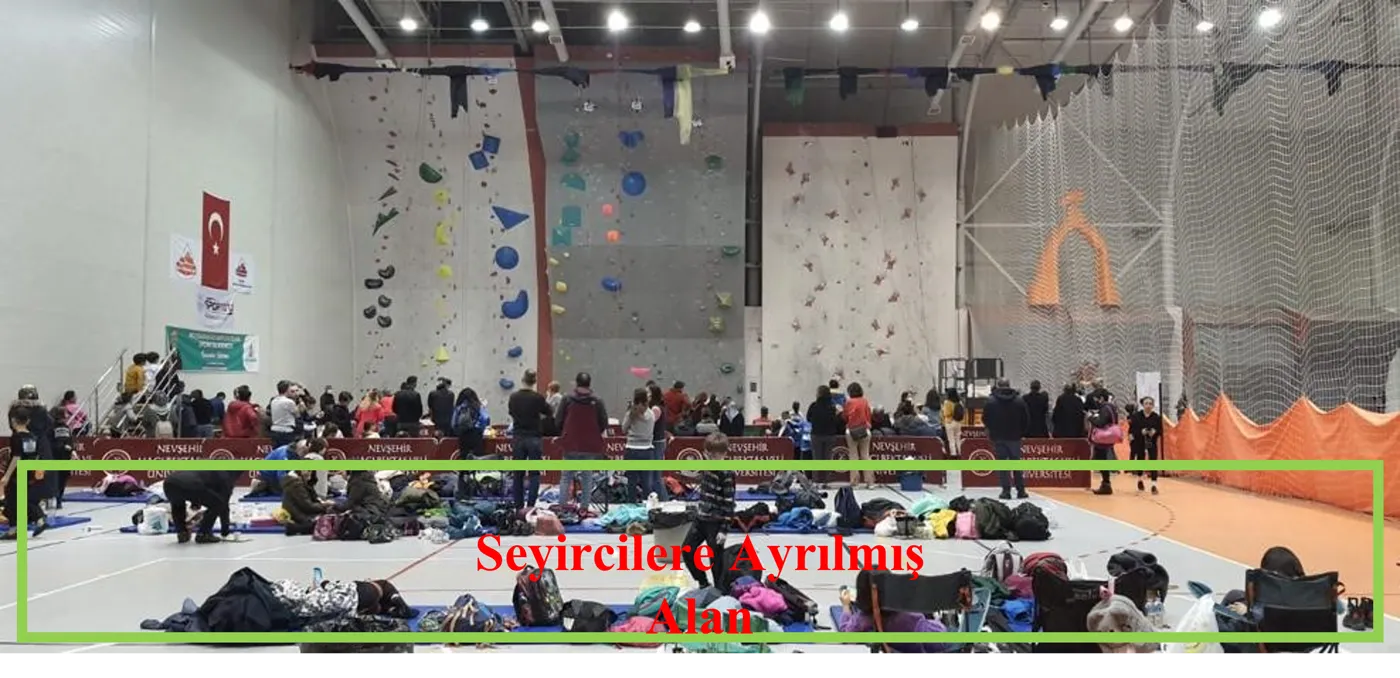
A competition venue must have at least the following separate areas:
- an isolation room/zone with a warm-up wall,
- waiting areas (for coaches, athletes and spectators),
- a transit area,
- one or more competition areas,
- a first-aid area.
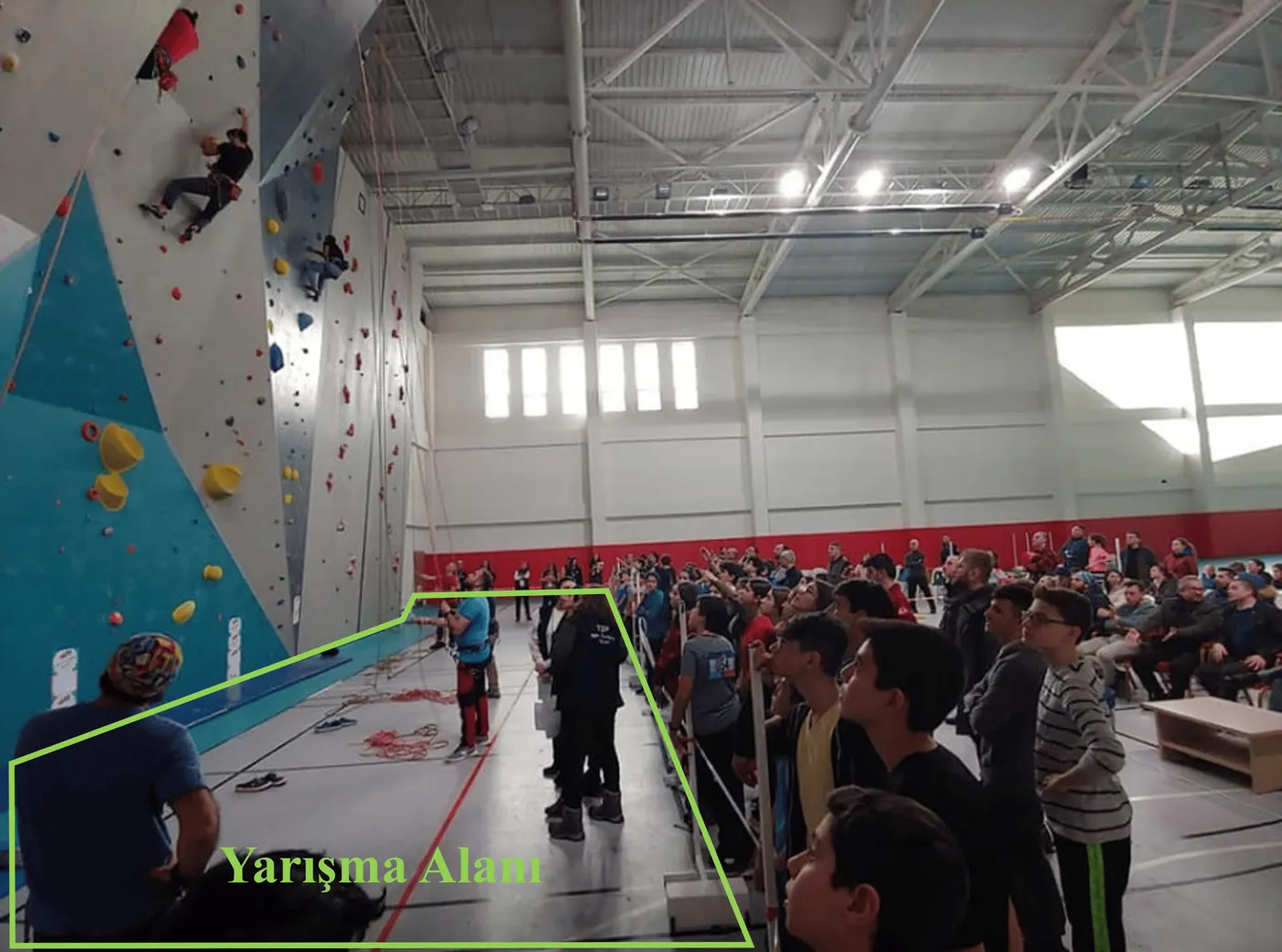
General points
The competition area may be entered by:
- TDF officials,
- organisation staff,
- athletes taking part in the relevant round,
- authorised team officials (only those whose request has been approved, in the isolation or warm-up area),
- people authorised by the jury president.
Everyone else must watch the competition from the area set aside for spectators.
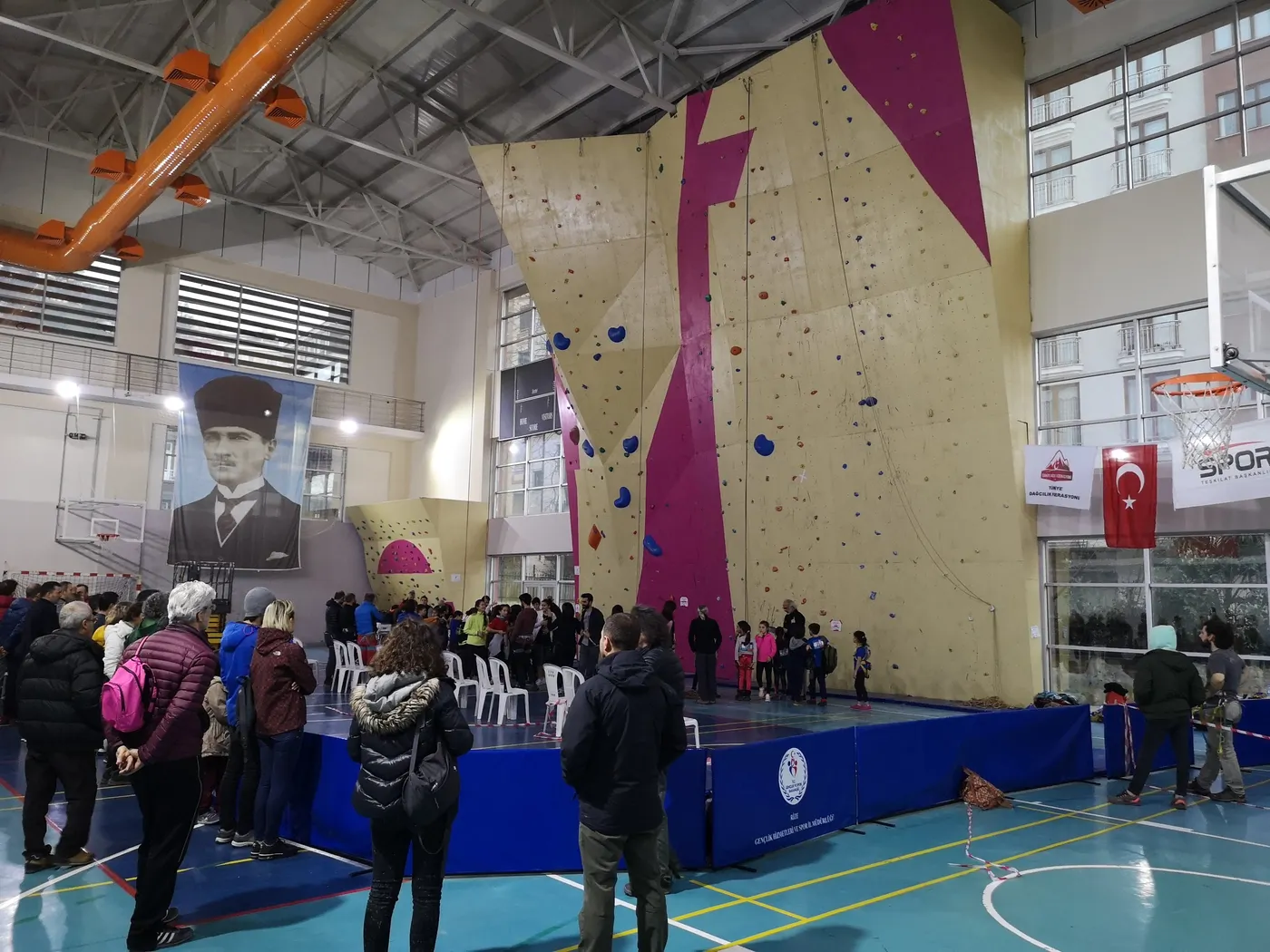
- All equipment used in competitions must meet the standards in the national rulebook. To see the standards, click here (in Turkish).
Competitors:
- must wear climbing shoes;
- may use a chalk bag and/or a climbing helmet,
- dry/liquid chalk on their hands only,
- elastic bandages on their arms and legs,
- and kinesiology tape anywhere on the body.

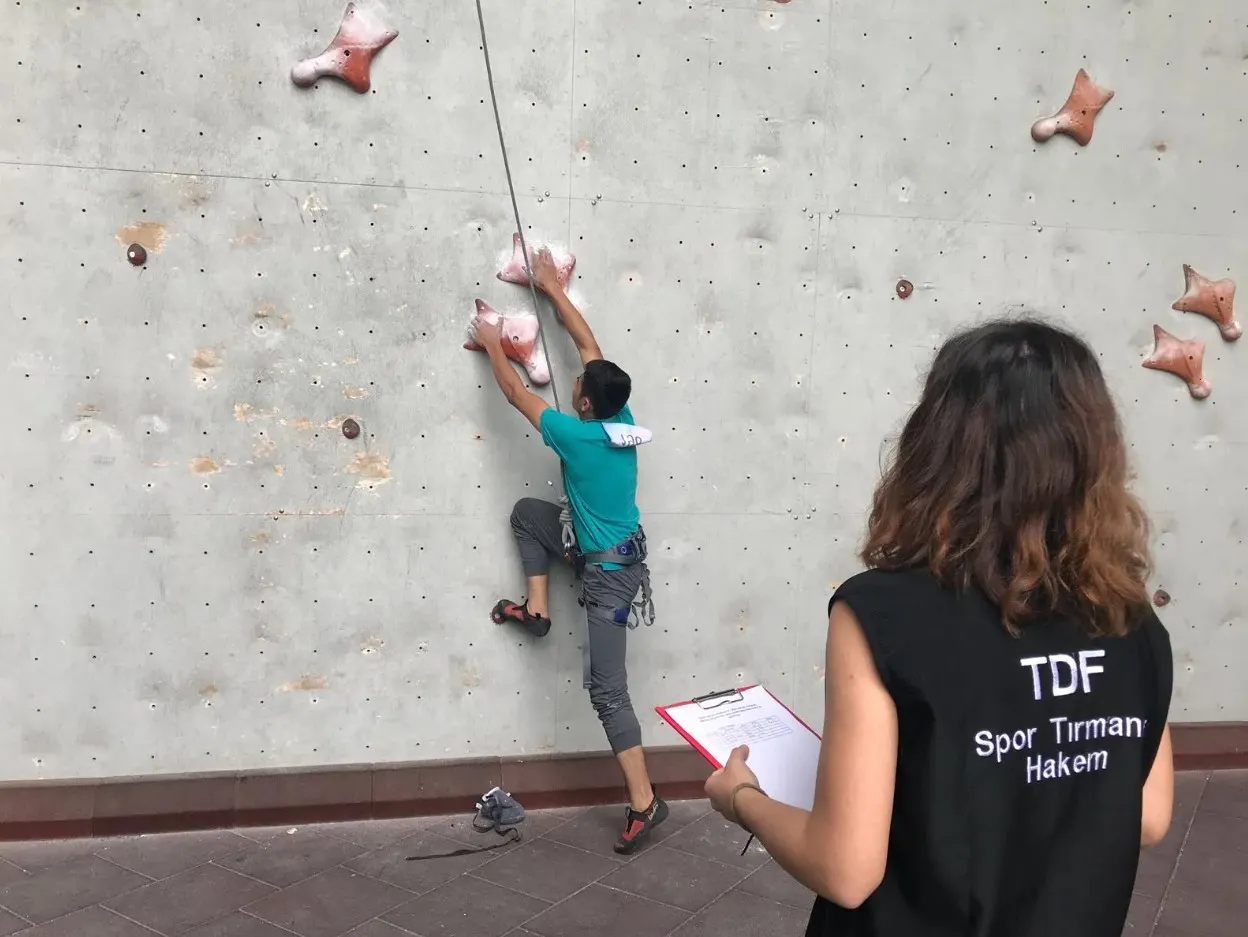
Competitors must wear the start number given by the organisers clearly visible on the back of their top throughout the competition.
Wearing a national team jersey at competitions is forbidden unless it has been issued by the TDF.
- To see the advertising restrictions athletes must follow on their equipment and clothing, click here (in Turkish).
Throughout a sport climbing competition, following announcements and updates is the individual responsibility of club/team officials and athletes. Updates may be made at any time during the competition by public announcement or on the notice board whose location is announced at the technical meeting.
In all disciplines and competition formats, the finalists are introduced before the final round.
Competition officials
A climbing competition has two pillars: the organisers/judges and the route setters. At every competition held under the TDF’s responsibility, the following serve:
- the jury president,
- the chief judge,
- the scoring chief,
- the judges,
- the chief route setter, route setters and trainee route setters,
- an observer, and
- organisation staff.
The jury president is the most senior official on site and is responsible for running the competition without problems. They chair all meetings with judges, organisers and athletes, and submit a detailed report to the federation after the competition.
The chief judge is mainly responsible for approving the ranking, start and result lists, assigning judges and applying the national rulebook. They sit on the jury (appeals panel) and are also responsible for recording the competition with the federation’s cameras.
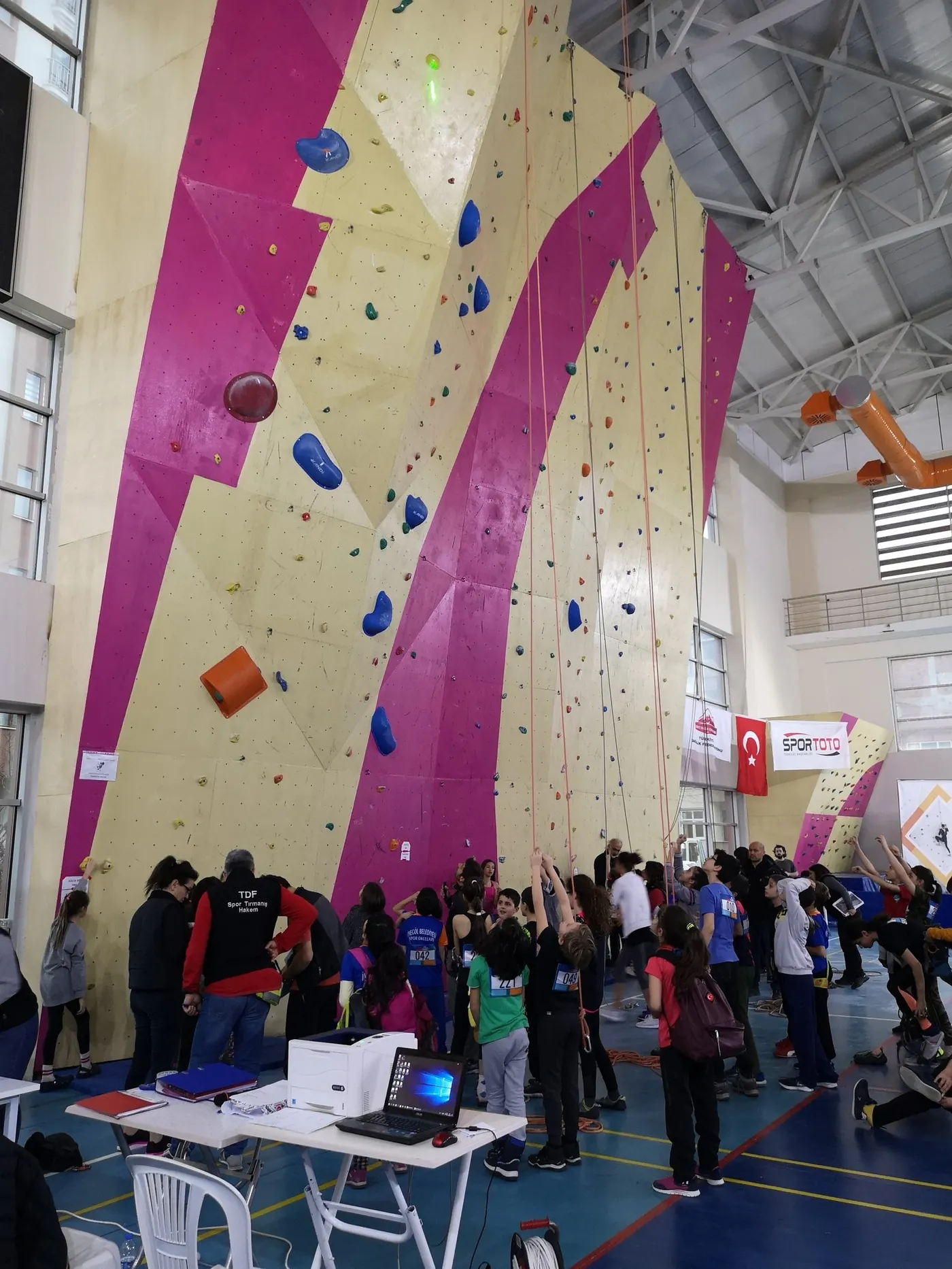
The chief route setter is responsible for the climbing and climbing-safety aspects of the event, above all planning and setting the routes, checking the protection points and the suitability of the technical equipment used. In Lead and Boulder competitions they set the scoring of each route and inform the judges.
Disciplinary procedures
Yellow cards
A yellow card may be shown by the jury president, the chief judge and/or the judges for the following offences:
- failing to follow the instructions of the jury president, chief judge or judges;
- leaving the call zone, or being late to enter the competition area without an excuse;
- not starting the route as instructed by the route judge or chief judge;
- not following the equipment and clothing rules;
- not wearing the bib number issued by the organisers or the TDF;
- not using compulsory equipment;
- medal winners not attending the award ceremony;
- using obscene or abusive language, or relatively minor mocking or unsporting behaviour.
An athlete who receives two yellow cards in one competition is disqualified from that competition and receives no competition points.
An athlete who receives three yellow cards in one season:
- cannot take part in national team training camps or squads that season, even if they have qualified for them, and
- will not have entries accepted for any competition in any category that season.
Disqualification
At a competition, the jury president and the chief judge each have the authority to disqualify a person from the competition on their own. A disqualified person is also given a red card.
In the following circumstances, a person is disqualified from the competition by being shown a red card, with no need for any other sanction.
- observing the routes from outside the permitted observation area while isolation rules apply;
- using unapproved equipment;
- using a communication device without permission in the isolation zone or another restricted area.
The following offences result in a red card, immediate disqualification of the competitor and, in addition, a report to the Central Judges Board for referral to the TDF Disciplinary Board:
- in competitions with isolation, getting information about a route the competitor will climb beyond what the rules allow (in rounds without isolation, i.e. in “flash” format, competitors may not get information from other team members outside the competition area before or during their attempts);
- getting and/or giving information to other competitors beyond what the rules allow;
- distracting or interfering with a competitor who is preparing or competing on a route;
- refusing to comply with the advertising rules for clothing and equipment;
- unsporting or seriously offensive behaviour during a competition;
- abusive, threatening or violent behaviour towards TDF officials, organisers, team members (including competitors) or anyone else.
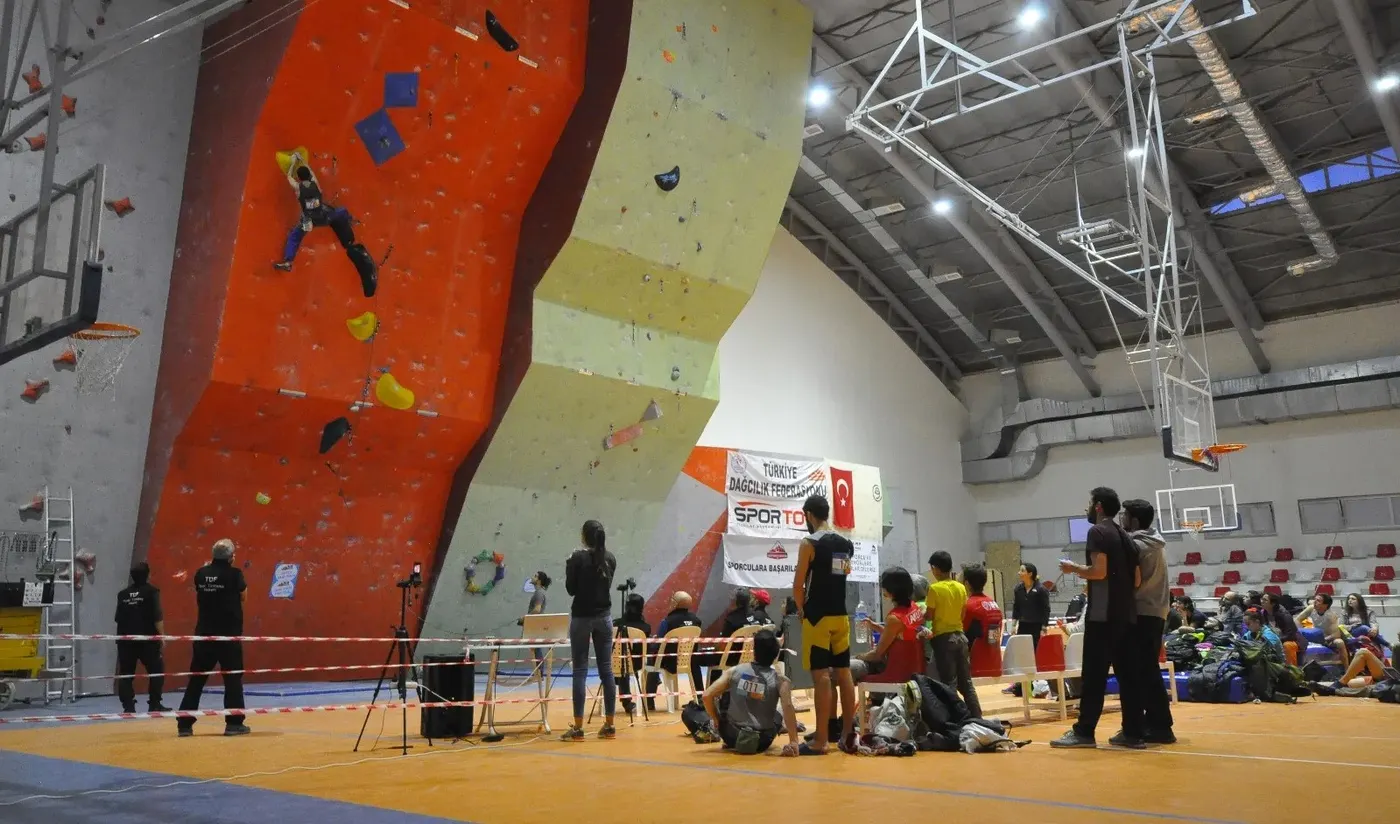
The following offences result in a red card, immediate disqualification and a report to the Central Judges Board for referral to the TDF Disciplinary Board, even if committed outside the competition area, in a public area or within the venue, or in accommodation or facilities used by the competitor or team member in connection with the competition:
- seriously unsporting or other seriously offensive behaviour;
- abusive, threatening or violent behaviour towards TDF officials, organisers, team members (including competitors) or anyone else.
In addition, when required by the jury president, a competitor’s refusal to take a Body Mass Index (BMI) test results in a red card, immediate disqualification and referral to the TDF Disciplinary Board.
At competitions, team officials are treated the same as athletes. A team official who receives a yellow card may not enter any area reserved for team officials. Likewise, a team official who receives two yellow cards in one competition is disqualified, and one who receives three yellow cards in a season is not admitted to TDF competitions for the rest of that season.
As the most senior official in the competition area, the jury president has the authority to ask anyone who breaks the rules to leave the area and, if necessary, to stop all competitions until this is done.
Lead
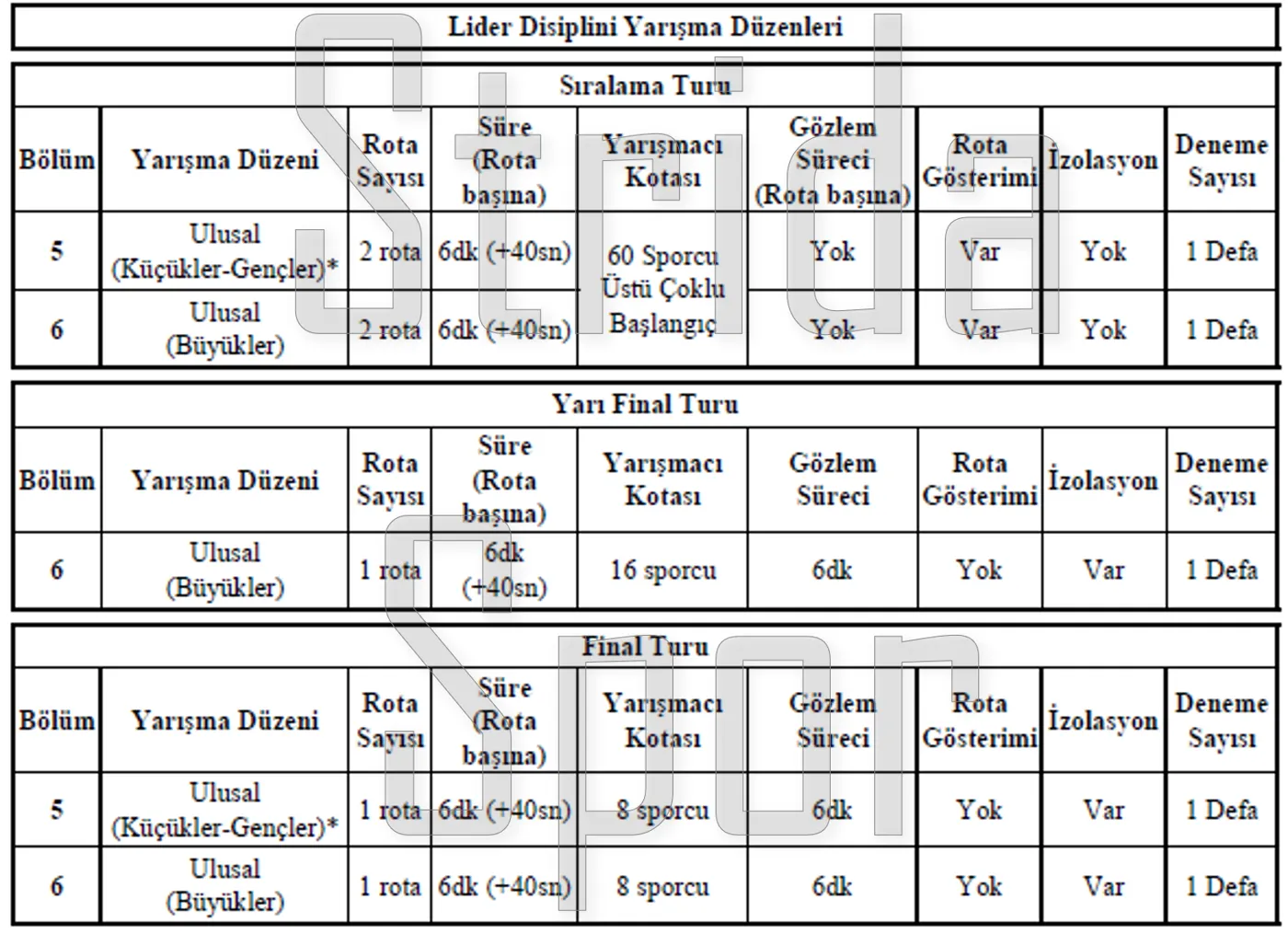
Lead (Section 5: national youth)
The general rules are explained below, but the jury president may, within their authority and when conditions require, replace some or all of them with the special forms in the national rulebook.
- The competition is held in two stages: qualification and final.
- Qualification consists of two different routes designed to separate performances; the final consists of one route.
- There is no entry limit in qualification, which uses multiple starts, while the final quota is 8 athletes. If athletes in 8th place and below have the same qualification score, the tied athletes all go through to the final; this is the only way the final quota can be exceeded.
- With the jury president’s approval, the rope may be fixed to suitable protection points, or an extra belay assistant may be used on the start section of the route.
- If qualification and final are held on the same day, at least 2 hours must be left between them, and at least 50 minutes between qualification routes, so the athletes can rest.
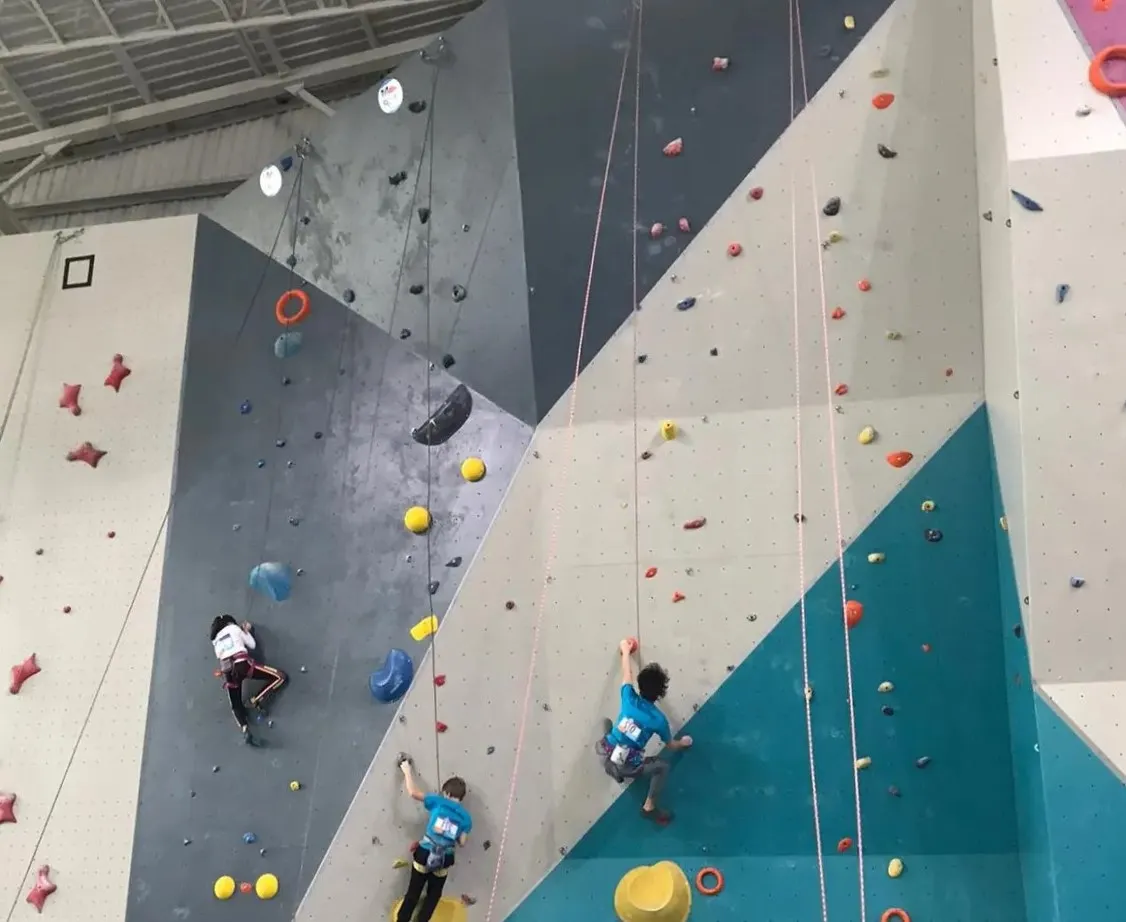
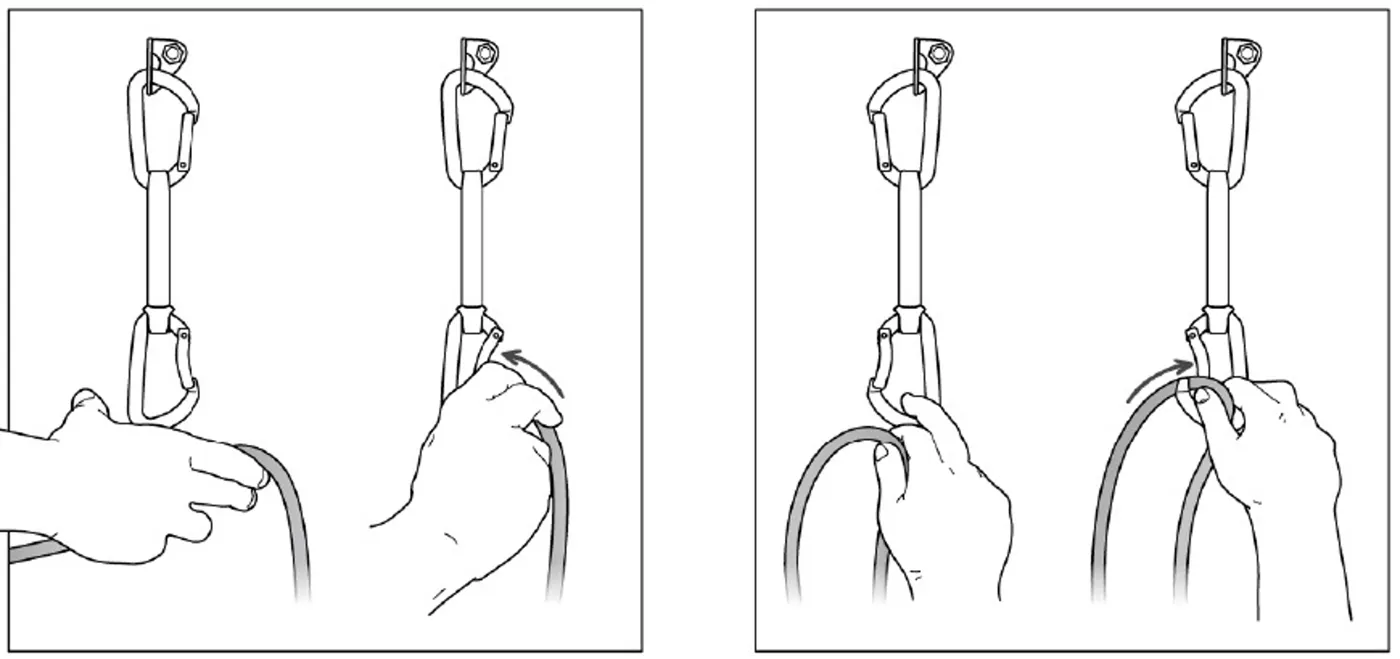
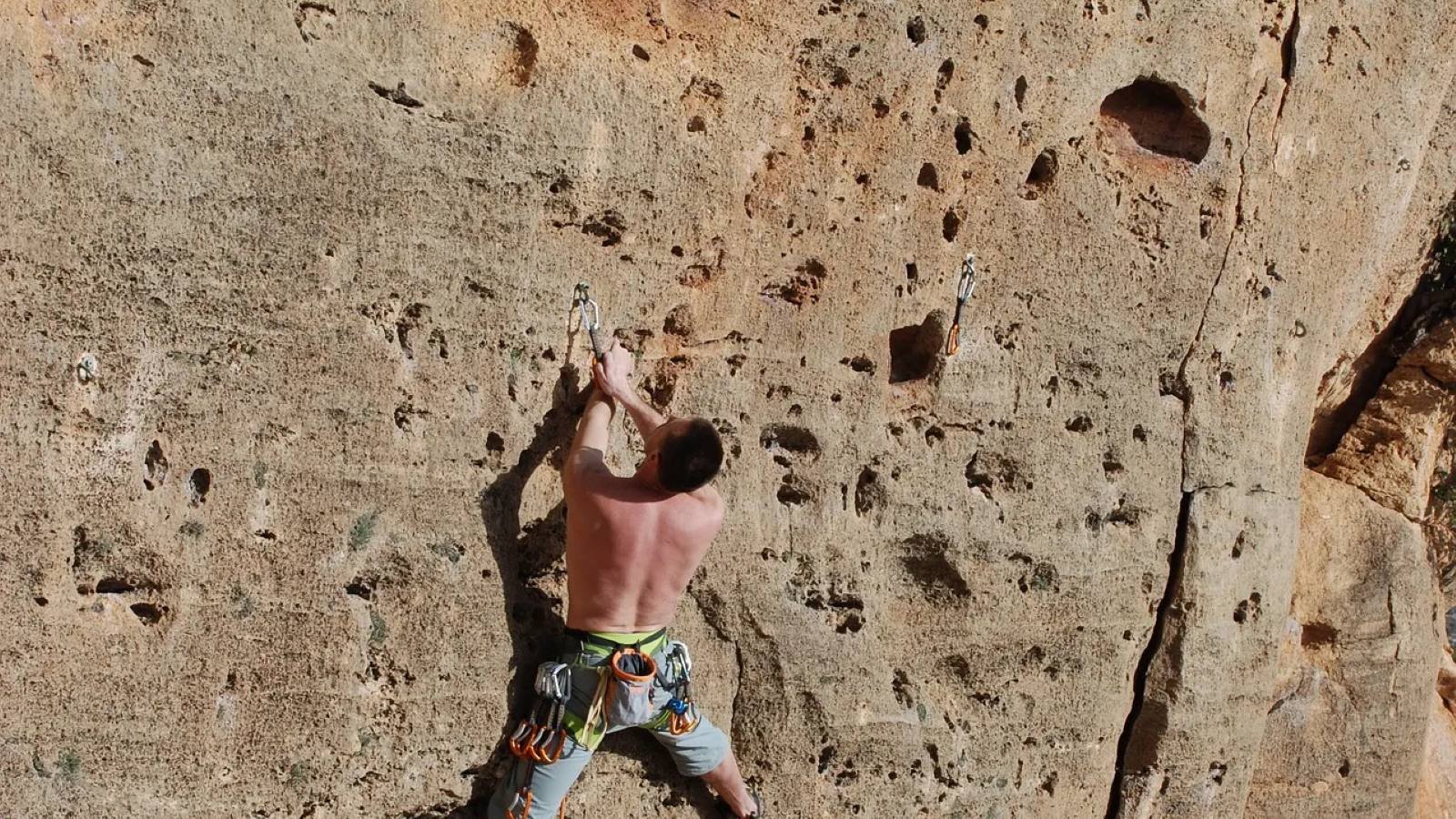
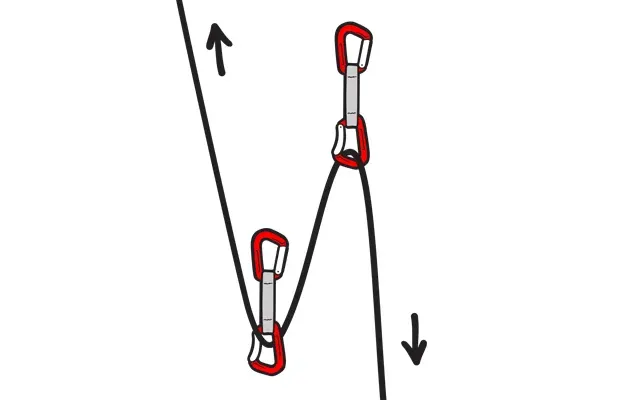
- A quick-link quickdraw, whose length and suitability are set by the chief route setter, is attached to every protection point on the route. The quickdraw gates are oriented to suit the route, taking into account the risk of cross-loading. At protection points, shortening slings with knots, linking quickdraws to lengthen them, or using knotted rope or tape slings is forbidden.
- Lead competition routes are climbed on lead, belayed from below (Youth D–E categories on top rope).
- Competitors tie the rope into the tie-in points of their harness with a figure-eight knot and tie a safety (single fisherman’s) knot in the free end.
- Route demonstration may be given by video, with one screen per route, starting at least 1 hour before the programme starts, or on the federation’s social media accounts at least 12 hours before each round. Where none of this is possible, the route may be demonstrated live or presented in a route briefing.
- The isolation zone closes at least 30 minutes before the first competitor’s climbing time and at least 1 hour before the time planned for introducing the finalists. This period cannot exceed 1 hour.
- Until the official observation period, competitors may not get information from anyone other than the jury president and the judges. What matters is that every competitor has the same information. That is why competitors in the competition area may not get information from people outside it unless specifically allowed by the jury president. Likewise, athletes who have finished may not pass information to athletes who have not yet competed.
- Athletes arriving at the waiting zone must have all their equipment and do their own preparation.
Climbing procedure:
- Qualification has a route demonstration, and the final has a 6-minute route observation. In all rounds competitors have 6 minutes to climb and 40 seconds to start. Failing to follow the verbal instruction to start results in a yellow card.
- The climb starts, and the clock with it, when the competitor’s body has fully left the ground.
- To complete a route successfully, the rope must be passed through the quickdraws in order and through the final carabiner within the climbing time and in line with the rules.
- Quickdraws must be clipped by the competitor one after another. Once announced to everyone, the first clip may also be made from the ground. To make a move easier, the competitor may unclip the last quickdraw and clip it again.
- Competitors’ bodies must not go above the lower carabiner of an unclipped quickdraw. (Going as high as athletes in the same category or the chief route setter could reach with their foot is accepted.)
- If an athlete makes a Z-clip, they may climb down, correct the mistake and continue.
A competitor’s attempt ends unsuccessfully if they:
- fall or exceed the climbing time;
- use any part of an advertisement, information banner or similar material fixed to the wall;
- use the side or top edges of the wall to climb;
- use hangers (including bolts) or quickdraws to climb (hanging on them, hooking them and so on);
- continue climbing after skipping a clip;
- touch the ground with any part of the body after starting the attempt; or
- use an artificial aid to climb;

- deliberately use a part of the wall, a hold or equipment marked with black tape (out of bounds);
- use empty bolt holes left for placing holds, except holes on a hold that are part of its bolt fixing (with a screw in them).
Lead (Section 6: national seniors)
The only difference between the senior and youth categories is that a semi-final follows qualification. The semi-final quota in the senior category is 16 competitors. As in the final, this round has isolation, and a 6-minute route observation is held before it, just as before the final.
Boulder
Boulder (Section 7: World Climbing format)
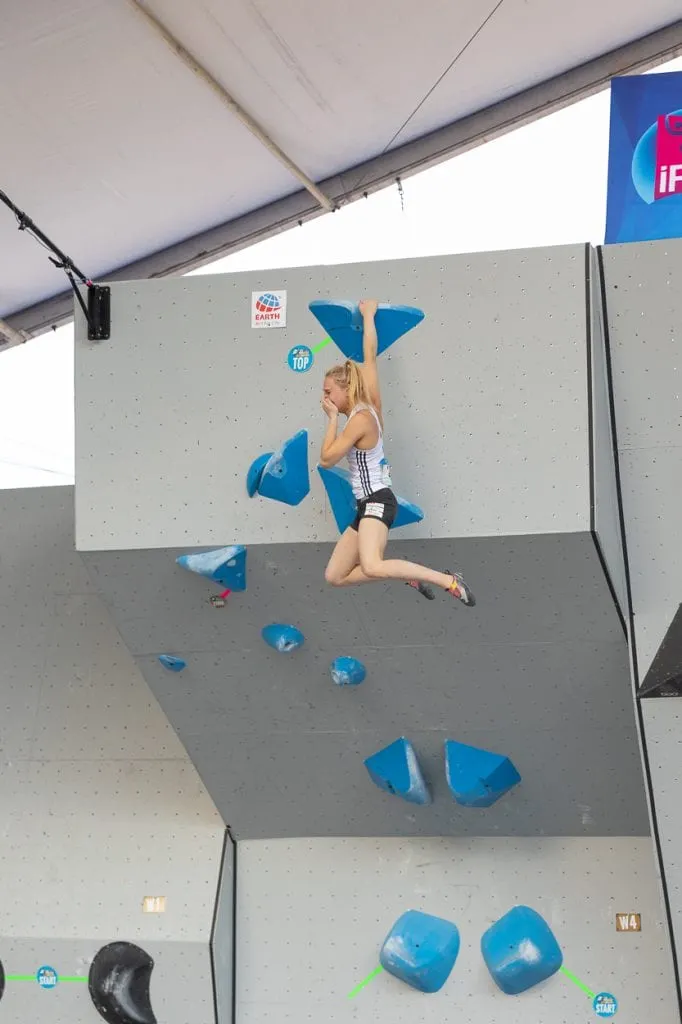
Boulder competitions in the World Climbing format are held in three stages: qualification, semi-final and final. In these rounds, each boulder problem has 1 Zone hold and 1 Top hold (or a marked area). All rounds are held with isolation.
- In this format qualification has 5 boulder problems, and the semi-final and final have 4 each.
- Qualification is 5 minutes with unlimited attempts, the semi-final (quota of 12 athletes) 5 minutes with unlimited attempts, and the final (quota of 6 athletes) 4 minutes with unlimited attempts. No extra observation time is given in qualification and the semi-final, while the final has 8 minutes of observation in total, 2 minutes per problem.
Competition format:
- In exceptional circumstances the jury president may cancel at most 1 problem in a round, or a whole round (the semi-final).
- If more than one start group is needed, the problems must be set to a similar difficulty.
- Each boulder problem is designed so that the lowest part of the competitor’s body is no more than 3 metres above the mat. Crash mats are laid with no gaps between them.
- If consecutive rounds of a boulder competition are held on the same day, at least two hours are left between the moment the last competitor finishes the first round and the closing of the isolation zone for the next round.
- Holds may be cleaned by organisation staff after each climb, and athletes may also clean them themselves with brushes provided by the organisers, as long as their feet stay on the ground.
- Between climbing rotations, athletes wait their turn in the area reserved for them and may not observe the problems. There is a 15-second changeover between problems. All timings can be followed on a clock set up so it is visible from the whole area.
- Team officials may not accompany athletes during observation periods. During observation, competitors may touch only the first marked hold, keeping both feet on the ground.
For the start of each boulder problem, the marked hand and foot holds, the parts of the wall that may not be used and, in exceptional cases, start holds labelled left and right to indicate a special start position, are marked.
For the finish of each boulder problem, a designated finishing hold, or a designated area instead of the boulder’s top hold, is marked.
Each boulder problem also has a clearly marked zone hold. On each problem the start and finish holds are marked in one colour and the zone hold in another. These colours are displayed in the isolation zone in advance so competitors can see them. To score the zone, the athlete must hold it in a controlled way.
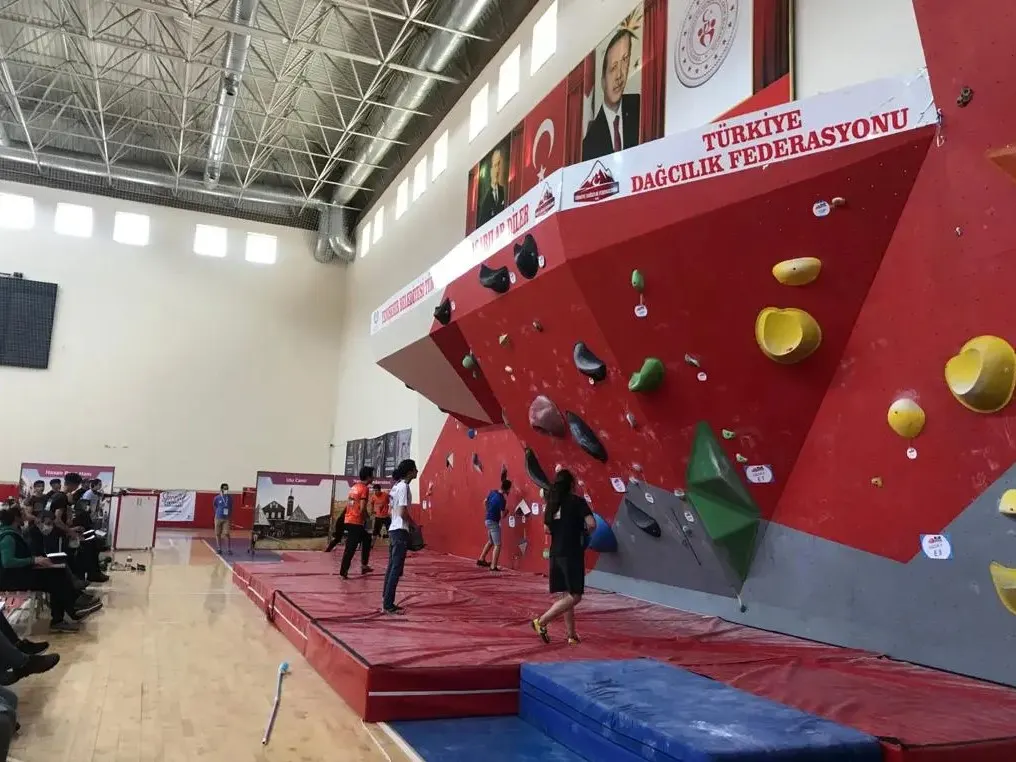
For an attempt to count, the competitor’s whole body must have left the ground. Before starting, the competitor must also show the judges that they have taken the start position in a balanced way, using the start holds as marked. If the start holds are high off the ground, competitors may jump into the start position.
For an attempt to be successful, the competitor must hold the top hold with both hands in a controlled way within the time allowed and receive the judge’s “OK”. This can also be signalled by showing a green card.
An attempt is unsuccessful if the competitor:
- does not hold the finishing hold with both hands in a controlled way, or does not hold the finishing position;
- starts the boulder incorrectly;
- uses a part of the wall or marked holds that are out of bounds, marked with black tape (or another colour announced by the jury president at the technical meeting);
- uses the bolt holes or sockets of the wall with a hand;
- uses the side surfaces or the top of the wall;
- uses advertising banners on the wall;
- touches the ground again with any part of the body after the attempt has started;
- does not finish the attempt within the climbing time for the problem.
The following mistakes count as an attempt:
- touching holds other than the start holds with hands or feet;
- touches that leave any kind of mark.
If a mistake is made during an attempt, the route judge ends the attempt and the athlete’s attempt count goes up by 1.
Isolation rules:
- When the closing time of the isolation zone has passed, competitors and/or team officials stay in the isolation zone unless told otherwise. Competitors, team officials or others the jury president has allowed into the zone may leave it at any time, but cannot return once they have left.
- For any round, the isolation zone closes no more than one (1) hour before the first competitor on the start list begins climbing, or, in the final, no more than one (1) hour before the time set for introducing the finalists. Measures are taken so that competitors cannot see the boulders at any time before the isolation zone closes, even from outside the competition area.
- The logic of the isolation rule is that competitors receive no information about the boulder problems before the official observation period other than what the jury president and judges pass on. It is essential that every competitor receives important information about the problems equally.
- Competitors who have finished their attempts, or who are in the climbing area for any reason, may not give information to climbers who have not yet made their attempts.
At every bouldering competition, an electronic timing system is set up where it can be clearly seen from the competition area. It gives a loud audible signal at the start and end of each period and when 1 minute remains, and includes a 15-second changeover between periods. (You can watch a sample timing video here.)
Boulder (Section 8: multi-point)
This format, in active use in Türkiye since the 2024 competition season, consists of qualification and final rounds. In this format:
- qualification problems have 1 Zone and 1 Top, as in Section 7, while final problems have holds (or marked areas) worth 5 (Zone 1), 10 (Zone 2) and 25 (Top);
- qualification has at least 8 boulder problems for youth and junior categories and 12–20 for senior categories, and the final has 4 problems for all categories;
- athletes have unlimited attempts in every round;
- qualification is held in an open format and the final with isolation.
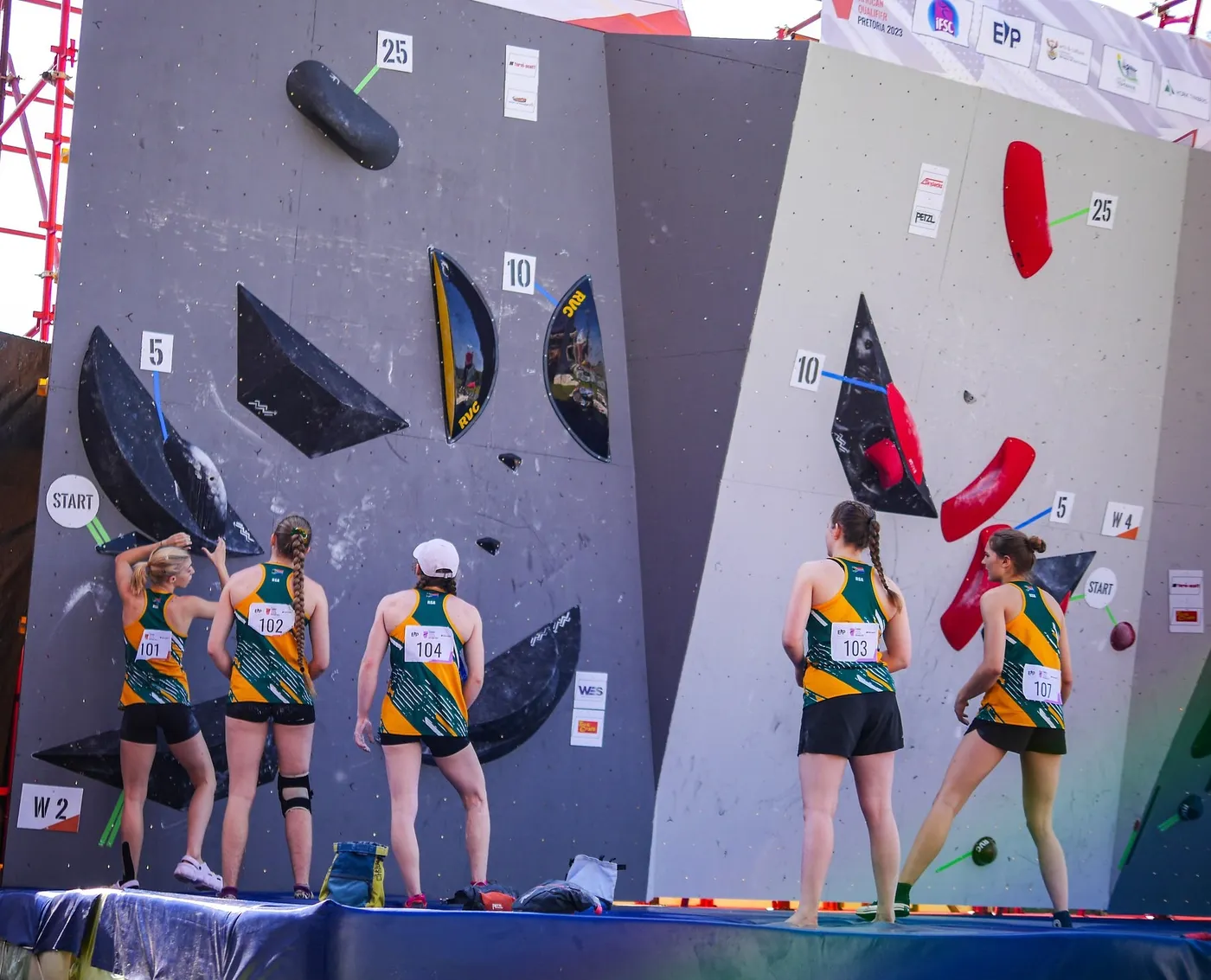
Everything else is the same as in Section 7. For the scoring principles, see our Scoring page.
Speed (Section 9)
Speed competitions include a qualification round of a single stage on two lanes, and final rounds of one to four stages (eighth-finals, quarter-finals, semi-finals, small and big final). There are three starting brackets for the finals: 16, 8 and 4. Which one is used depends on how many athletes have a valid time in qualification. The final quota is:
- 4 if 4–7 athletes have a valid climbing time,
- 8 if 8–15 athletes have a valid climbing time,
- 16 if 16 or more athletes have a valid climbing time.
Practice runs give every athlete the chance to warm up. No times are taken in these practice runs, but starts are made as in competition. A competitor’s attempt is not stopped after a false start.
In qualification each athlete has 2 climbs, one on each lane. For the first attempts, the athletes on the left lane are chosen at random. For the second attempts, athletes swap lanes and the list is shifted by 50%, so that the same athletes are not paired on both lanes. (Example: with 21 competitors in a category, the competitor due to start 1st on lane A will start 11th on lane B.)
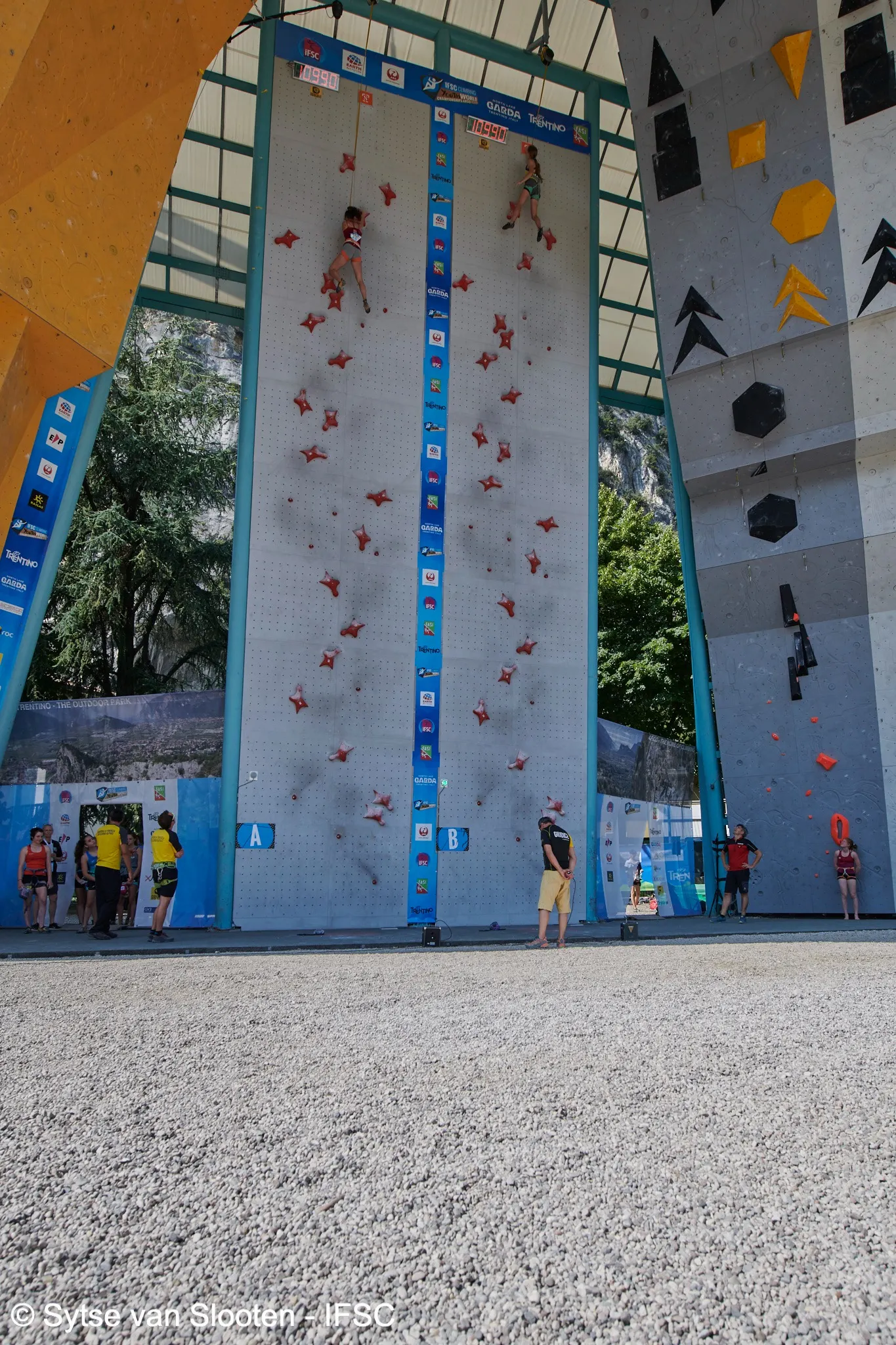
Qualification is held on both lanes at once, with competitors climbing in pairs. Apart from re-runs needed after a false start or a technical incident, each competitor makes one attempt on each of the two lanes. (If one competitor makes a false start, the other may complete their unfinished attempts on one or both lanes, but will climb alone.) Competitors are given at least 5 minutes’ rest between their two attempts and may not leave the area during it.
If ties in the qualification results would exceed the final quota, the following tie-break procedure is applied:
- the competitors’ best times are compared to a thousandth of a second;
- then their second-best times are compared to a thousandth of a second, and the faster one is ranked higher;
- if the competitors have no second time to compare, they make one tie-break climb on the route in lane A. The results are used only to break the tie for the final.
More than one attempt is made if needed to break repeated ties.
When called to the route for a race, each competitor is given 10 seconds to adjust the foot pad to their preferred start position. Competitors then turn back towards the belayer and are tied into the climbing rope (by the belayer).
Then, at the command “On your marks!”, the climbers take their start position. After the “Ready” announcement, the race starts following three (3) beeps one (1) second apart (the first two at the same pitch, the last one higher).
After a false start the race is stopped at once. A false start in the race for a semi-final place and for third and fourth place leads to a re-run; in all other stages it is recorded as no time. The athlete who did not make a mistake is declared the winner and does not need to race again, but may race again on the same lane if they wish.
Likewise, if a competitor fails to hit the finish pad and gets no valid time, the result is recorded as no time. If a fault is found in the timing system, the competitors are given a new attempt. An attempt is unsuccessful if the competitor:
- falls;
- uses the side or top edges of the wall to climb;
- touches the ground with any part of the body after starting;
- uses an artificial aid.
Athletes eliminated in the finals are ranked among themselves by their best time. Where more than one athlete is eliminated in a final round, or where there is a tie, the times they achieved in that round and, going back until the tie is broken, in earlier rounds are compared.
The competition always ends with the small final held before the big final.
Post-competition rankings (Section 10)
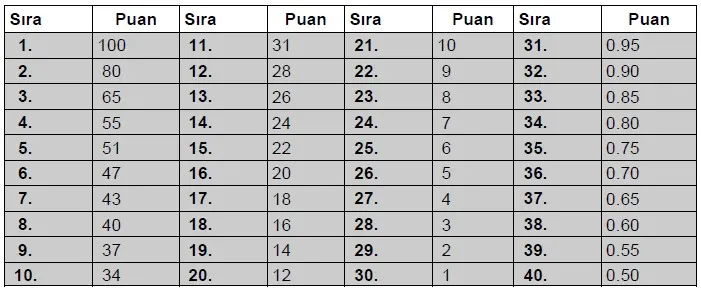
At the end of each competition, the top forty (40) competitors in each category receive competition ranking points according to the table below, for calculating the end-of-season rankings.
The scoring system used for combined competitions is a 1,000-point system, in line with World Climbing. From the 2024 competition season it is applied as below.
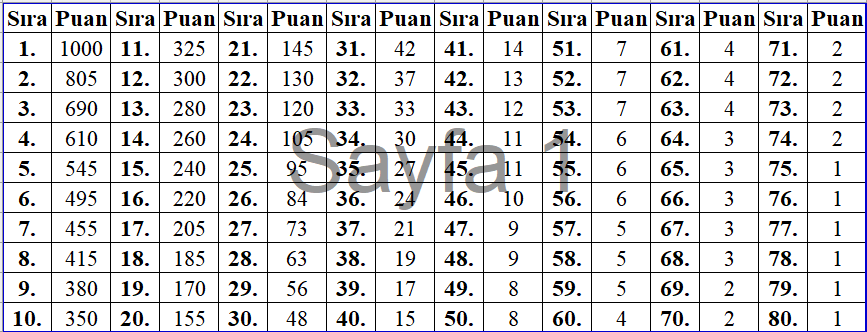
Note: in case of a tie, when calculating competition points, the points for the tied places are added up and divided by the number of tied athletes, and the tied athletes are given equal points.
Regulations
Use the links below to find the current rulebooks.

- For the current World Climbing competition rules, click here.
- For detailed information on World Climbing speed walls, click here.
- For the TDF 2024 rulebook (in Turkish), click here.