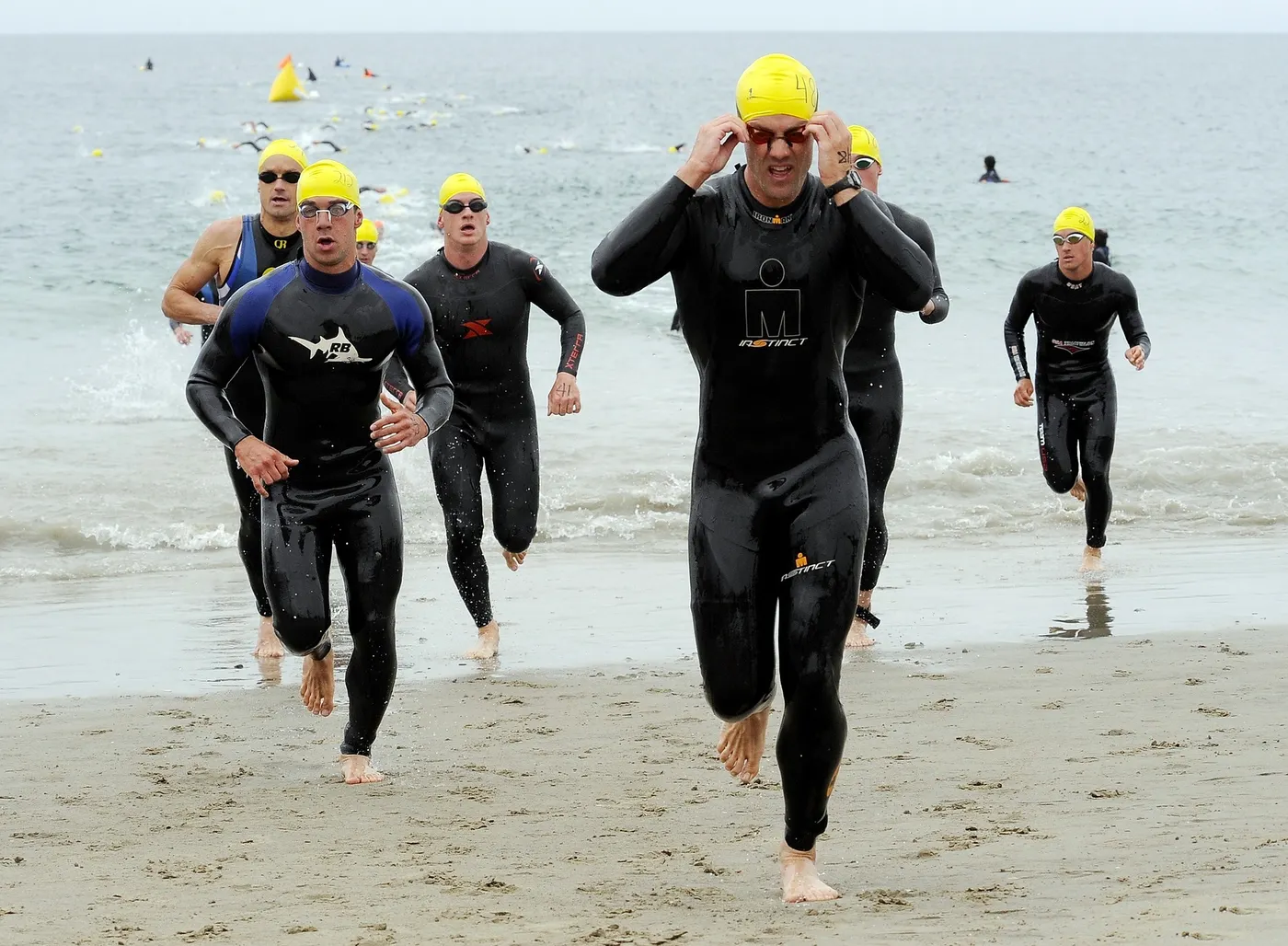
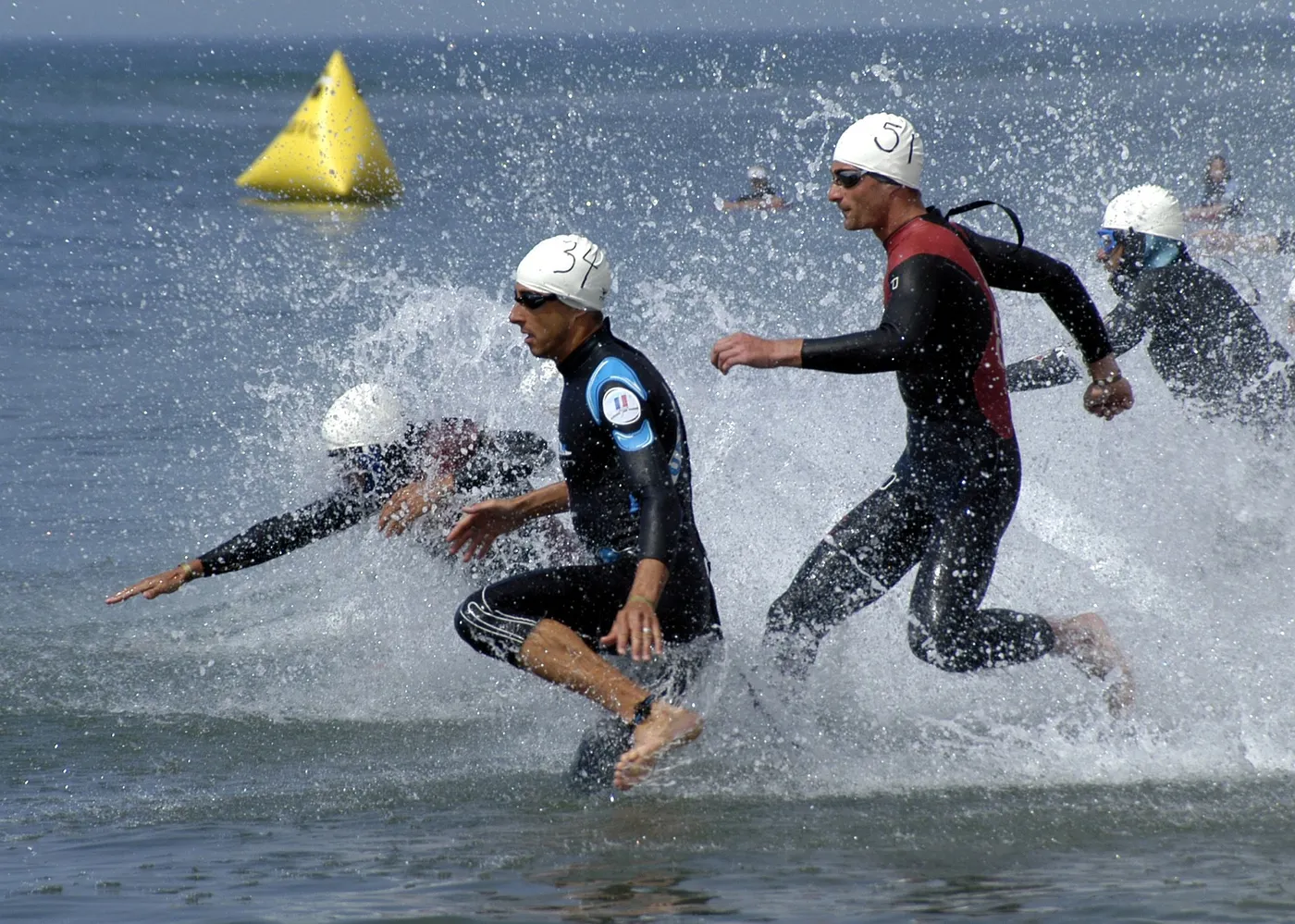
Triathlon training is not three separate sports side by side. Swimming, cycling and running share the same heart, the same legs and the same week. That is why a good programme considers each leg together with the others.
On this page you will find the basic principles that help when building your training, plus sample weekly plans for the sprint and Olympic distances. The plans are for healthy adults. If you are just starting, your first step is a medical check-up.
Balancing three sports
Roughly half of your weekly time goes to the bike, and the rest to swimming and running. The reason is simple: the bike is the longest leg of the race. Still, this is a starting point, not a rule.
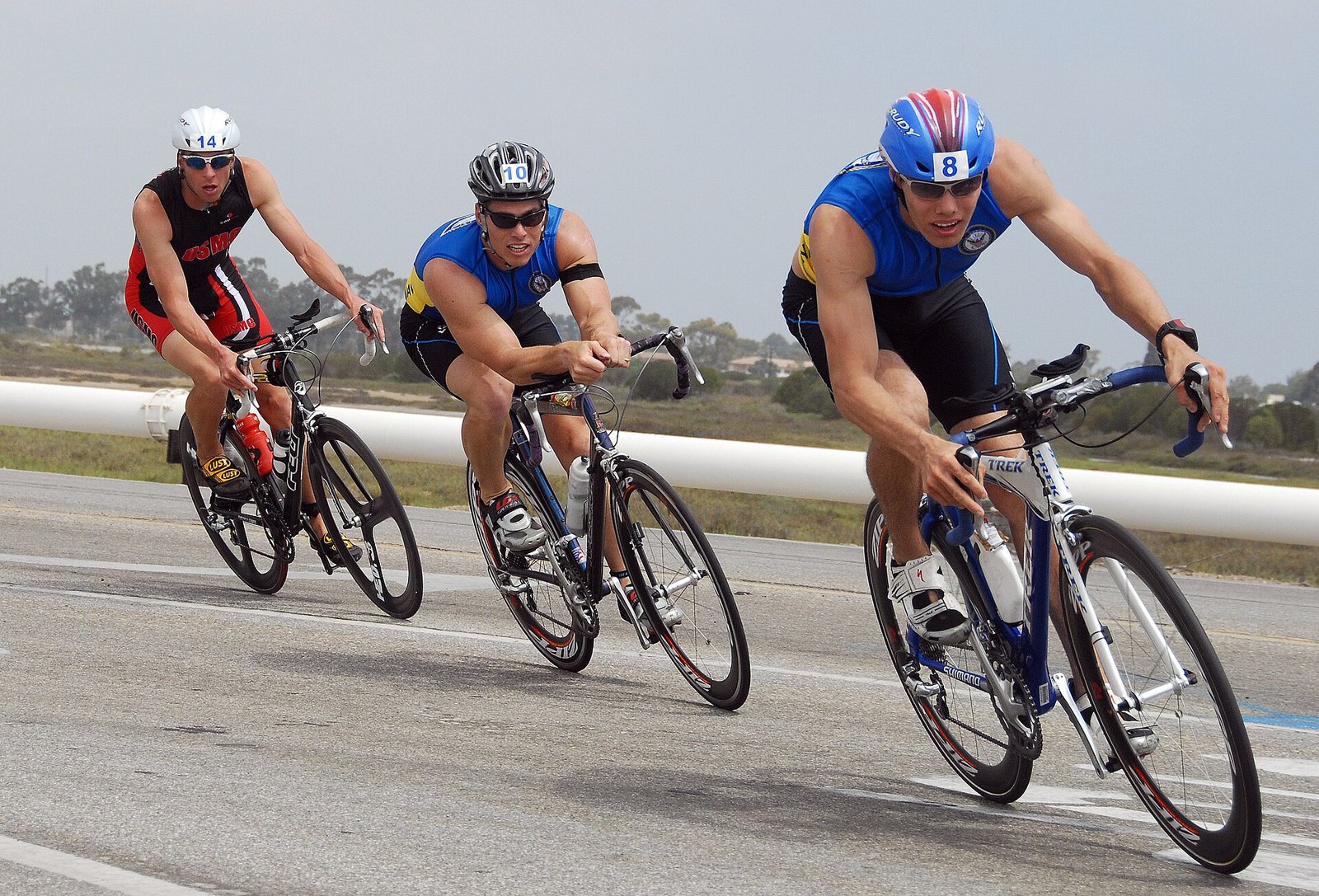
- Prioritise your weakest sport. If your swim technique is weak, three short pool sessions a week do more than two long ones.
- Build running slowly. Running is a high-impact sport and causes most injuries. Cycling and swimming build fitness without tiring the joints.
- Frequency matters more than duration. Doing each sport at least twice a week improves you faster than doing it once for a long time.
- Separate hard days. Don’t put hard bike and hard run sessions, which use the same leg muscles, on consecutive days.
Heart rate and training zones
Training without measuring intensity is like setting off without a map. The most practical tool is a five-zone heart rate table. The percentages are of your maximum heart rate and vary from person to person; finding your own values with a field test is more accurate.
| Zone | Max. heart rate (approx.) | How it feels | What for |
|---|---|---|---|
| 1 — Very easy | 50–60% | Easy conversation | Warm-up, recovery |
| 2 — Easy | 60–70% | You can speak in sentences | Base endurance |
| 3 — Moderate | 70–80% | Talking gets harder | Race pace (long distance) |
| 4 — Threshold | 80–90% | A few words | Sprint/Olympic race pace |
| 5 — Maximum | 90–100% | You can’t talk | Short intervals, speed |
Research shows that good endurance athletes do about 80% of their training at low intensity and the rest at high intensity. The most common mistake amateurs make is spending every session in zone 3, “neither easy nor hard”. Easy days should be truly easy, and hard days truly hard.
If you don’t have a heart-rate monitor, use the talk test: if you can speak in sentences, you are in the easy zone. On the bike, a power meter (watts) is more reliable than heart rate. In swimming, 100-metre times are used instead of heart rate.

Brick sessions
A brick is a session in which you start running as soon as you get off the bike. In the first kilometres after the bike your legs feel heavy and your stride short. This feeling is unique to triathlon, and bricks get the body used to the change. The loss of running economy after cycling is smaller in experienced athletes.
- Start short: a 10–15 minute easy run after 45–60 minutes on the bike is enough.
- Frequency: every two weeks in the base period, once a week as the race approaches.
- Practise transitions too: taking off the helmet, changing shoes and putting on your number are part of the race. Setting up a transition area at home and rehearsing a few times saves minutes on race day.
- Keep the first steps short: start the run with quick, short steps, and find your pace after the first kilometre.
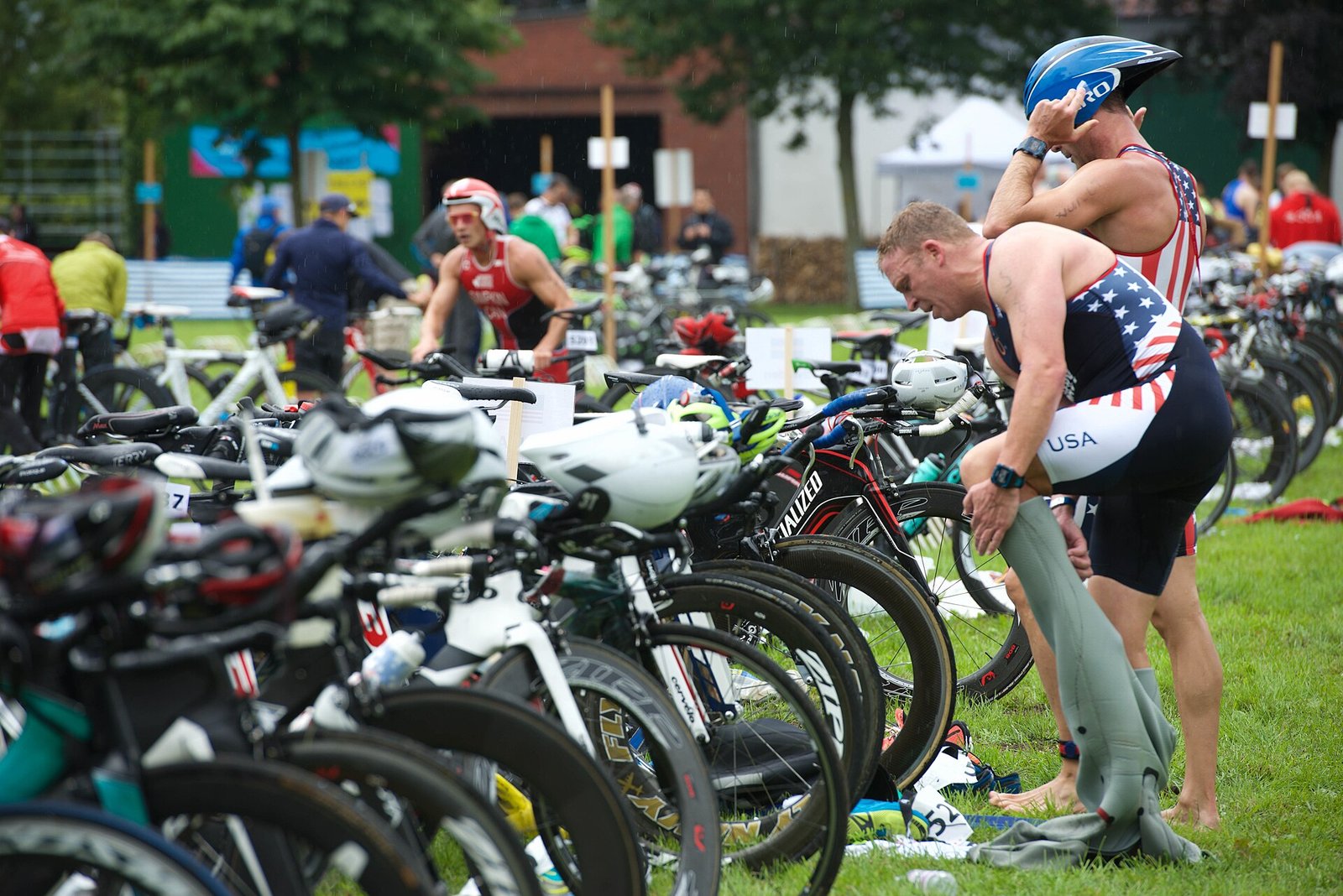
Open-water swimming
Many athletes who swim comfortably in a pool struggle at their first open-water start. There are no walls, lanes or black line on the bottom, and there are hundreds of arms and legs around you. That is why you should swim in open water at least a few times before a race.
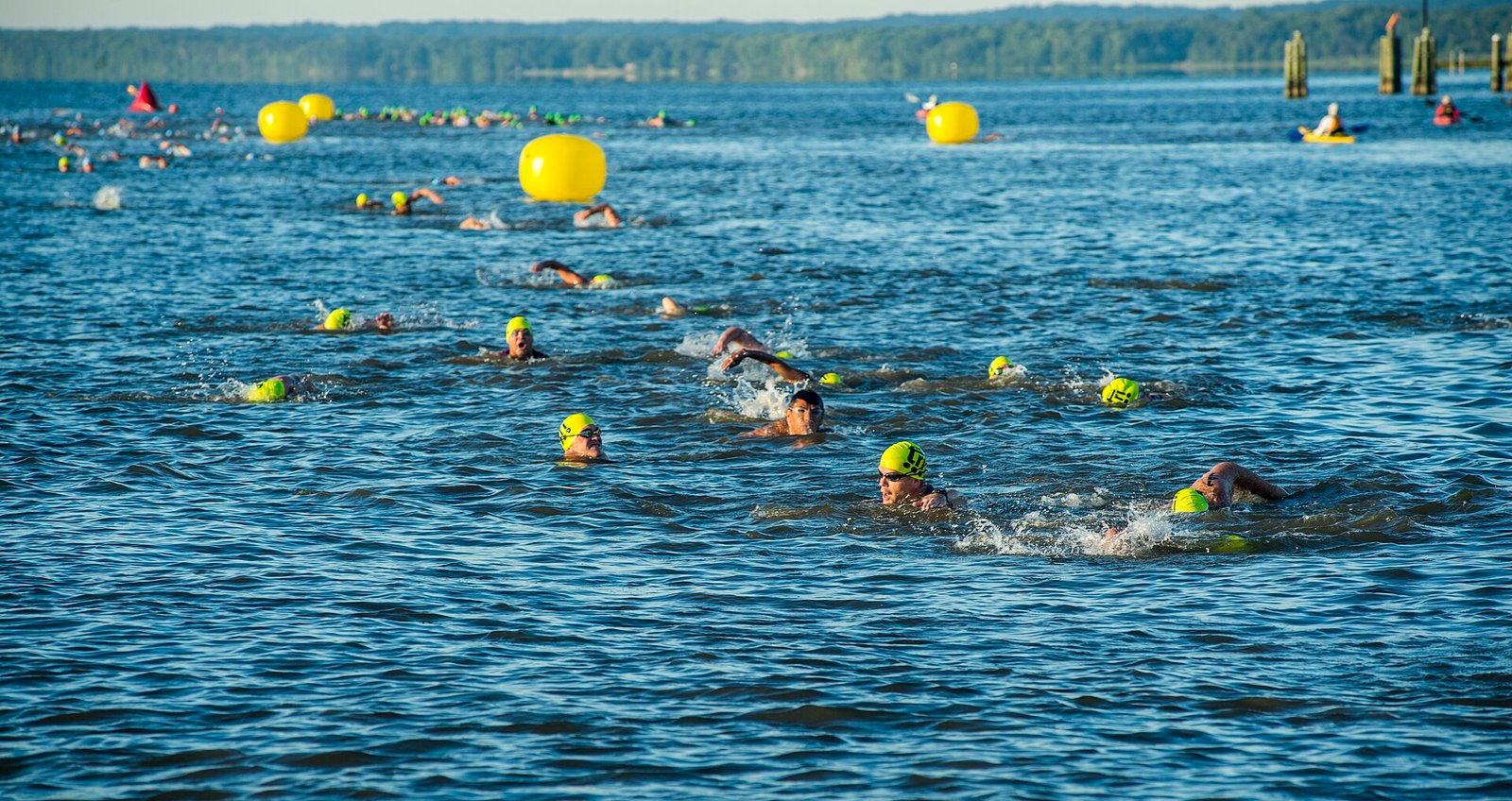
- Sighting: lift your head forward every 6–10 strokes and look for the buoy. You can practise this in the pool too.
- Bilateral breathing: being able to breathe to both sides makes life easier against waves and sun.
- Mass starts: in your first races, start from the side or the back of the group.
- Wetsuit: wear it and swim in it a few times in training; race day should not be your first try. Under World Triathlon rules, for age-group athletes up to 59 in swims of up to 1,500 metres, a wetsuit is mandatory at a water temperature of 15.9 °C or below and forbidden at 22 °C or above. The final decision is announced on race day, one hour before the start.
- Safety: never swim in open water alone. Choose a lifeguarded area or a club session, and use a bright cap and an inflatable tow float.
Strength training
Strength training doesn’t make a triathlete sluggish; done right, it improves running and cycling economy. You use less energy at the same speed, and the risk of injury drops.
- 1–2 sessions a week of 30–40 minutes is enough.
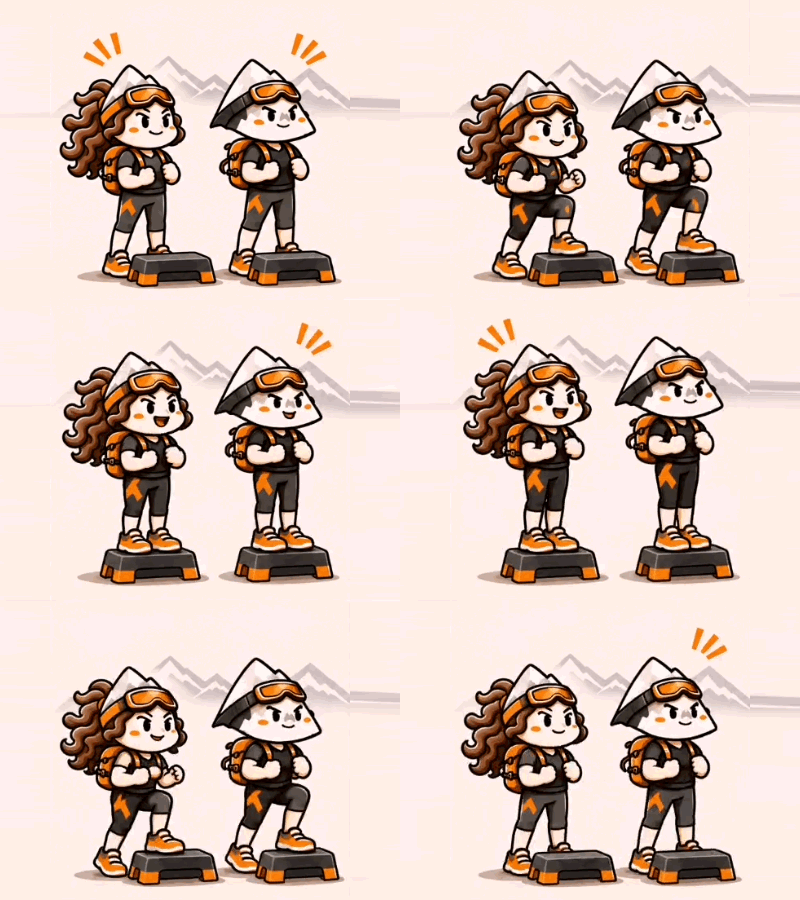
- Basic exercises: squat, deadlift, lunge, step-up, calf raise, plank and back exercises.
- Few reps, challenging weight: once your technique is solid, do 3–4 sets of 4–8 reps with a weight that makes the last reps hard. Many reps with light weights only repeat what your endurance training already gives you.
- Timing: don’t schedule a strength session the day before a hard run. In the race period keep lifting the same weight but do fewer sets.





Periodisation and tapering
A season is not uniform; the load rises and falls from period to period. This plan is called periodisation.
- BaseLong, easy training, technique, strength
- BuildThreshold and interval sessions, more frequent bricks
- Race periodRace pace, transition rehearsal, nutrition practice
- TaperLast 1–2 weeks: volume drops, intensity stays
- Race
- Base period: long, easy sessions, technique and strength. The aim is to build your endurance foundation.
- Build period: threshold and interval sessions are added, and bricks become more frequent.
- Race period: sessions at race pace, transition rehearsals and testing your race-day nutrition.
- Taper: the load is reduced in the 1–2 weeks before the race.
Within longer periods, a common pattern is to build the load for three weeks and keep the fourth week easy. The easy week isn’t laziness; it is when the body turns training into fitness.
On tapering, the research summary is clear: for about two weeks, cut training volume by 40–60% but keep the intensity and how often you train. In other words, train shorter but still at pace. One week is enough for a sprint; the longer the race, the longer the taper.
Recovery and overtraining
Fitness is gained not during training but in the rest that follows. For triathletes training three sports at once, it is easy to neglect recovery.
- Sleep: 7–9 hours a night. It is the most effective recovery tool.
- Nutrition: eat carbohydrate and protein after long and hard sessions. Under-eating for long periods is a common cause of excessive fatigue.
- Rest day: keep at least one day a week completely free or very light.
If load and rest stay out of balance for a long time, performance can drop for weeks or even months. Experts describe this as a condition that is hard to diagnose, and say the best remedy is prevention. If these signs last more than a few days, reduce the load and see a doctor if needed:
- Falling performance despite rest
- An unusually high morning heart rate
- Poor sleep, lack of motivation, getting ill often
Sample weekly plans
The plans below are frameworks to start from. You can move the days around to fit your life; what matters is the order of hard and easy days.
The first 12 weeks for beginners
The goal is to finish a sprint triathlon comfortably at the end of 12 weeks. To start, it is enough to be able to walk and run for 25 minutes without stopping and to swim 100 metres in a pool.
| Weeks | Weekly time | Focus |
|---|---|---|
| 1–4 | 3–4 hours | Each sport twice a week, all easy. Swim technique, run–walk intervals. Week 4 is easy. |
| 5–8 | 4–5 hours | Sessions get longer, one tempo session a week. A short brick every two weeks, first open-water try. Week 8 is easy. |
| 9–11 | 5–6 hours | Race-pace efforts, a weekly brick, transition rehearsal, swimming in a wetsuit. |
| 12 | 2–3 hours | Taper: short, lively sessions, then race day. |
A sample week for sprint and Olympic
This week is for athletes who have trained regularly at an easy pace for a few months and are now moving on to faster sessions. Every fourth week is easy: cut each session by a third that week, for example making a 60-minute session 40 minutes.
| Day | Sprint (about 6 hours) | Olympic (about 8.5 hours) |
|---|---|---|
| Monday | Rest | Rest |
| Tuesday | Swim 45 min: warm-up + 8×100 m | Swim 60 min: warm-up + 10×100 m; strength 30 min |
| Wednesday | Bike 60 min: 3×8 min at threshold | Bike 75 min: 3×10 min at threshold |
| Thursday | Run 40 min: 5×3 min tempo; strength 30 min | Run 50 min: 5×5 min tempo |
| Friday | Swim 40 min, easy and technique | Swim 50 min, easy or in open water |
| Saturday | Brick: bike 75 min + run 15 min | Brick: bike 2 hours + run 20 min |
| Sunday | Run 60 min, easy | Run 75 min, easy; strength 30 min |
In the table, “easy” means zones 1–2, “tempo” zones 3–4 and “threshold” zone 4.
Sources
- Training intensity distribution – Seiler: What is best practice for training intensity and duration distribution in endurance athletes? (2010)
- The bike-to-run transition – Millet and Vleck: Physiological and biomechanical adaptations to the cycle to run transition in Olympic triathlon (2000)
- Wetsuit rules (rule 4.2) – World Triathlon Competition Rules 2026
- Strength training – Rønnestad and Mujika: Optimizing strength training for running and cycling endurance performance (2014)
- Tapering – Bosquet et al.: Effects of tapering on performance: a meta-analysis (2007)
- Overtraining – Meeusen et al.: Prevention, diagnosis and treatment of the overtraining syndrome, joint consensus statement of the ECSS and ACSM (2013)
- Triathlon and clubs in Türkiye – Turkish Triathlon Federation
- Videos – Global Triathlon Network YouTube channel
- Photos – Wikimedia Commons (US Navy and US Marine Corps)
- Exercise animations – Strida Spor