
In rock climbing, a grade tells you how hard a route is: 6a, 7b+, 8c and so on. Competitions are different. World Climbing (formerly the IFSC) does not grade competition routes. Because all athletes climb the same route, the real question is not “how hard is the route?” but “who climbed it better?”. That is why competitions use a measure specific to each discipline instead of a grade.
The highest hold reached. Finishing the route earns a “Top”.
Measure: hold numberEach boulder is worth up to 25 points. Each failed attempt costs points.
Measure: points (0–25)Everyone climbs the same standard route. The first to hit the pad wins.
Measure: secondsWhy are there no grades in competition?
Competition routes are set for that competition only and taken down when it ends. A route’s difficulty is set for the level of the athletes in that round: the aim is a route hard enough to separate the athletes but climbable enough to make the competition meaningful. That is why the World Climbing rulebooks do not grade routes. Athletes are ranked by their performance on the same route.
Lead: how high?
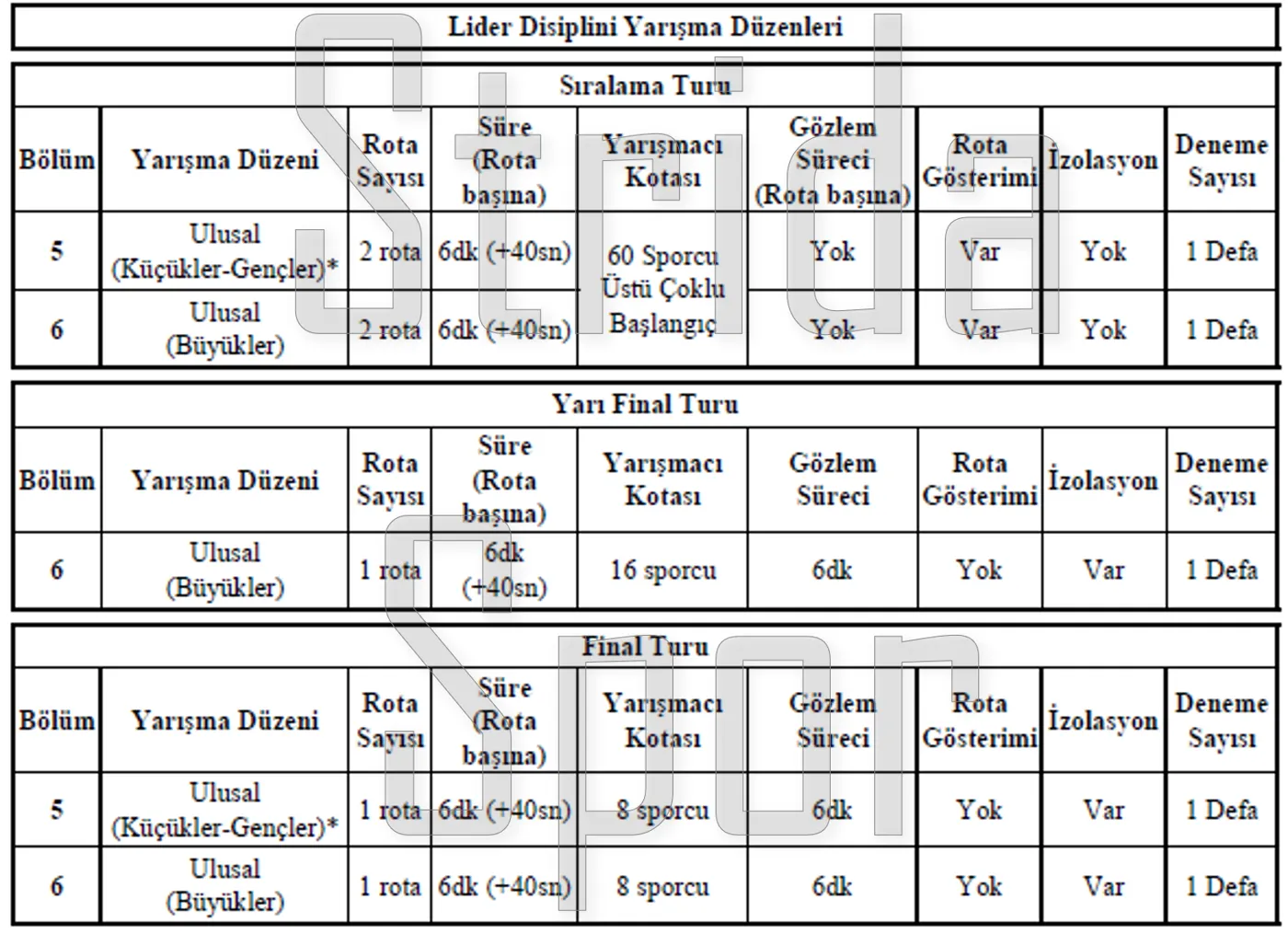
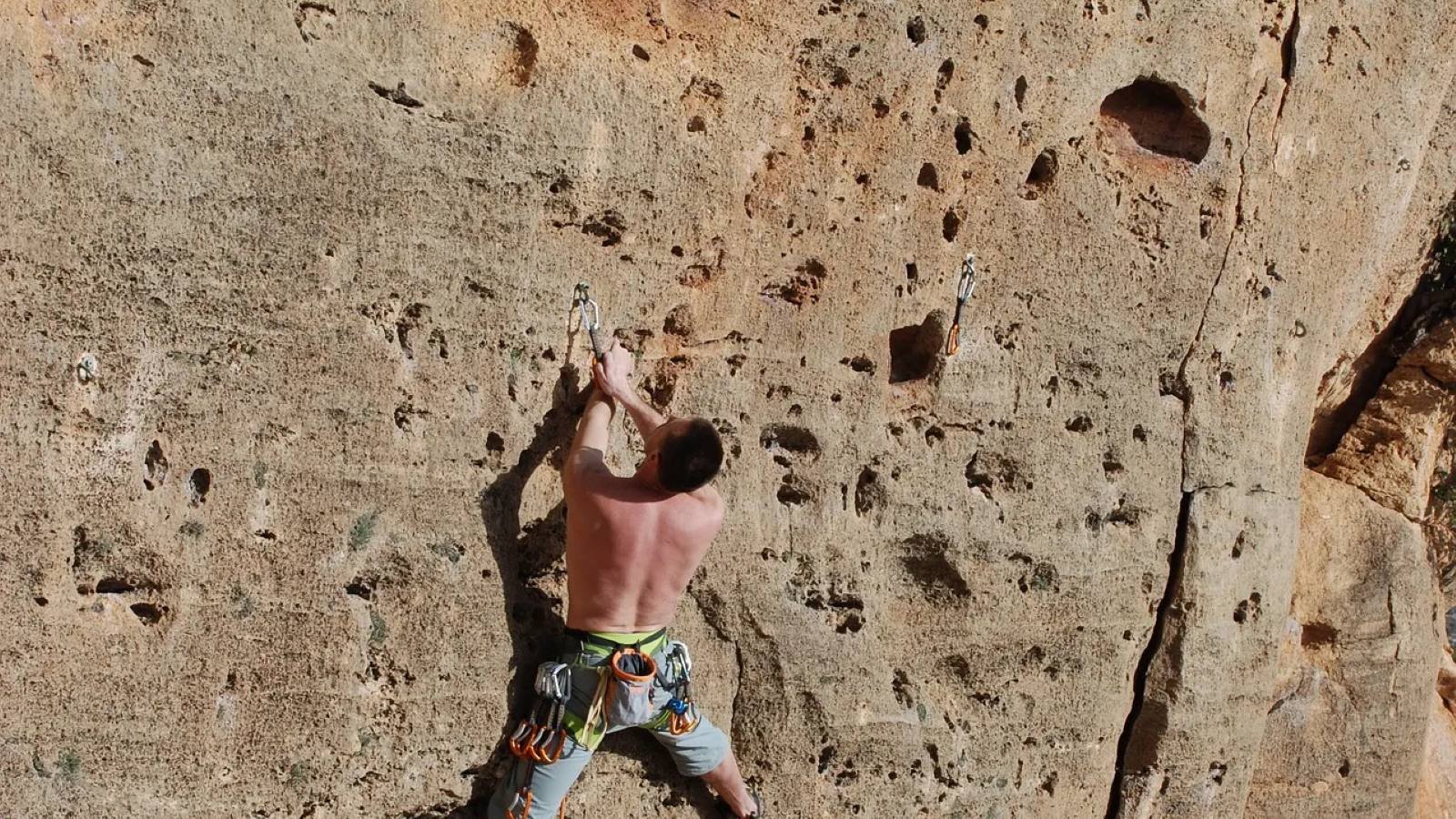
In Lead the athlete tries to climb as high as possible on the route, clipping the rope into the quickdraws in order. An athlete who clips the last anchor of the route scores a Top.
An athlete who falls scores the last scoring hold they controlled with their hands. If the athlete used that hold to make a controlled move towards the next hold, a “+” is added to the result. A result of 38+ is better than 38 but worse than 39. Failing to clip the quickdraws in order, or removing a quickdraw other than to correct a wrong clip, ends the attempt.
- 1. Athlete ATop
- 2. Athlete B38+
- 3. Athlete C38
- 4. Athlete D35+
- 5. Athlete E28
“+”: the athlete controlled the hold and moved towards the next one, but did not reach it.
In case of a tie, the ranking in the previous round is used first (count-back). If there is still a tie for the podium in the final, the athlete with the shorter climbing time is placed ahead.
Boulder: how many Tops and Zones?
In Boulder athletes make as many attempts as they like, within a time limit, on short, powerful problems without a rope. Each boulder has a Zone hold and a finishing hold (Top). Under the points system used since 2025:
- Top: 25 points, minus 0.1 points for each failed attempt before the Top.
- Zone: 10 points, minus 0.1 points for each attempt until the Zone is reached.
- A boulder’s score is the higher of the two. The score cannot go below zero.
- Top, 1st attempt25.0
- Top, 3rd attempt24.8
- Top, 7th attempt24.4
- Zone, 1st attempt10.0
- Zone, 4th attempt9.7
- Neither Zone nor Top0
The highest possible score in a four-boulder final is 4 × 25 = 100.
The ranking in a round is based on the total of the athlete’s scores across all boulders. This system rewards the athlete who tops boulders over one who collects many Zones. Before 2025, the ranking was by number of Tops, then number of Zones, then the attempts used.
Speed: how fast?
In Speed climbing there are no grades or points, only time. The same standard route is used all over the world: on a 15-metre wall overhanging at 5 degrees, the position and order of the holds are the same at every competition. This makes times from competitions in different countries comparable and allows world records to be kept.
- Time: the clock stops when the athlete hits the finish pad with a hand. Times are measured to a thousandth of a second and rounded to hundredths in official results.
- False start: an athlete who reacts to the start signal in less than 0.100 seconds has made a false start.
- Finals: athletes race in pairs and the winner goes through to the next round (an elimination bracket of 16, 8 or 4).
Combined format: Boulder and Lead
At the Olympics Boulder and Lead can be combined into a single event. At Paris 2024 athletes were scored out of 100 in each discipline and the two scores were added (maximum 200). In the Lead part the last 40 holds of the route were scored, and holds were worth more the closer they were to the top. At Los Angeles 2028, Boulder, Lead and Speed will award medals separately.
World ranking
Competition results also determine the athletes’ world ranking. At the end of each competition athletes receive ranking points according to their placing. The winner of a World Climbing Series (formerly World Cup) event receives 1,000 points; more important competitions such as the World Championships are worth more. Points are added up separately for each discipline (Lead, Boulder, Speed). Athletes tied for a place receive the average of the points for those places.
Competitions in Türkiye
The same principles apply in competitions of the Turkish Mountaineering Federation: the hold reached in Lead, Tops and Zones in Boulder, time in Speed. For rules specific to national competitions (such as the children’s category and multiple scoring formats) see our Competition Rules page, and for step-by-step worked examples see our Scoring page.