Sport climbing gear and accessories list
Sport climbing gear is broadly similar to the equipment used in other types of climbing, but advances in technology and professional needs have made some of it different in certain respects. In this section you can look at the gear specific to sport climbing.
Harness
In the Lead and Speed disciplines wearing a harness is compulsory. Harnesses must be sit harnesses (EN 12277 Type C). The harness is the most important basic safety item: it is what connects you to the rope.
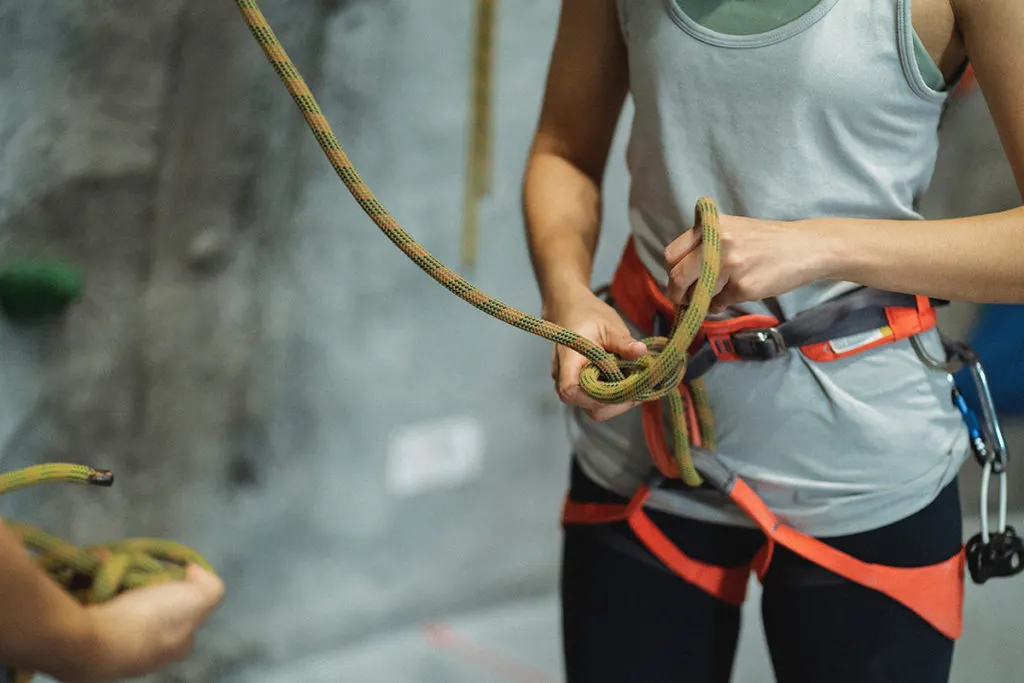
There are some basic points to consider when choosing a harness:
- The climber’s sex: harnesses made specifically for women have a narrower waist belt that widens downwards, and wider leg loops.
- Purpose: all climbing harnesses may look the same, but they are far from it. Manufacturers make different harnesses for different types of climbing and for mountaineering. Before choosing, it is worth reading the manufacturer’s description and checking that the harness is made for sport climbing.

- Weight/strength: a climbing harness should be as light as possible and just as strong. That is why it is useful to check the harness standards in the competition rulebook of your federation (in Türkiye, the TDF).
Finally, it is worth mentioning how harnesses made for sport climbing differ from others.
- Because they are lighter, they are relatively less comfortable.
- Compared with harnesses for other types of climbing, their strength ratings may be lower. So it is important to confirm that a harness is suitable for competition use.
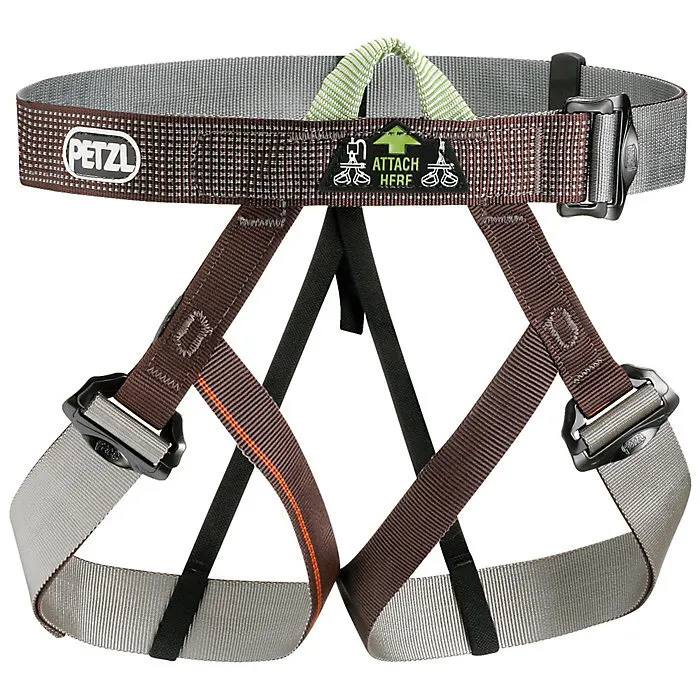
- The leg loops may have no adjustment buckles.
Climbing shoes
Climbing shoes (in Türkiye also called “kata” or “friction”) are shoes that wrap the foot completely and are used in rock and sport climbing.
By design they have a direct effect on climbing performance. They come as easy-to-wear slip-ons, Velcro or lace-up models.

With advancing equipment technology, climbing shoes have also improved greatly. Today many companies make models for different disciplines and foot shapes using different technologies.
There are some basic points to consider when choosing climbing shoes:
- Purpose: many manufacturers now make shoes that emphasise a different feature for each type and discipline of climbing. So the first thing to decide is which sport climbing discipline the shoe is for.
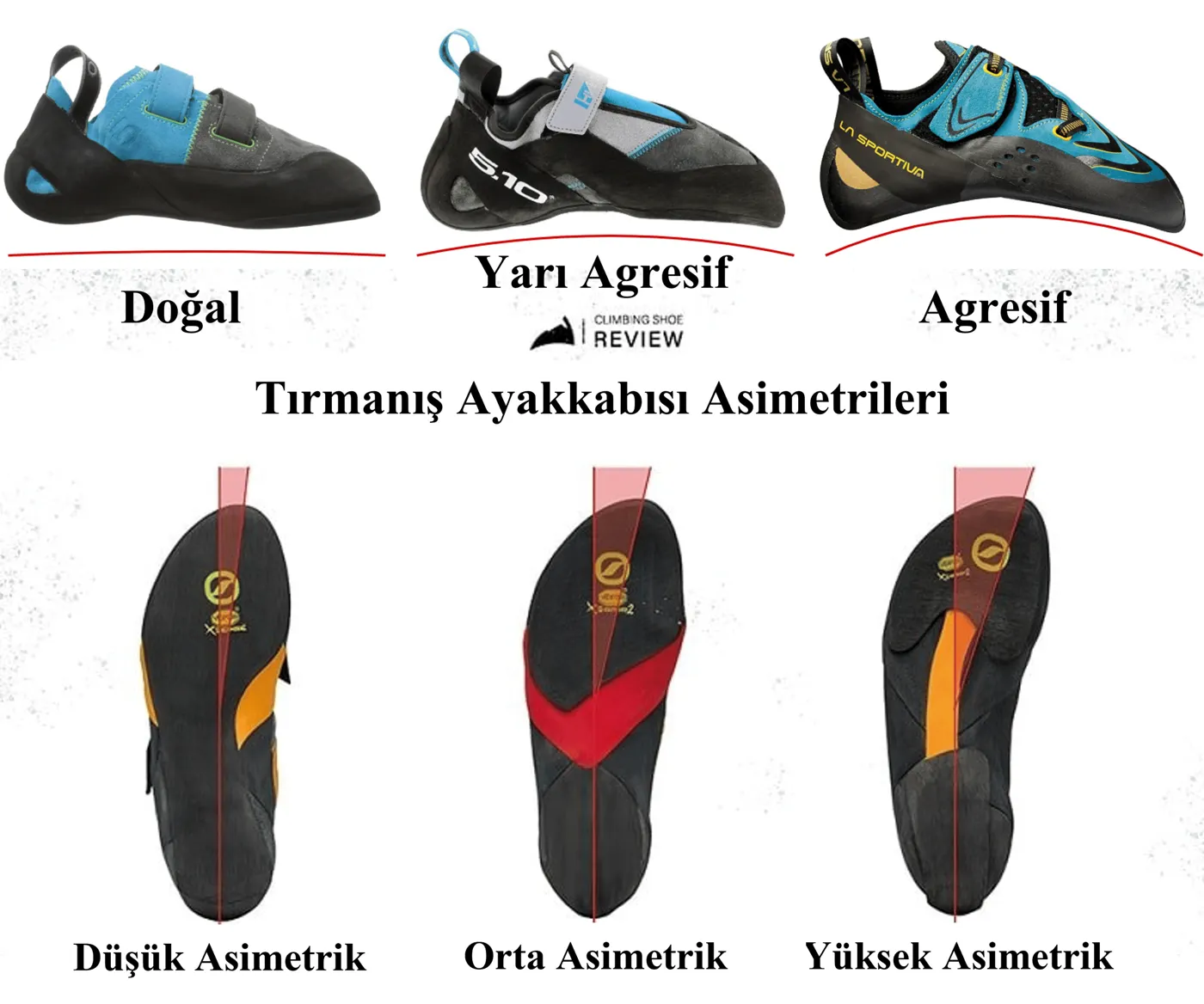
For example, for Lead a soft heel matters; for bouldering a stiff toe and a soft, adaptive midsection; and for Speed a completely soft, light heel with stiff toe protection reaching up over the toes.
- Comfort/performance: for more comfortable, longer climbs you may prefer shoes with a neutral sole, while for short climbs such as competitions you may choose an aggressive profile that supports high performance.
As the asymmetry and aggressiveness of a climbing shoe’s profile increase, performance goes up and comfort goes down, relatively speaking.
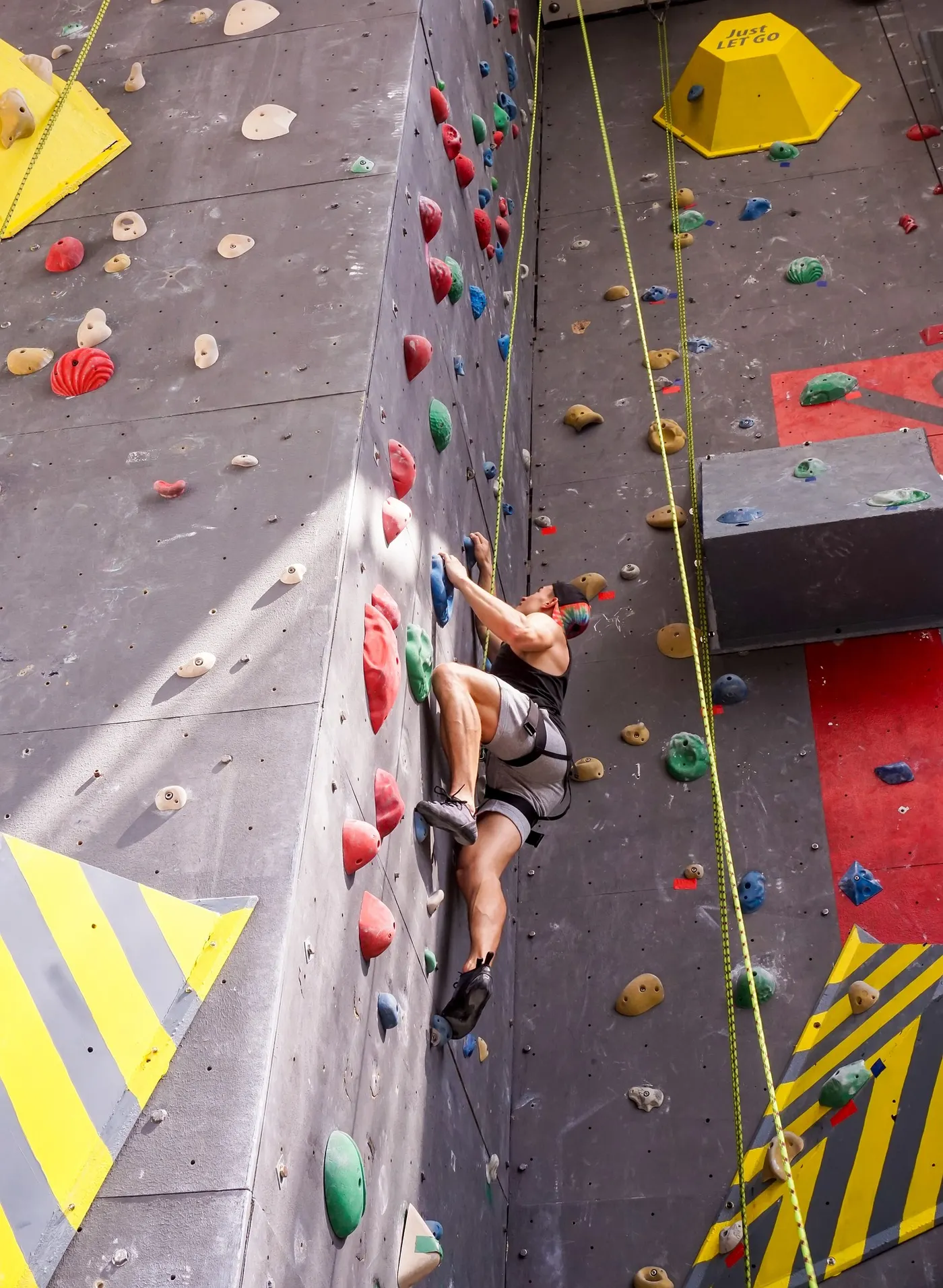
That said, neutral shoes are the better choice for beginners and for trad or multi-pitch climbers, while aggressive shoes suit professional climbers on overhanging terrain.
- Sex: every foot is different, and women’s and men’s feet differ a lot. Women’s feet are often narrower and smaller, while men’s feet can be wider and larger.
So don’t hesitate to try on climbing shoes, and look for the pair that fits your foot best.
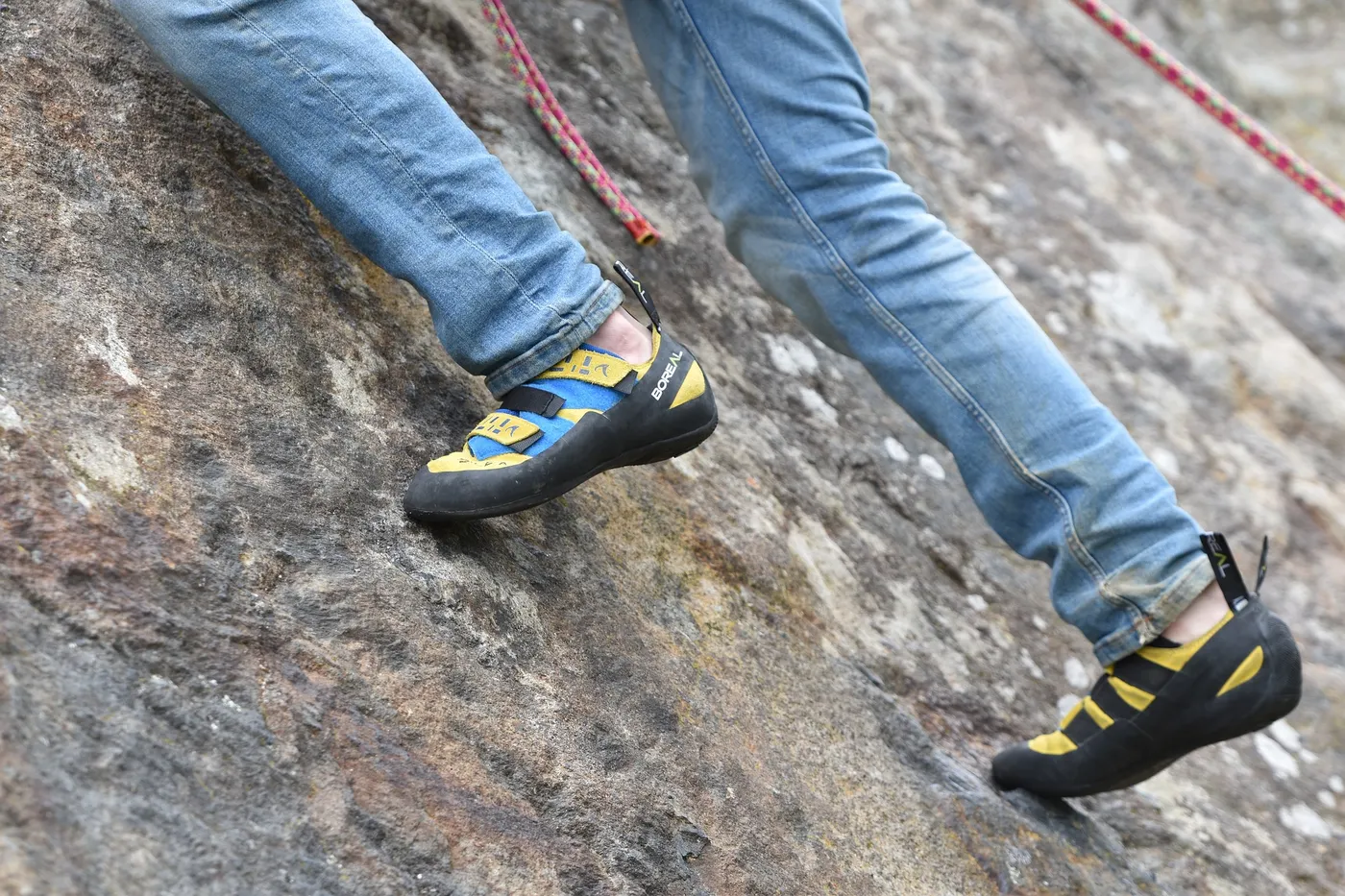
In addition, everything from the sole to the closure system, the stiffness and the size of the rand will affect your comfort and performance.
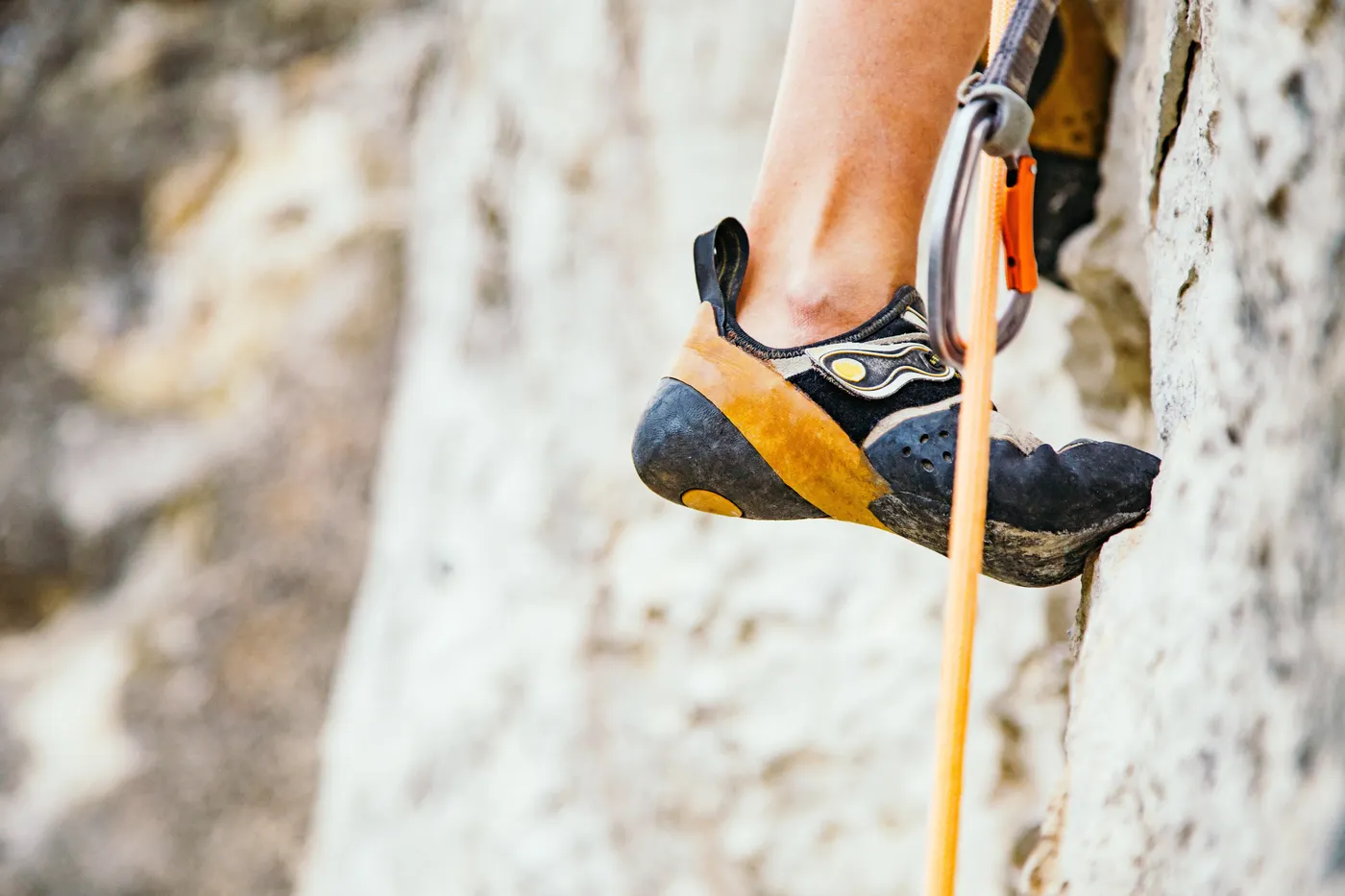
Athletes with professional goals in particular would do well to research which shoe suits them best before buying.
Climbing rope
Sport climbing ropes differ in some ways from ropes used in rock climbing. Some of the reasons are that they are mostly used indoors, that training focuses on hard technical work and so involves more falls, and that the special qualities needed for rock climbing are not required.
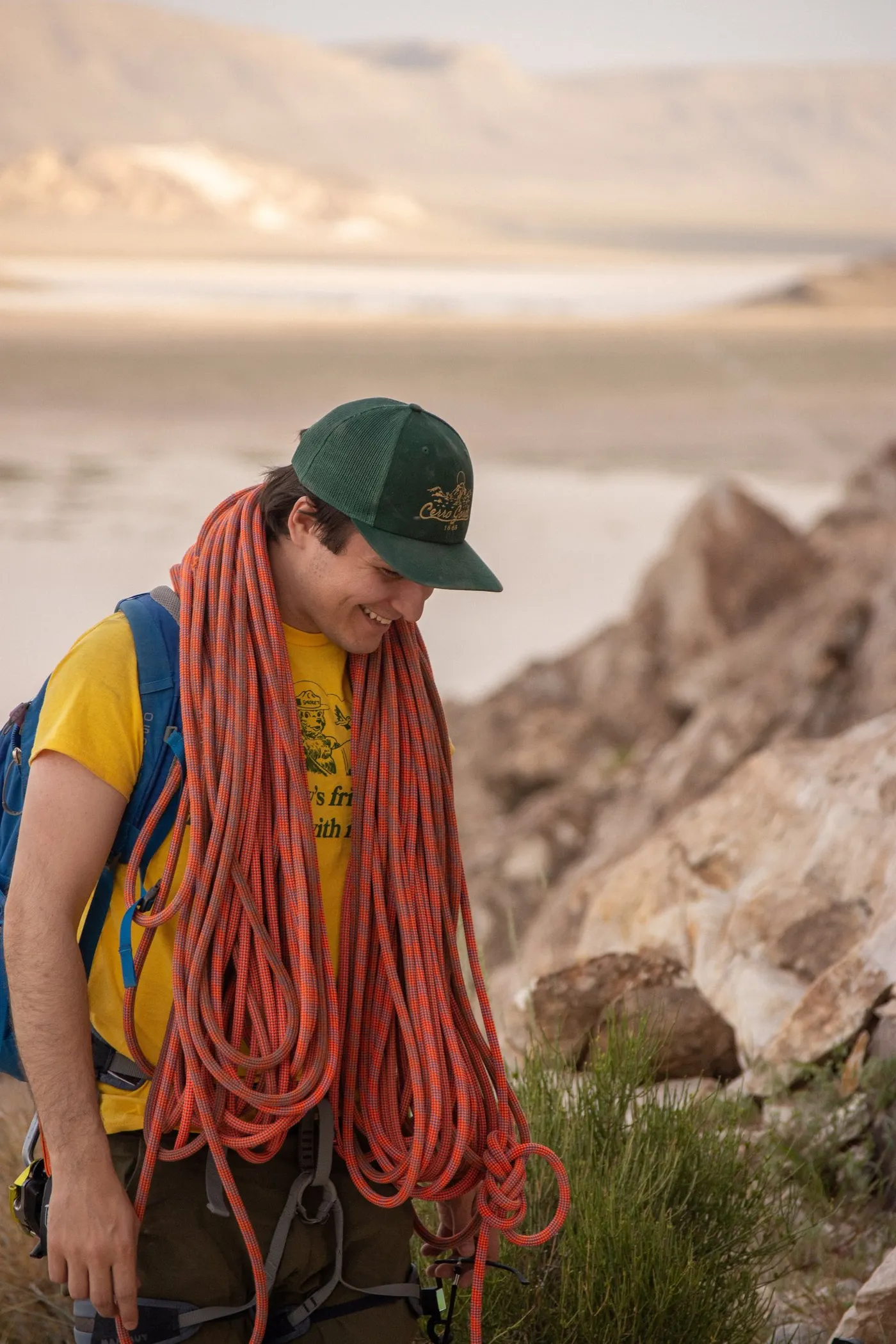
So it helps to consider the following when choosing a climbing rope.
- Type: sport climbing ropes should be dynamic single ropes. The usual recommended diameter is 9.5–10.5 mm. For sport climbing ropes, durability and performance in the belay device matter more than weight.
- Durability: the sheath of a sport climbing rope is on average about 40% thicker than that of other climbing ropes. A thicker sheath makes the rope more resistant to hard technical work and falls and extends its life.
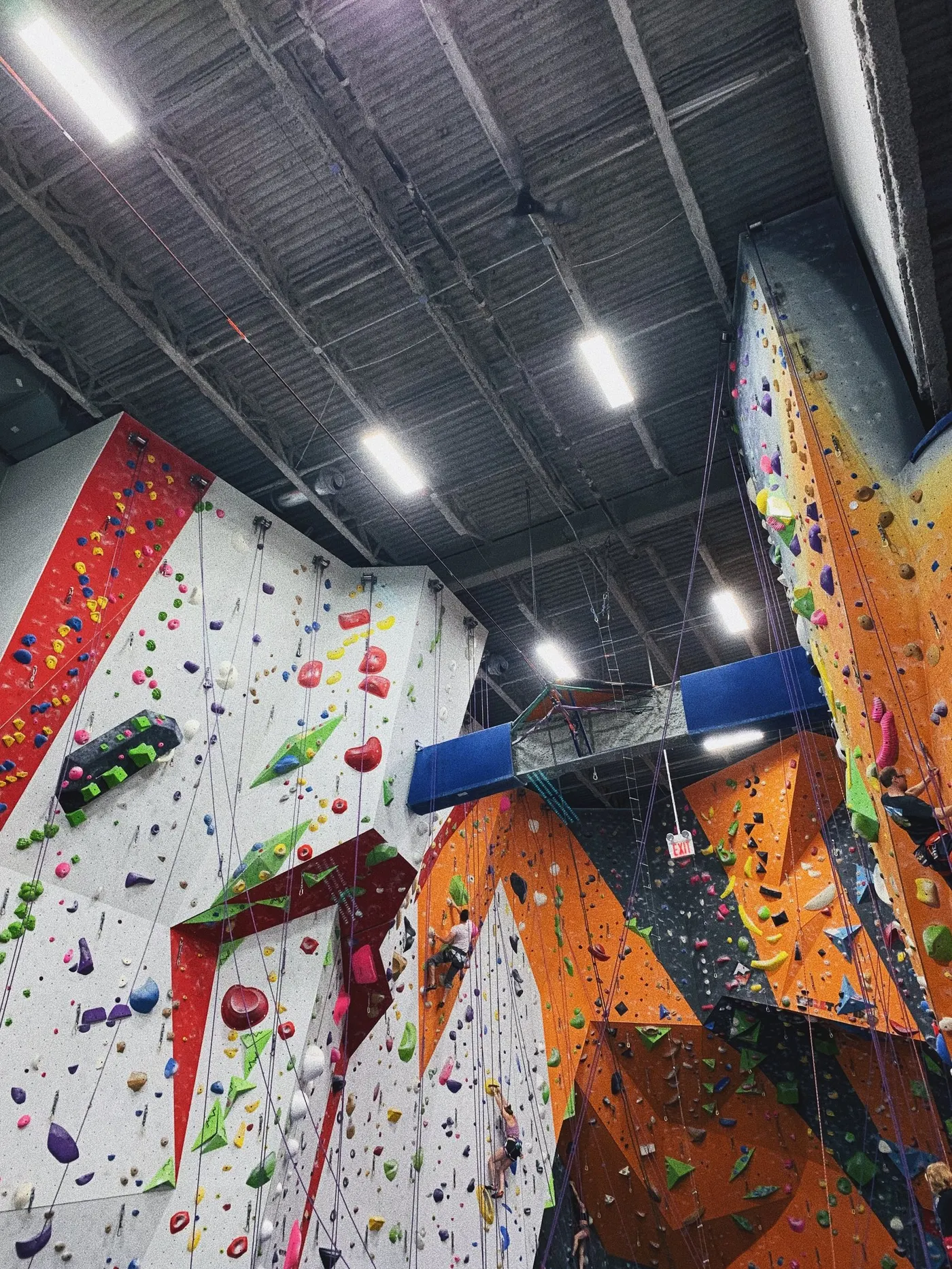
- Length: climbing walls are built in different sizes, but for a standard lead wall a rope of 40–50 metres is enough.
- Dry rope: a dry-treated rope is not needed for the gym or dry rock. It is preferred for snow, ice or wet conditions.
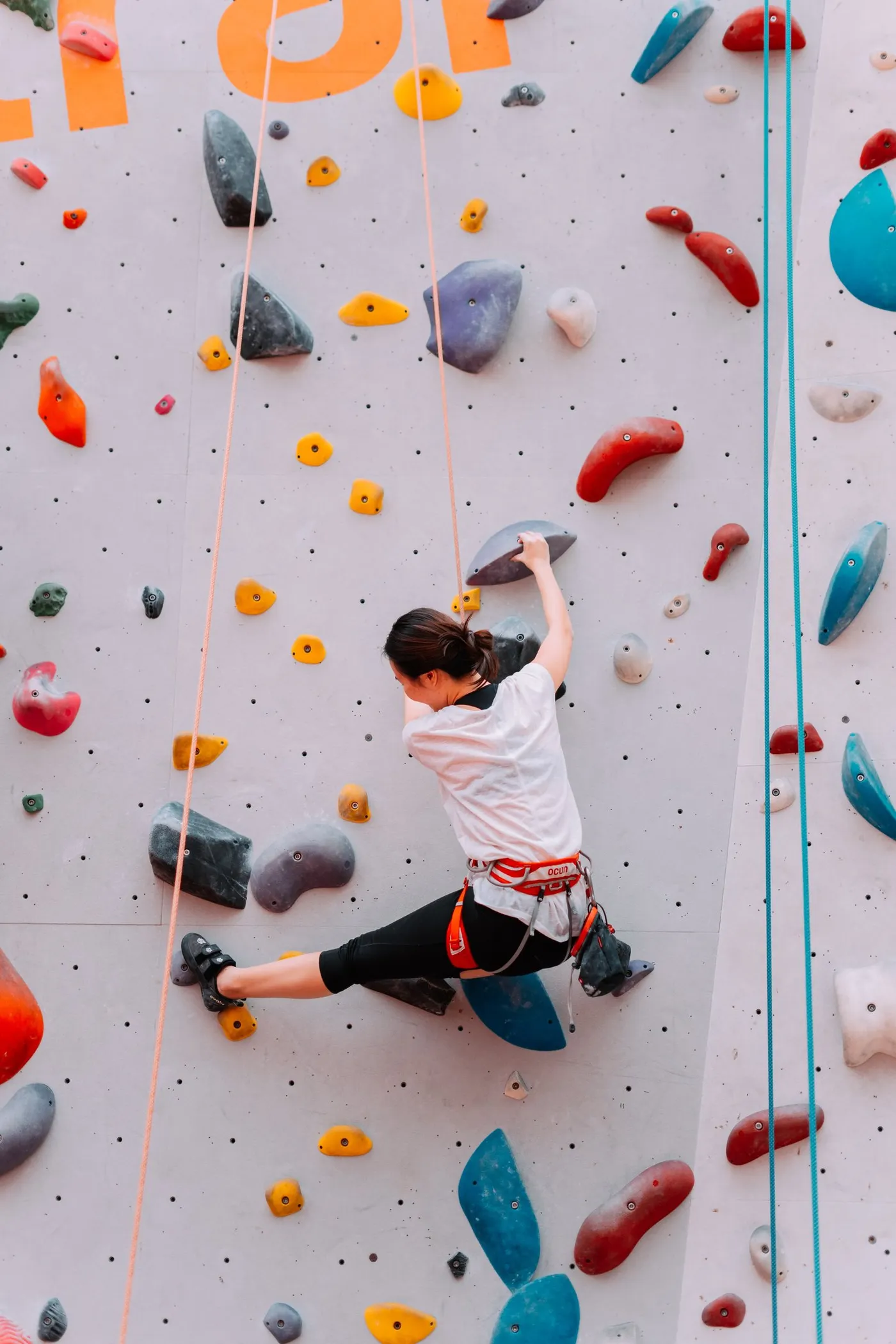
When choosing a rope, compare the values on its label: diameter, weight (g/m), number of UIAA falls, impact force and elongation.
Belay devices
Belaying a climber who is climbing or lowering is one of the most important subjects in sport climbing. Belaying has even become a separate skill and a field of expertise of its own.
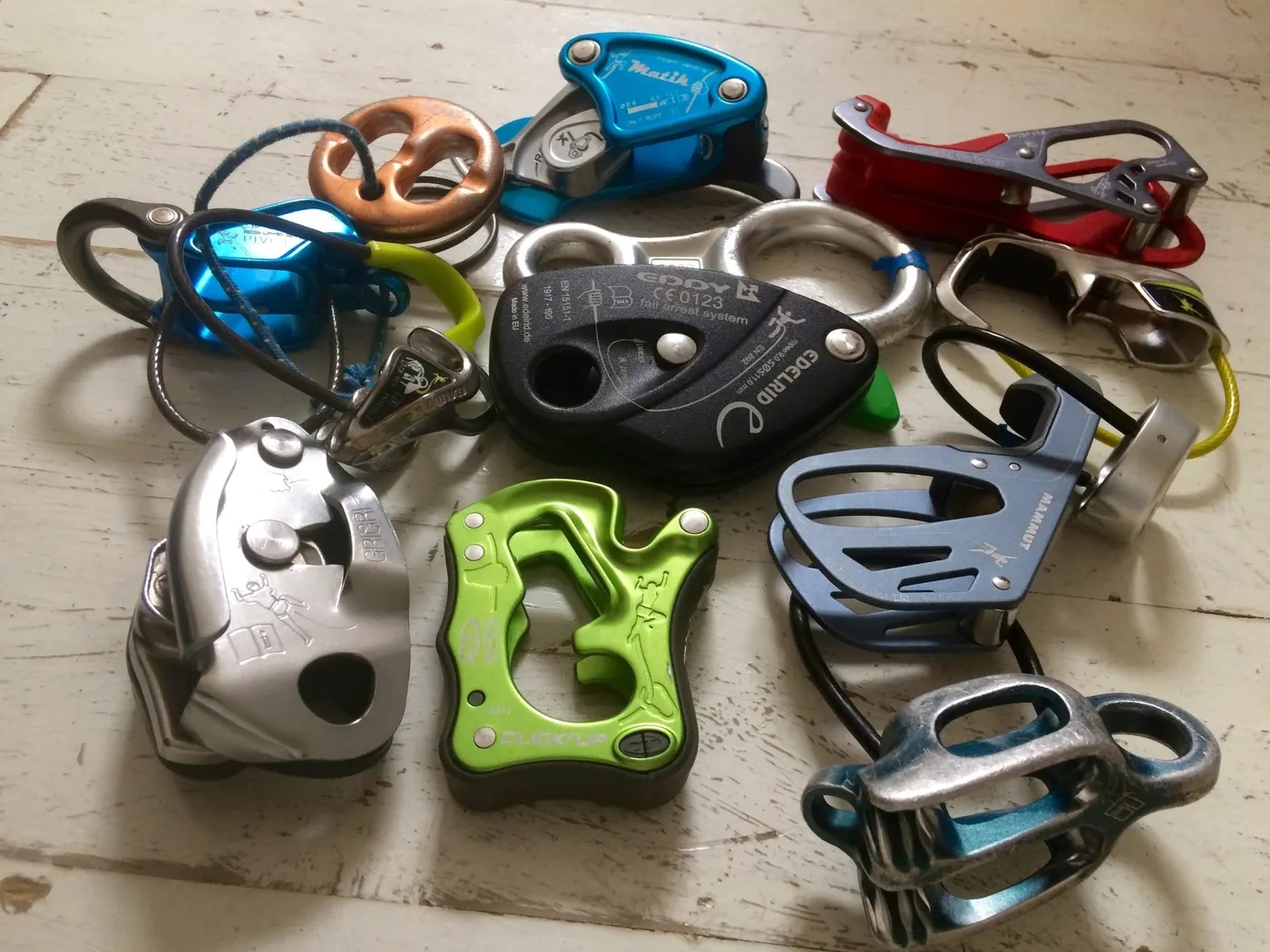
Today these devices are commonly made in three basic types: tubular, passive assisted (assisted tubular) and active assisted (cam assisted).
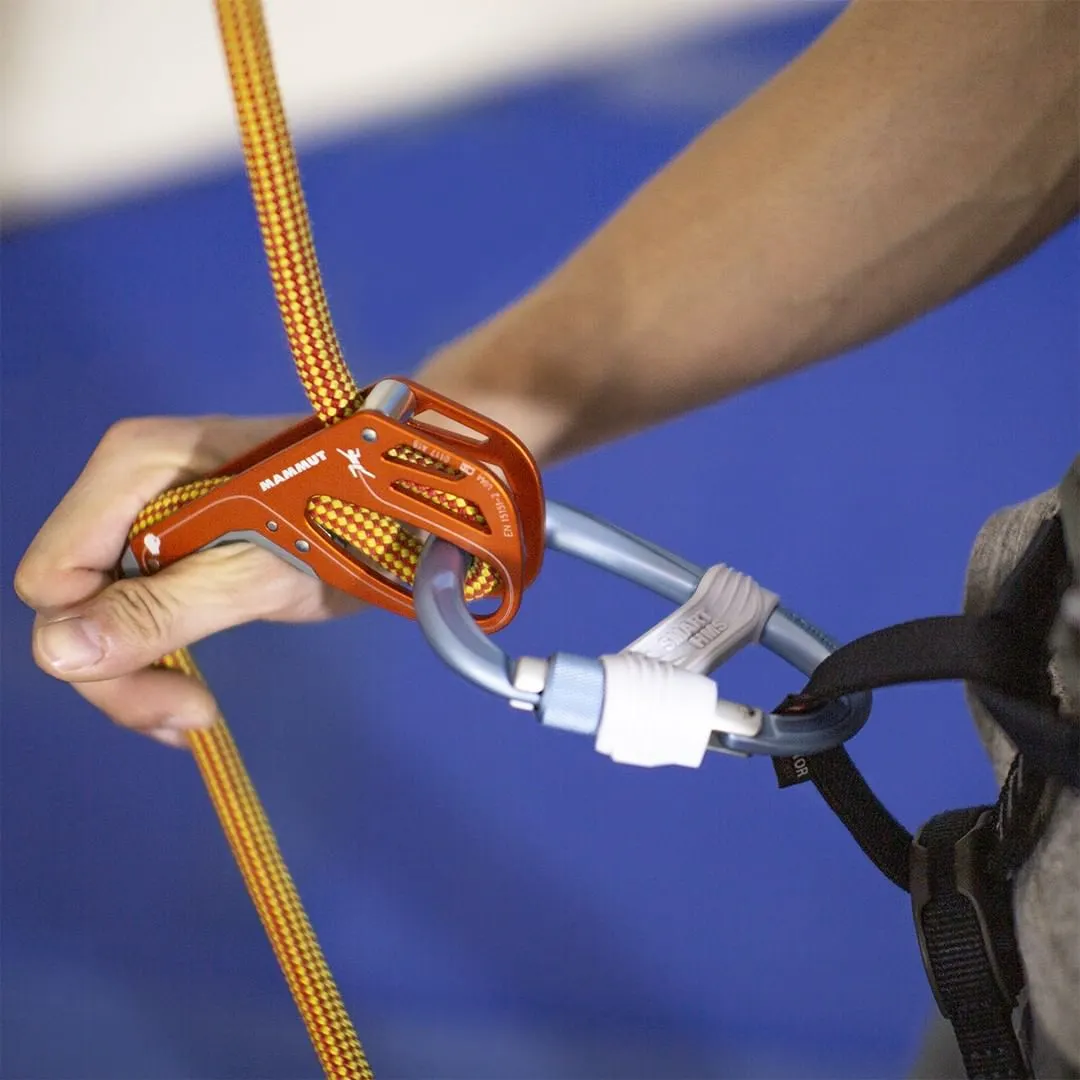
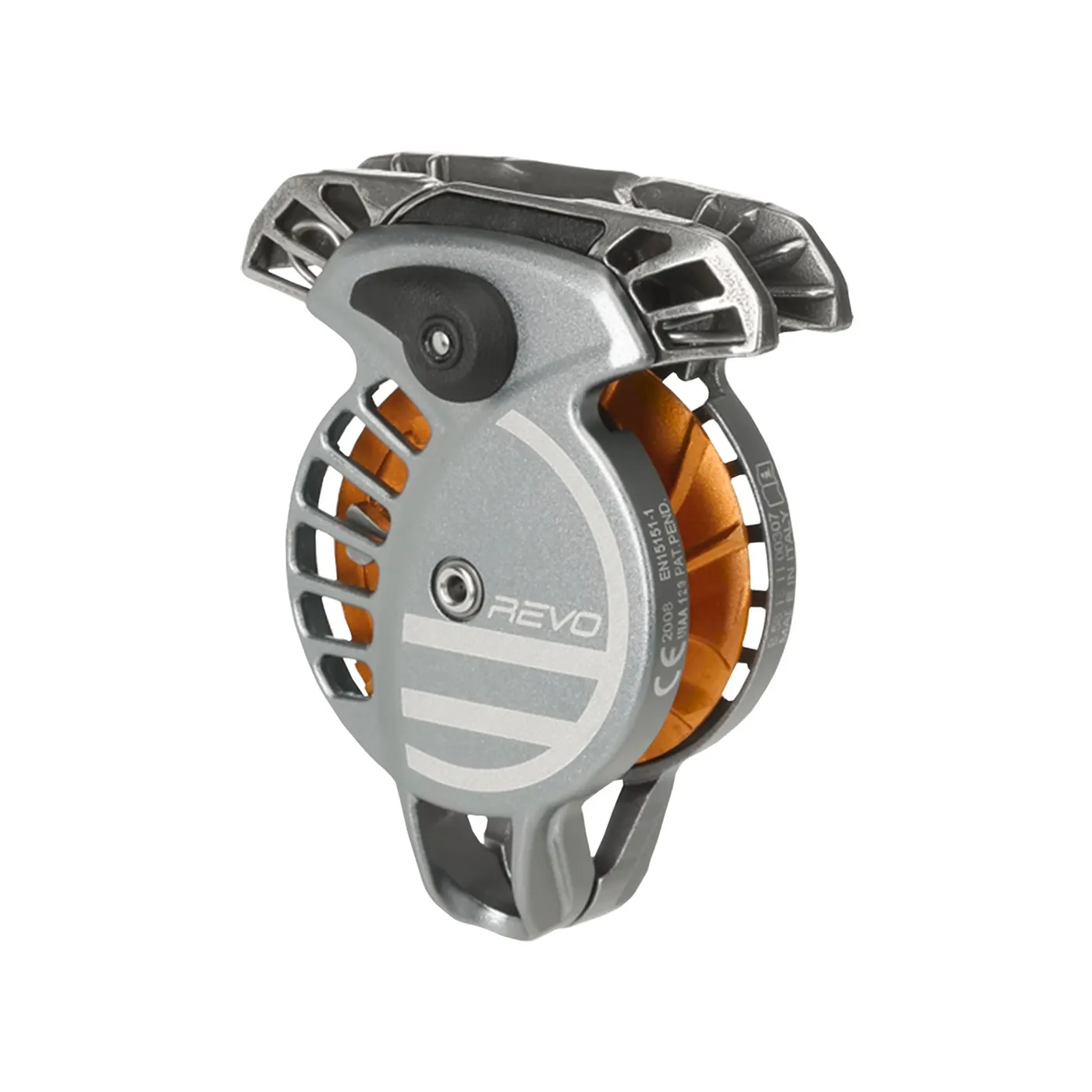
In Türkiye, according to the national rulebook of the Central Judges Board, passive and active assisted belay devices are allowed in TDF competitions (EN 15151-1 and EN 15151-2).
- Tubular belay devices: manufacturers make models with slight differences under various names (ATC, Mantis, Air Force 1-2 and so on).
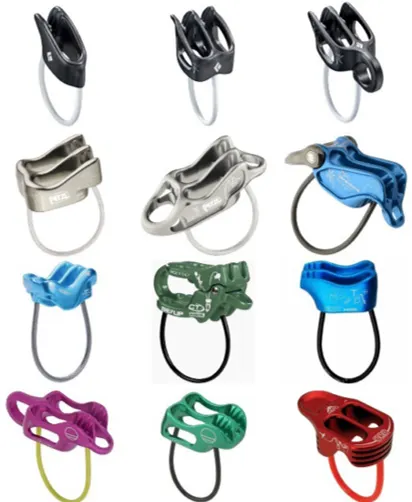
Advantages:
- Simple, light and easy to use
- Compatible with a wide range of climbing ropes
- Suitable for double-rope rappels
- They don’t twist the rope
Disadvantages:
- They brake by friction but have no assisted braking (locking); braking depends entirely on the belayer’s brake hand.
- Because of safety concerns, they may be banned in some climbing gyms.
- Models with a guide mode are also used in multi-pitch climbing. Check the manufacturer’s instructions for suitability.
- Passive assisted belay devices: these support or lock braking without any moving parts. They provide this braking/locking support through their design, by pinching the rope between their metal bodies.
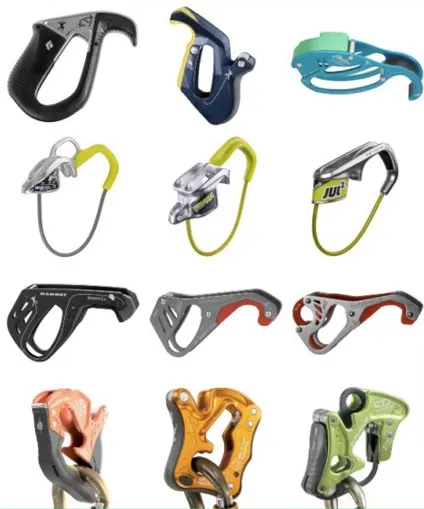
Advantages:
- They are safer than tubular devices in lead and top-rope climbing.
- They are much cheaper than active assisted devices.
- Feeding and taking in rope is relatively easier than with cam-assisted (active assisted) devices.
Disadvantages:
- They may need special carabiners for the braking assistance to work at full performance.
- Releasing the lock may need an extra movement.
- Active assisted belay devices: they differ from passive assisted devices in having moving parts. These moving parts provide braking and/or automatic locking mechanically.
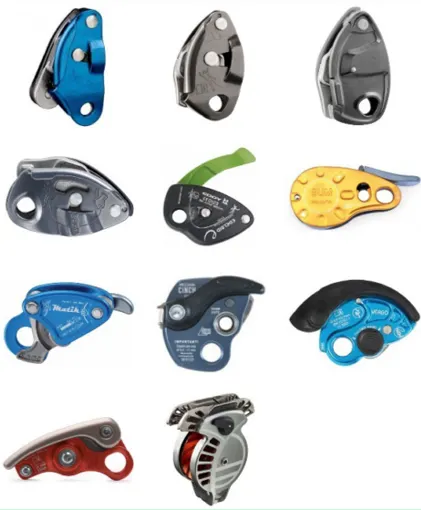
Advantages:
- They cover belayer errors better than other belay devices.
- Lowering the climber is easier and smoother than with other devices.
Disadvantages:
- They can take time and practice to get used to.
- They can be heavier and more expensive. Some models need a special carabiner and are suitable for single ropes only.
- Used incorrectly, they don’t lock automatically.
Choosing a belay device is very personal. Climbers who do only sport climbing and those who combine several types of climbing may prefer different devices, and whether your dominant hand is right or left can also affect the choice.
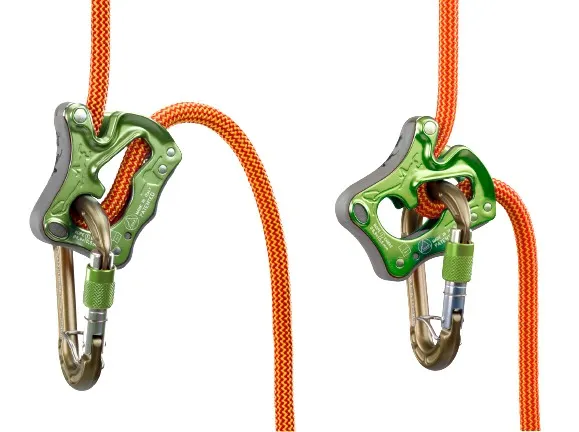
In choosing a device, don’t overlook the fact that habits matter as much as knowledge and practice.
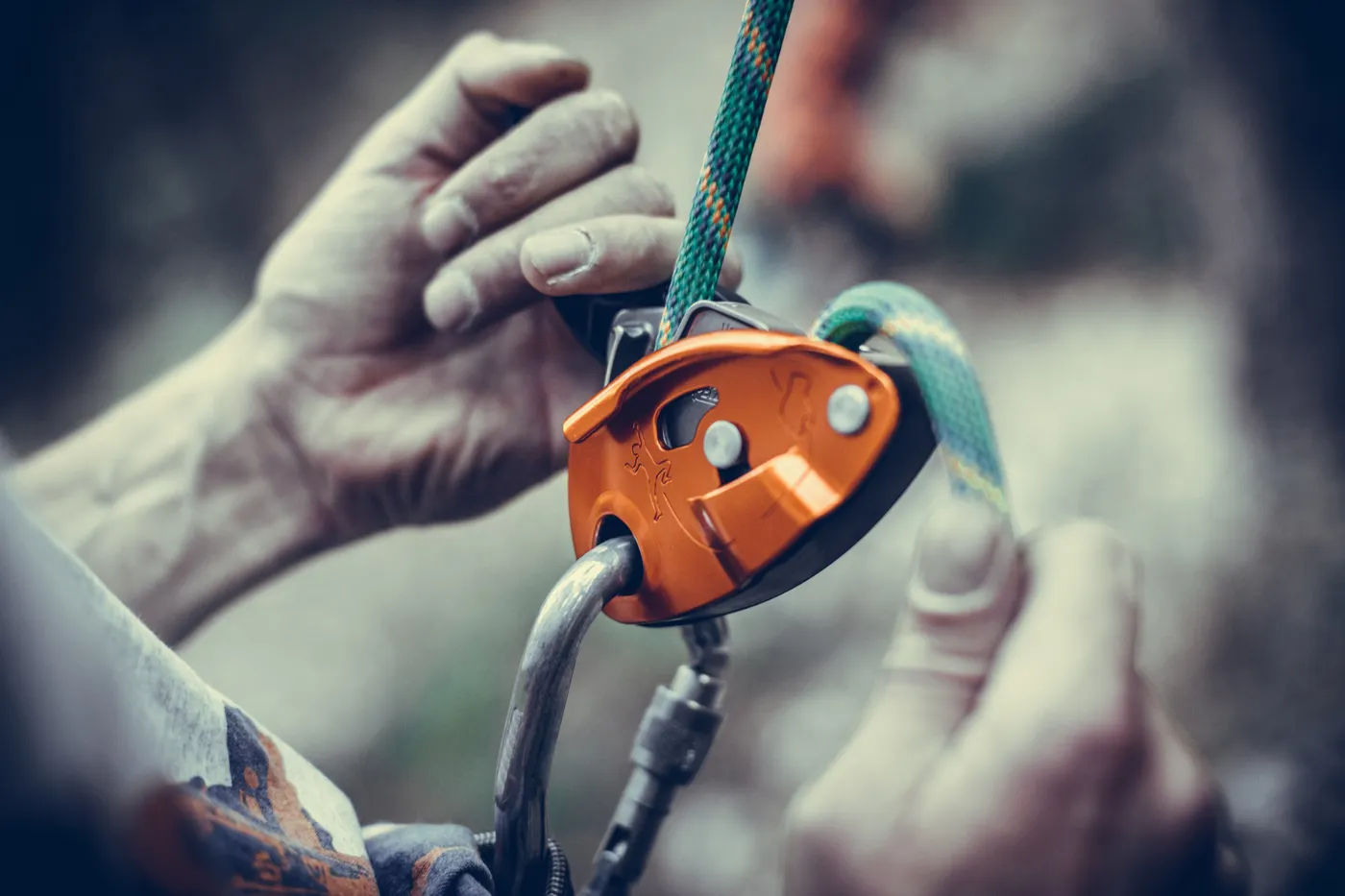
On your climbs, keep in mind that a simple device you are experienced with can be much safer than a more sophisticated one you are not.
In short, whatever belay device you use, remember to keep your brake hand close to your leg and your device in the braking position at all times.
Carabiners
In this section, for clarity and because there is no carabiner variety specific to sport climbing, it makes more sense to explain all types of carabiner and what they are used for.
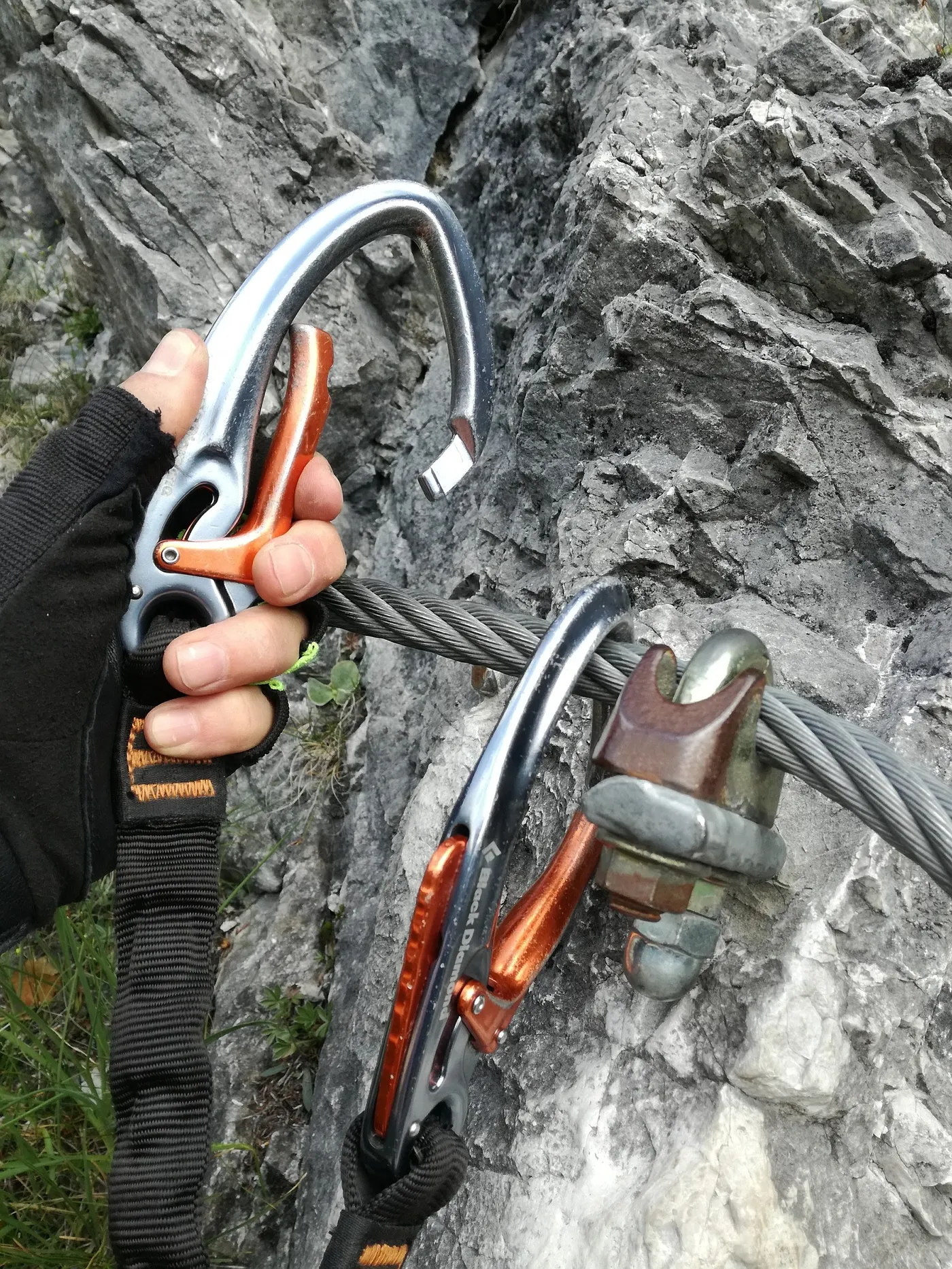
Carabiners can be grouped as follows:
- by material,
- by shape,
- by locking system,
- by nose design,
- non-locking carabiners,
- belay and rappel (anti-cross-loading) carabiners.
Let’s look first at these groups and then at the carabiners we need in sport climbing.
Carabiners by material
By material, carabiners fall into two groups. Today they are made of aluminium alloy or steel, depending on their purpose.
Although both aluminium and steel carabiners are made for many different purposes, they are mostly used as follows.
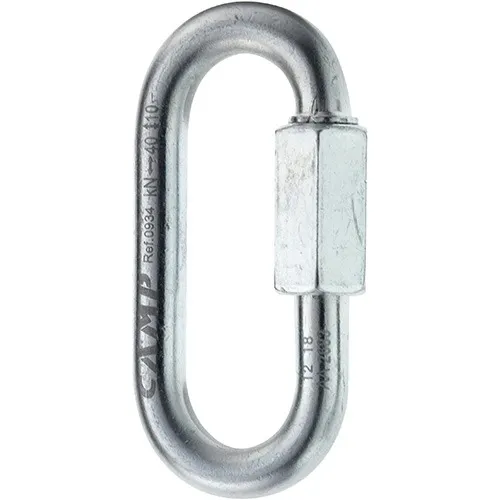
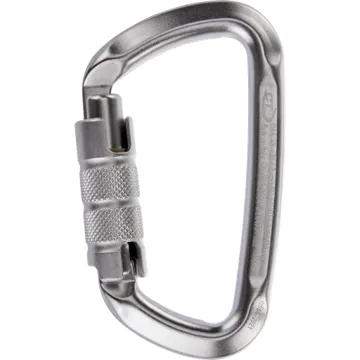
- Aluminium carabiners have a very wide range of uses and are used almost everywhere and for every purpose.
- Steel carabiners, though stronger than aluminium ones, are heavier, so today they are mostly used at fixed anchors and at points of high wear (lowering with a munter hitch and in some quickdraws).
Carabiners by shape
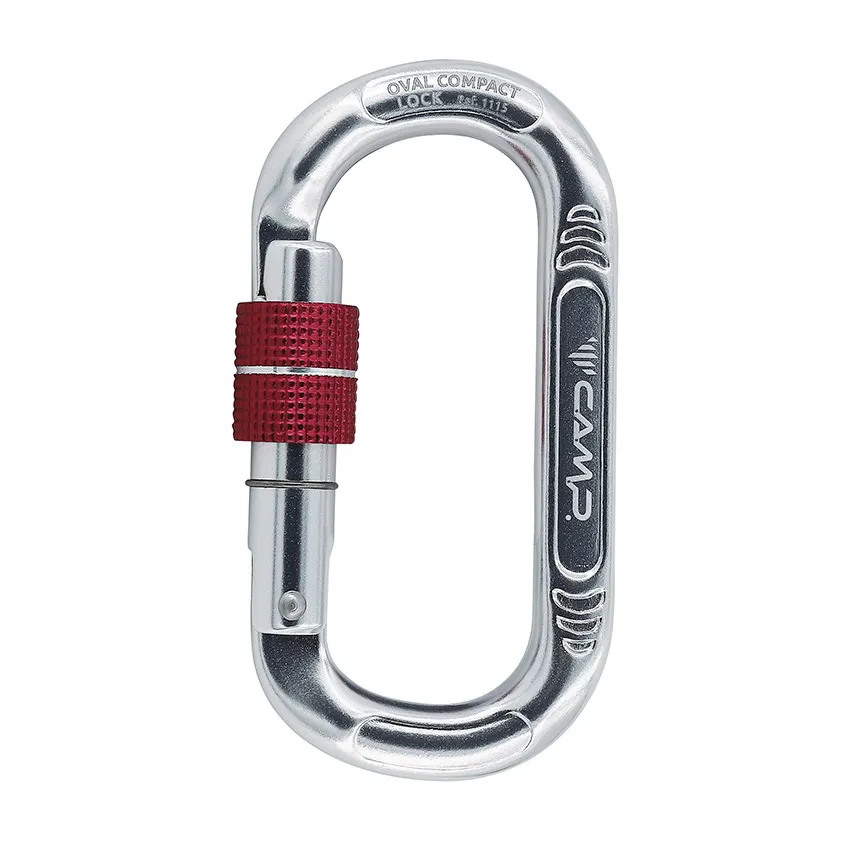
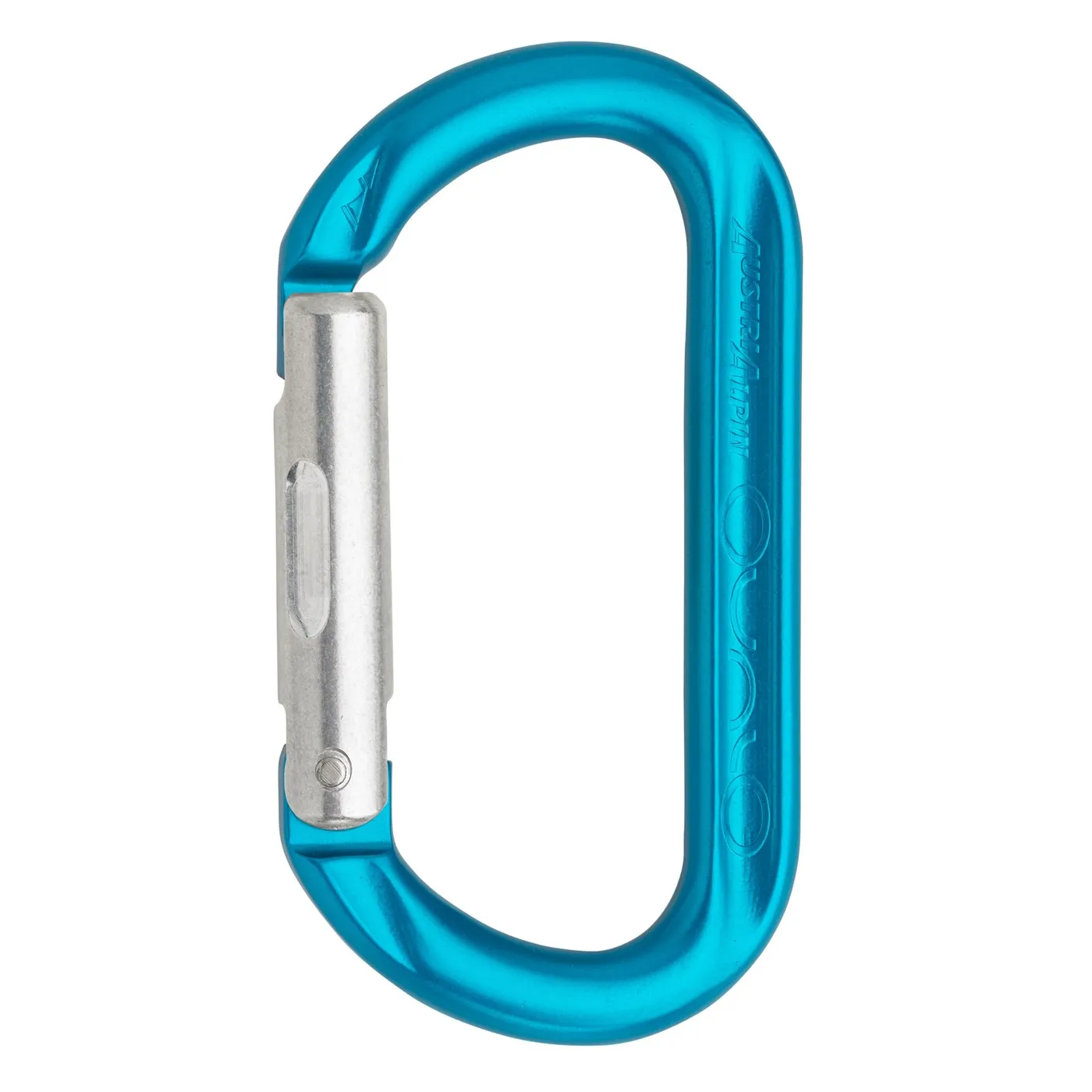
By shape, carabiners fall into four groups: oval, D, asymmetric D and pear-shaped. Below are their most basic functions, among many features.
- Oval carabiners: they centre the load parallel to the major axis.
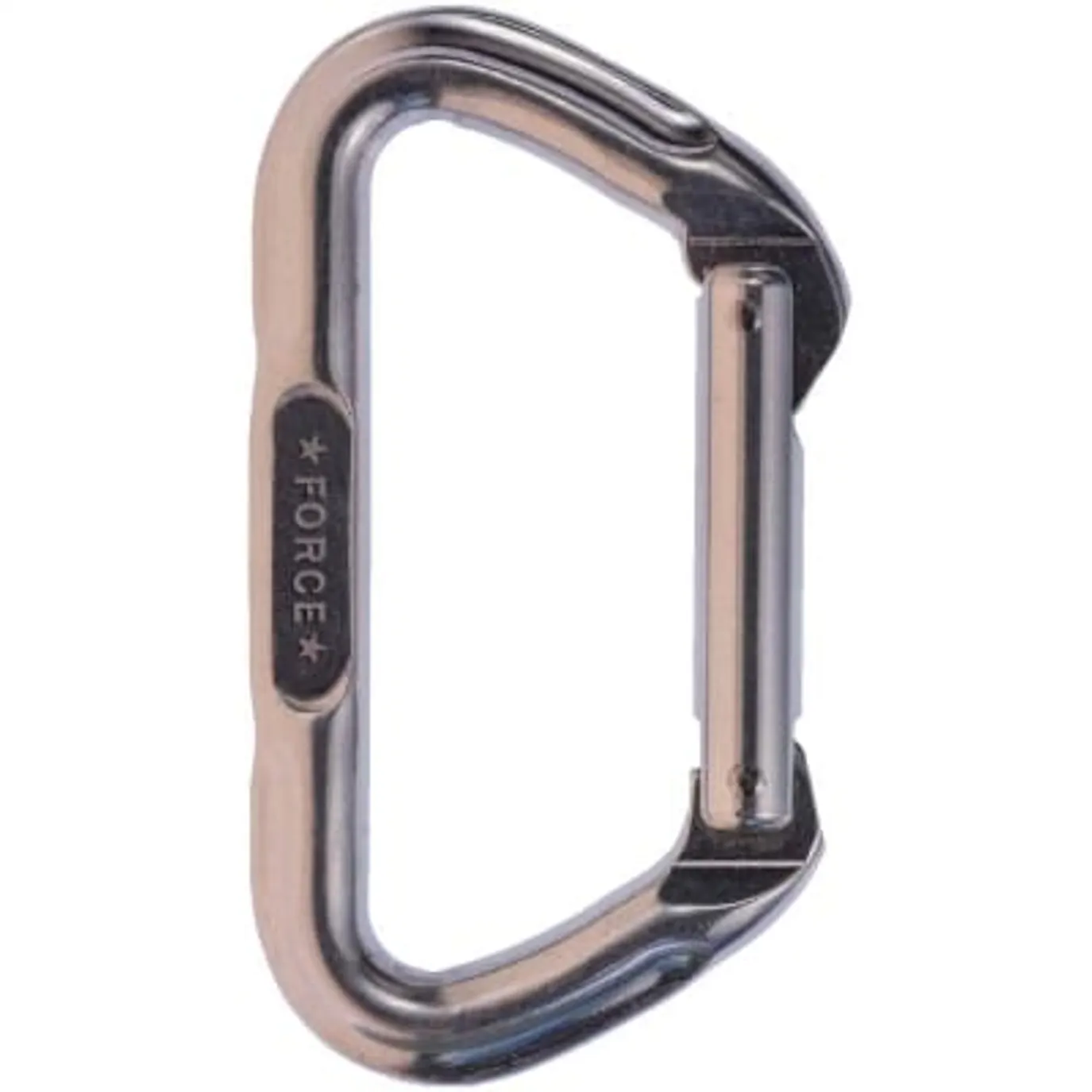
- D carabiners: they position the load as close as possible to the major axis.
- Asymmetric D carabiners: essentially D carabiners with a wide gate opening. They are usually more expensive than a standard D.
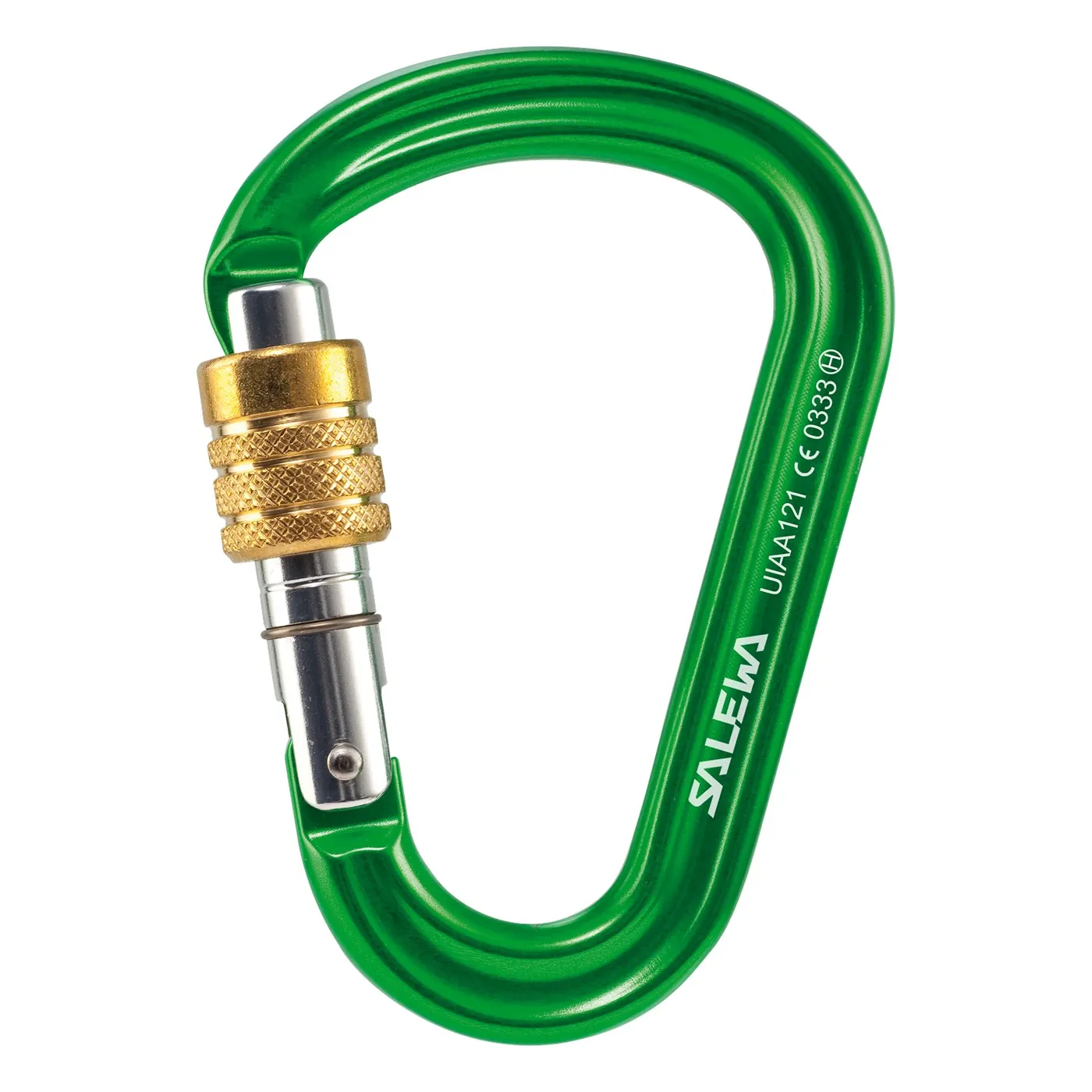
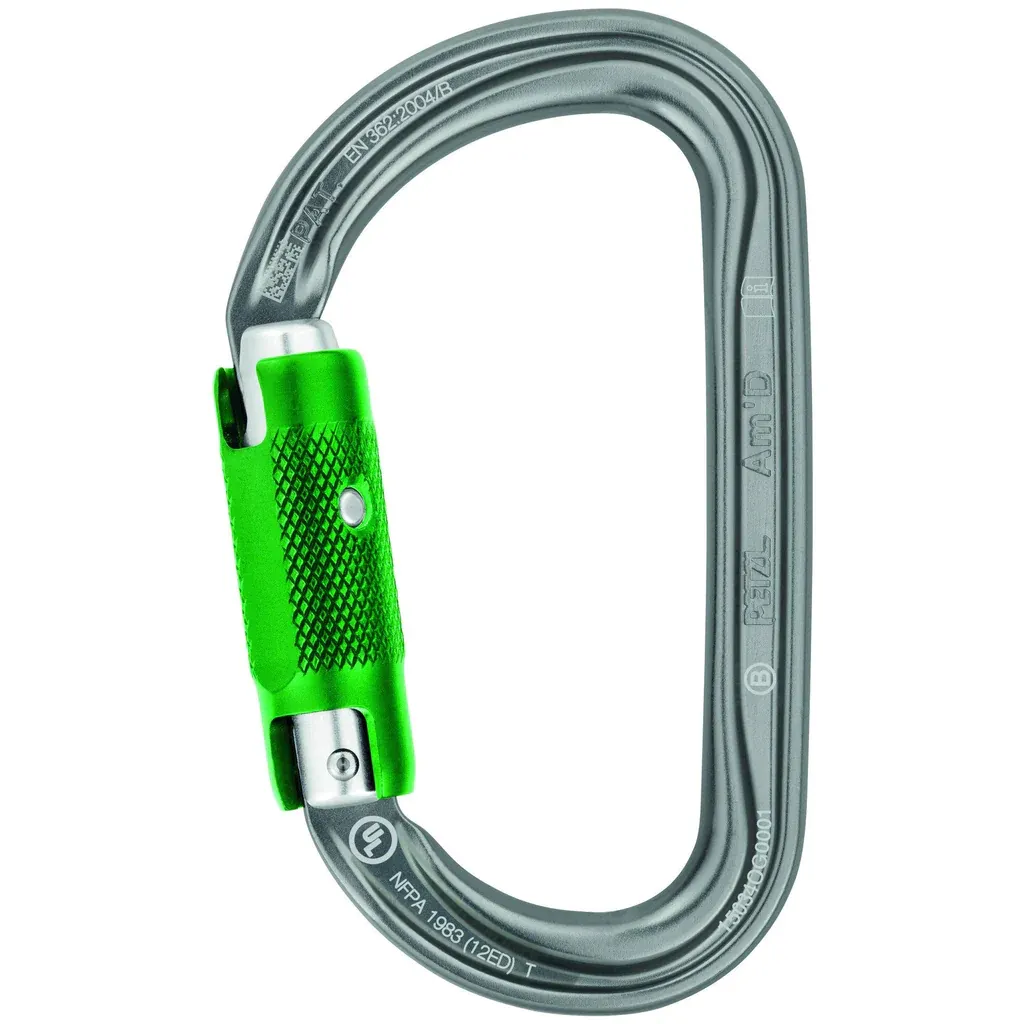
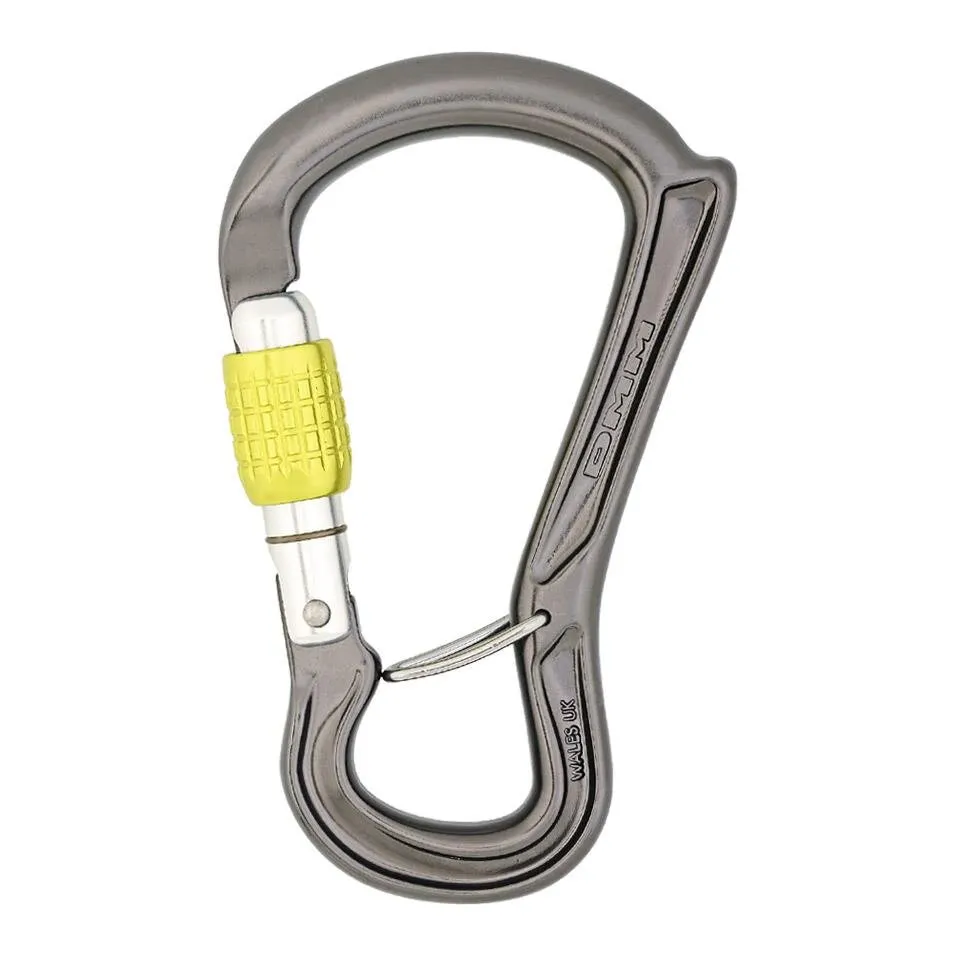
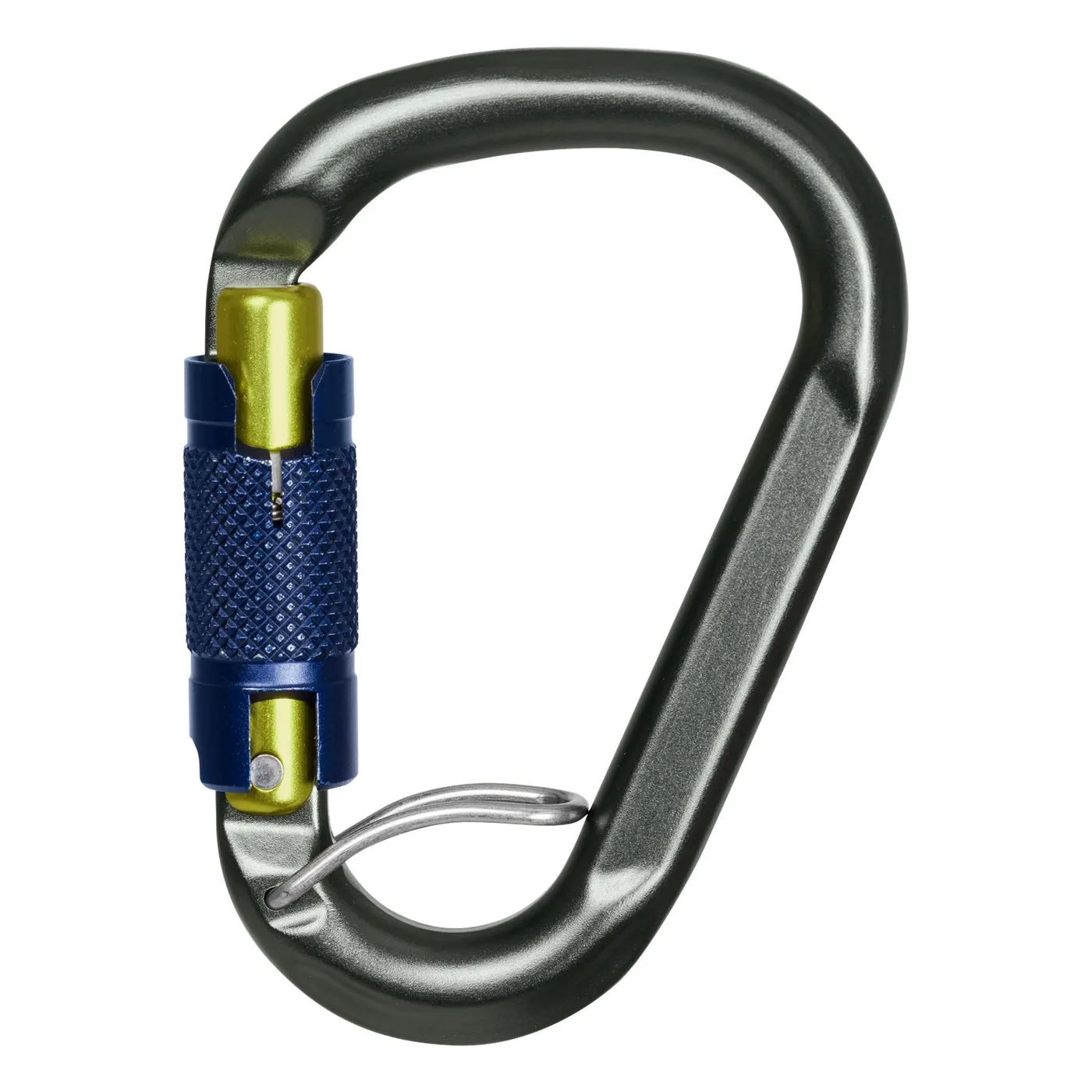
- Pear (HMS) carabiners: designed especially for belaying and rappelling. Their wide, asymmetric top works well with a munter hitch.
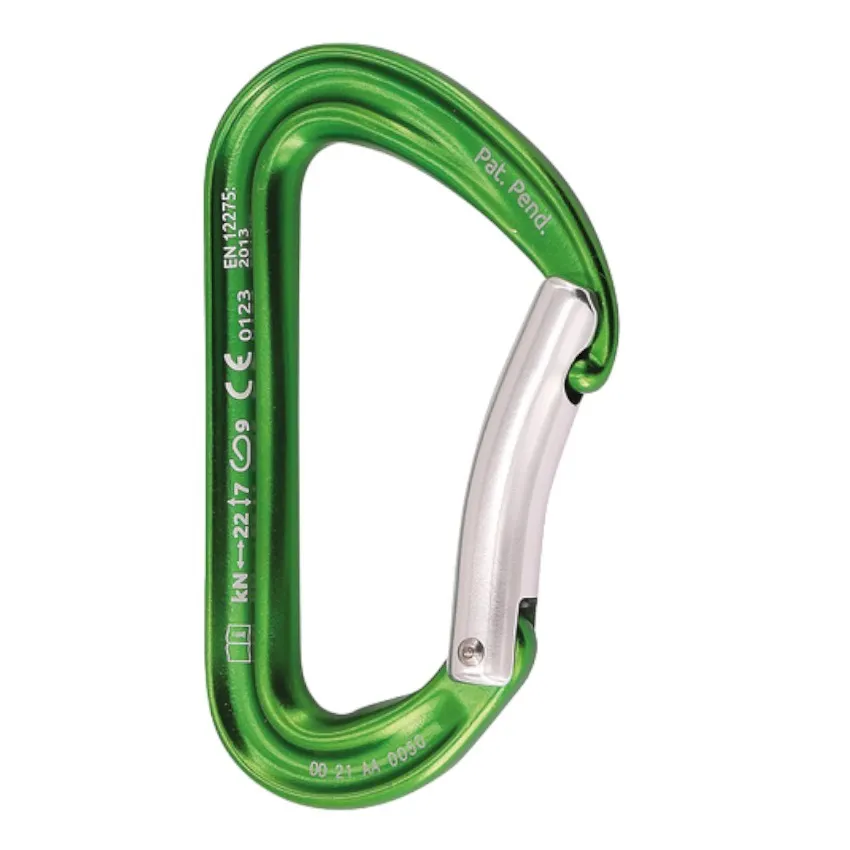
A carabiner’s strength is read from three values on its spine: major axis, minor axis and gate open (kN). Because the D shape carries the load close to the spine, it is usually very strong, but the decision should be made by reading the label.
Carabiners by locking system
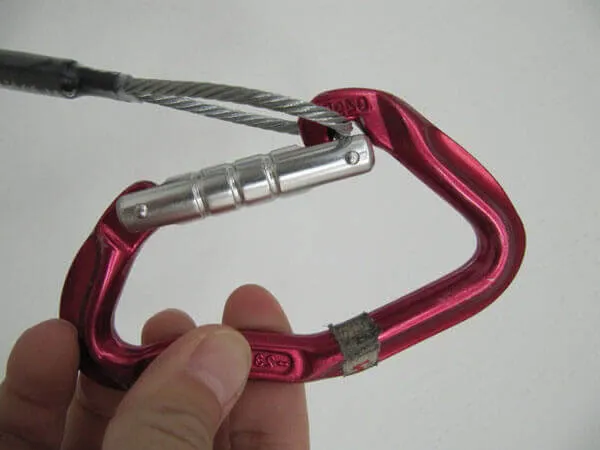
By locking system, carabiners fall into two basic groups: screwgate and auto-locking carabiners.
- Some screwgate carabiners have magnetic or mechanical secondary protection to stop the screw from opening by accident.
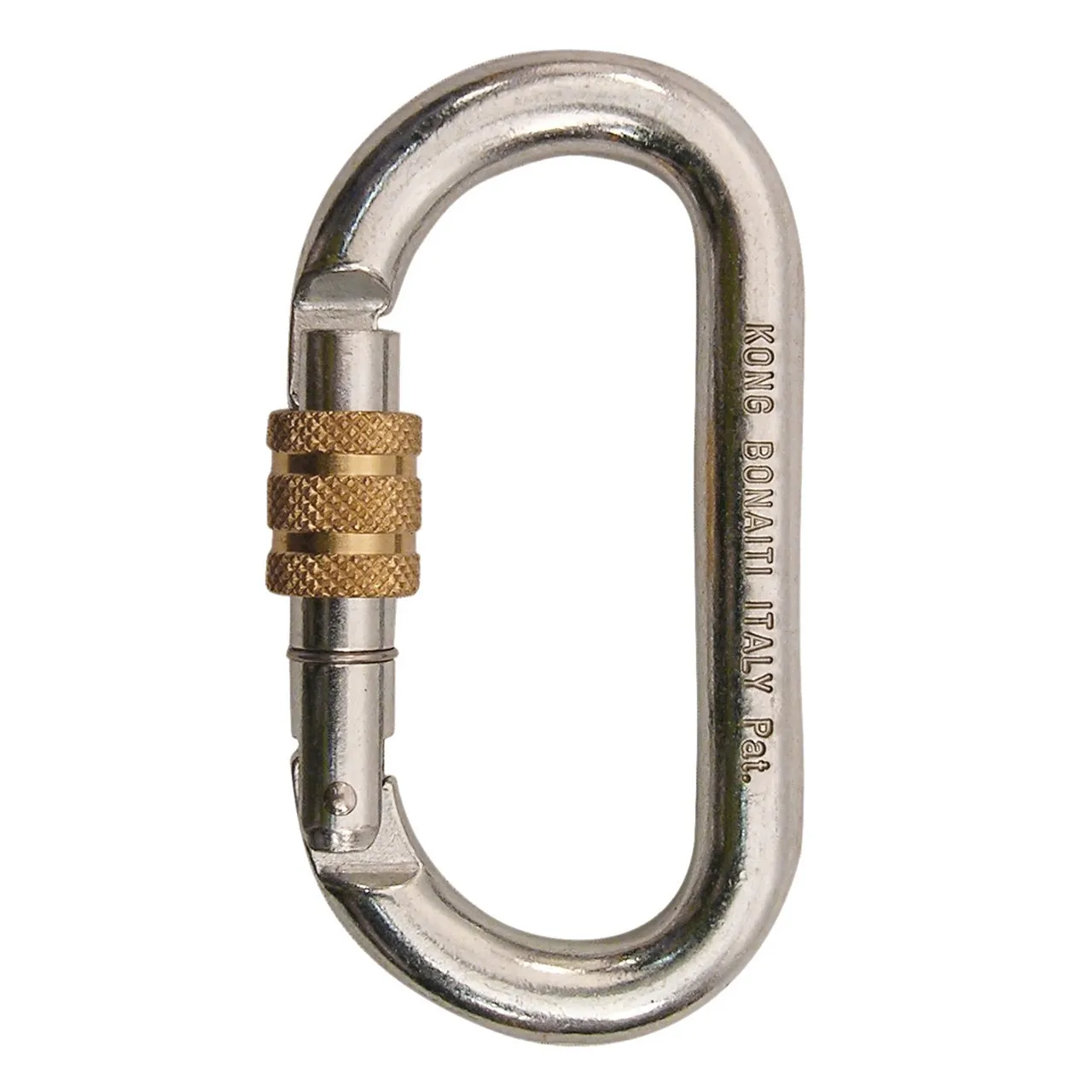
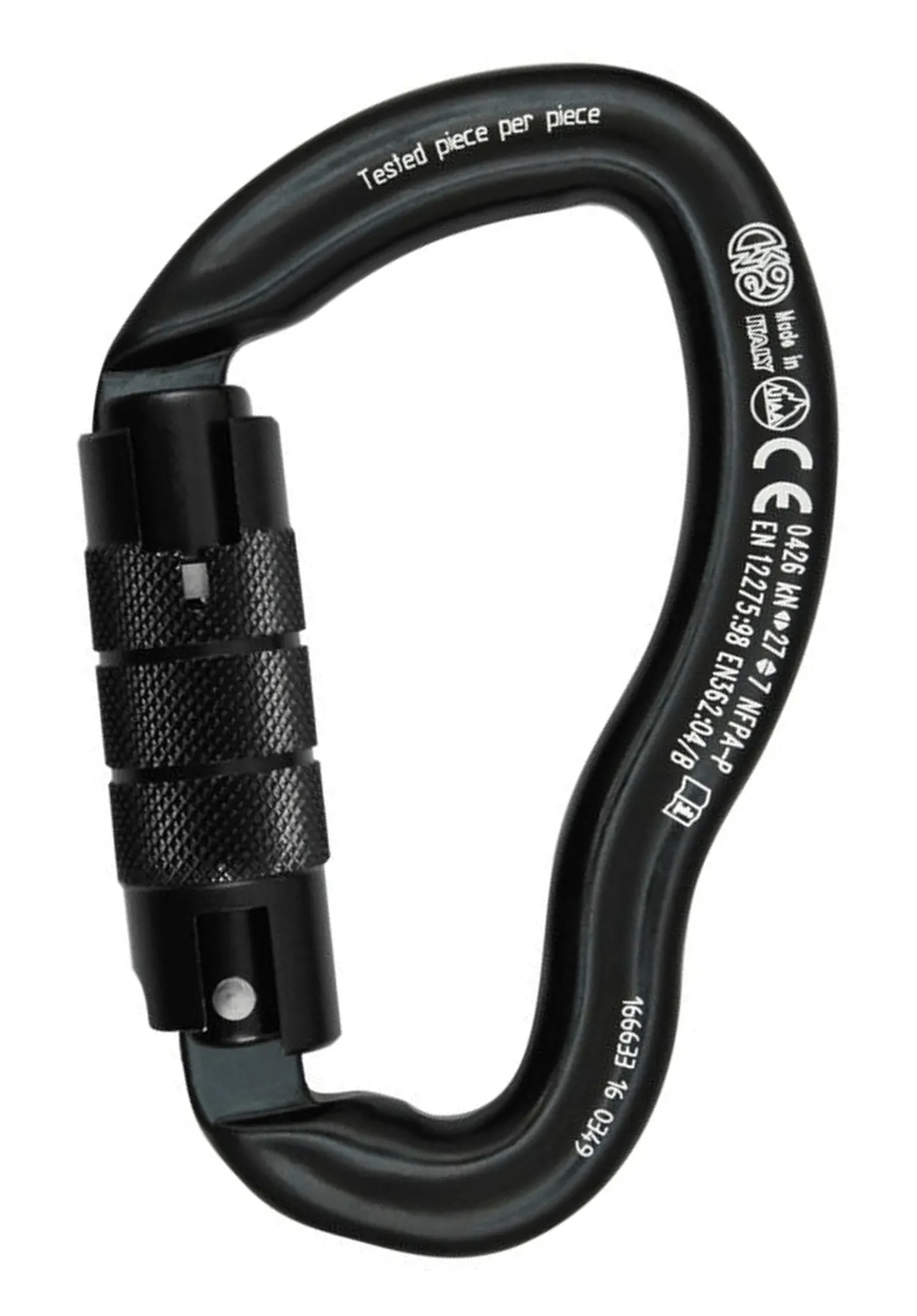
- For auto-locking carabiners, different locking mechanisms have been developed over time. The most widely used are:
- Twist-lock: twist → open
- Triact/triple-lock: slide → twist → open
- Pin/ball-lock: press → twist → open
Carabiners by nose design
By nose design, carabiners fall into two groups: traditional hook (notch) nose carabiners and keylock nose carabiners.
- Hook-nose carabiners: wire-gate carabiners are mostly made with a hook nose. Their biggest drawback is that they snag on rope, slings, bolts and other gear and anchors, so they need extra care and effort.
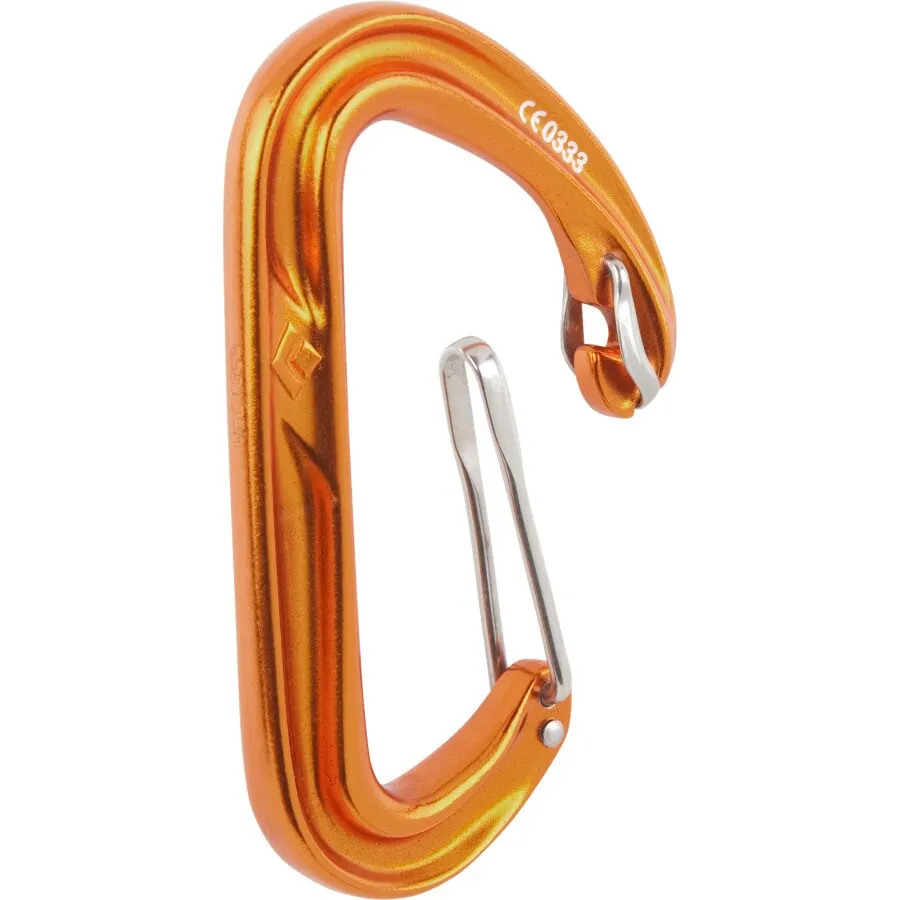
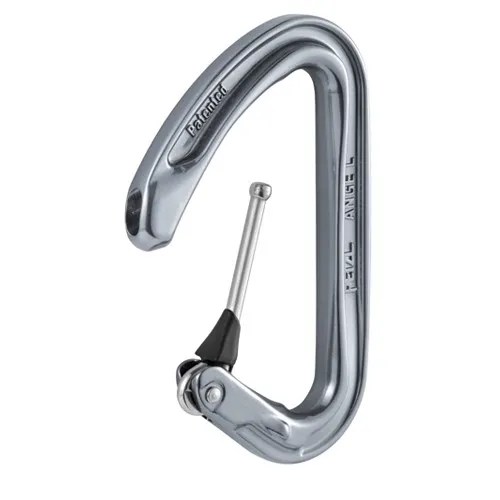
To solve this problem, manufacturers have developed different nose shapes and wire gates, such as hoodwire, monofilament, wirelock and clean-wire designs.
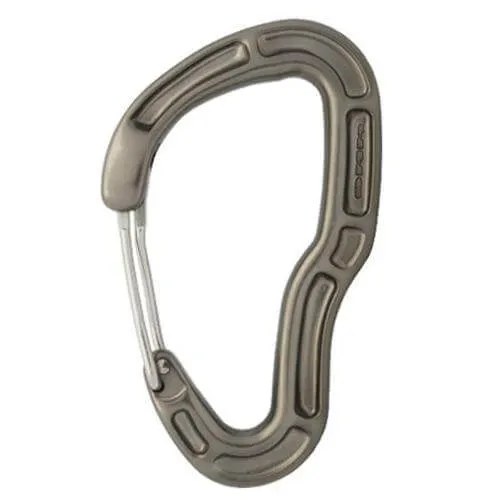
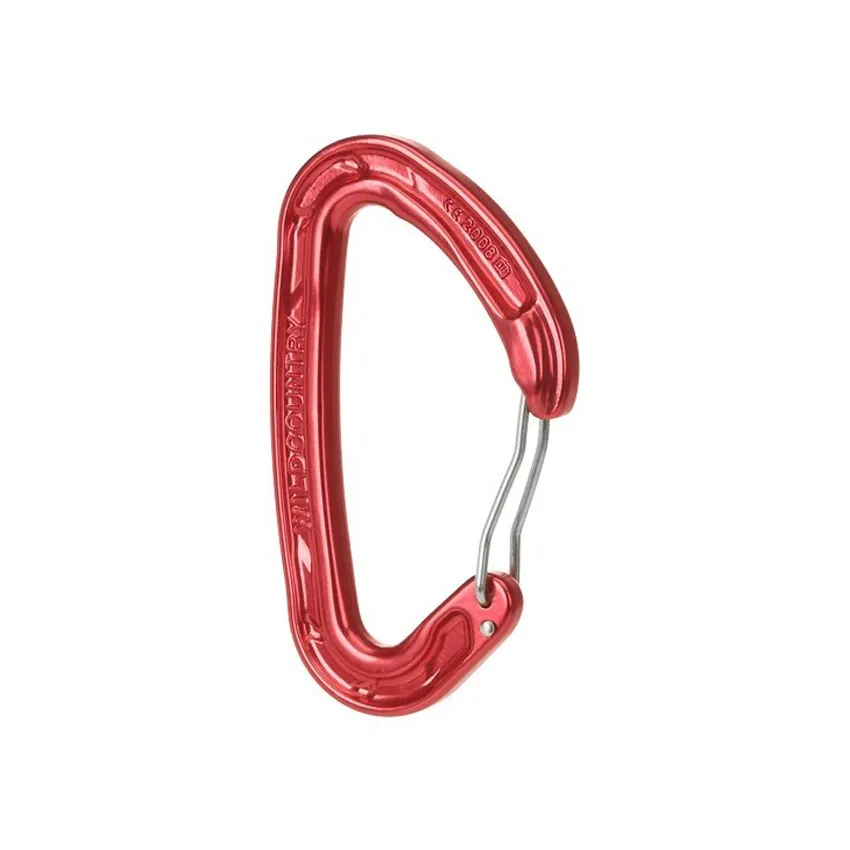
- Keylock-nose carabiners: a newer design than hook-nose carabiners, and considered more reliable. The keylock nose makes the carabiner less likely to snag on rope or gear.
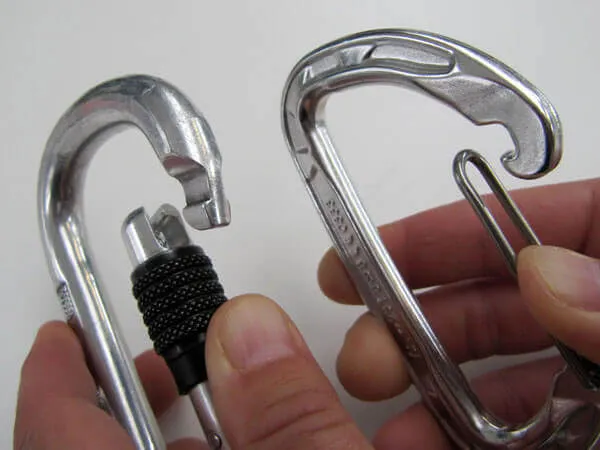
Their drawbacks are that they are heavier and more expensive. But among many uses, they can be used with confidence at anchors and for rappels.
Non-locking carabiners
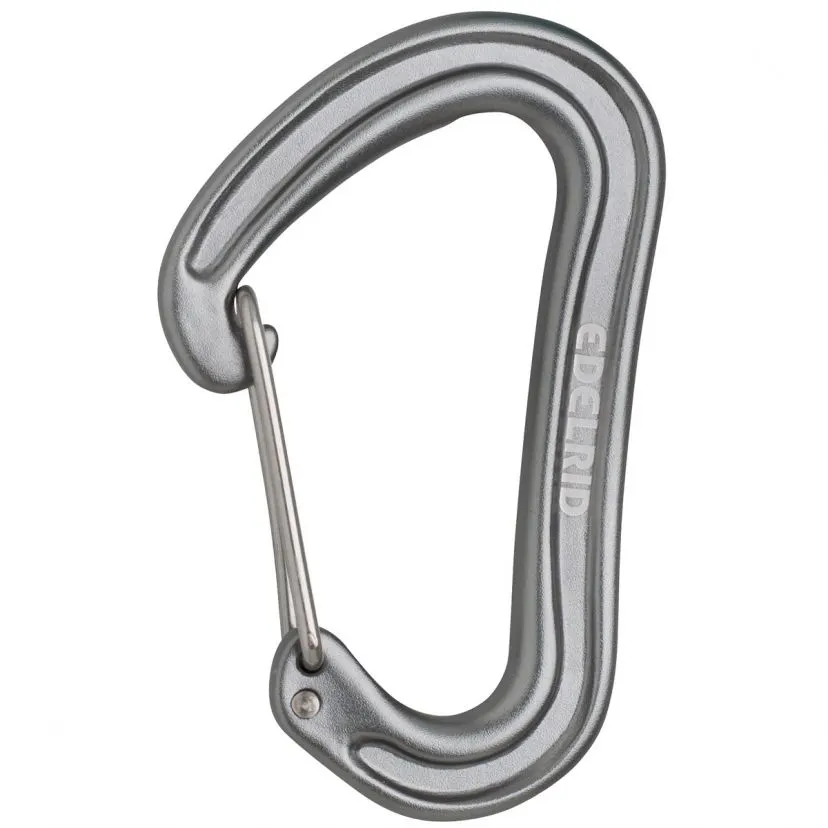
Non-locking carabiners are used for carrying gear and in quickdraws. Their advantage over locking carabiners is that they are lighter and smaller. There are three kinds: wire gate, straight gate and bent gate.
- Wire-gate carabiners: besides being small and the lightest, they resist freezing better, so they can be used in all weather.
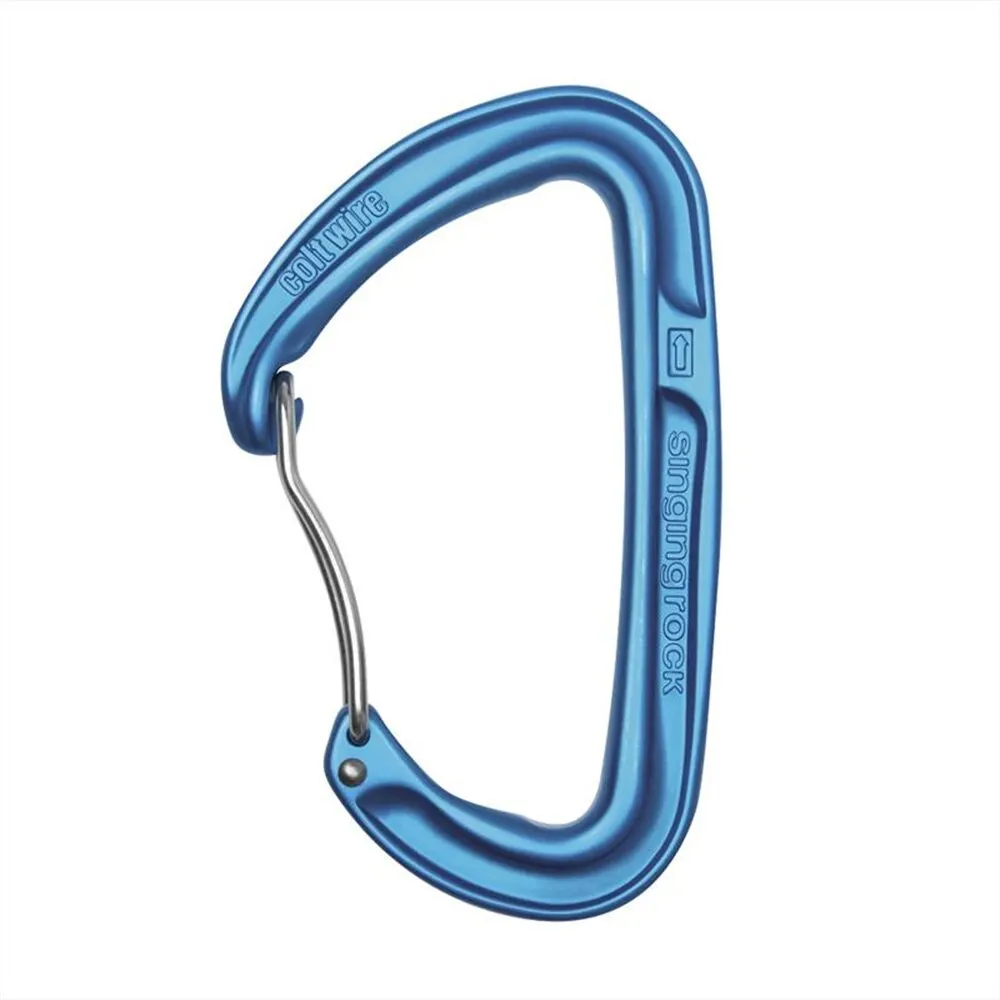
- Straight-gate carabiners: their most common and important use is as the bolt-end carabiner of a quickdraw. They are also widely used for racking gear on a harness. They are strong and durable.
- Bent-gate carabiners: most commonly used as the rope-end carabiner of a quickdraw. They are designed for clipping the rope easily, and their gates open easily.
Belay and rappel (anti-cross-loading) carabiners
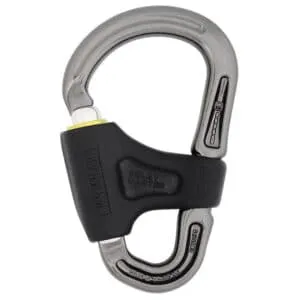
Pear (HMS) carabiners are usually preferred for belaying and rappelling. Because of their wide shape, HMS carabiners can rotate sideways on the harness belay loop, especially while paying out or taking in rope.
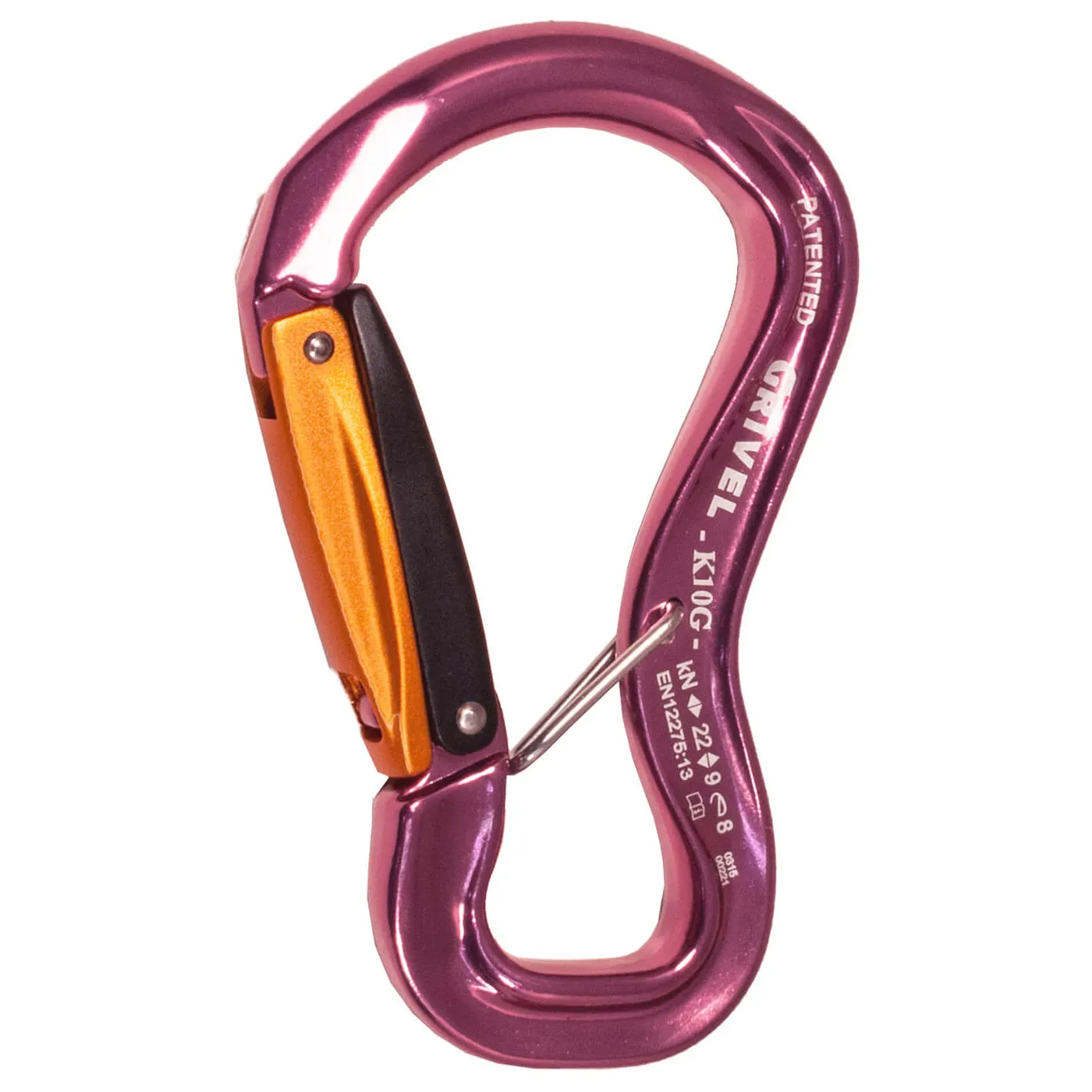
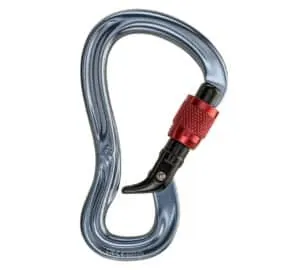
Anti-cross-loading systems were developed to prevent this rotation. Their aim is to stop the belay device rotating inside the carabiner and to keep the carabiner aligned with the load.
Quickdraws
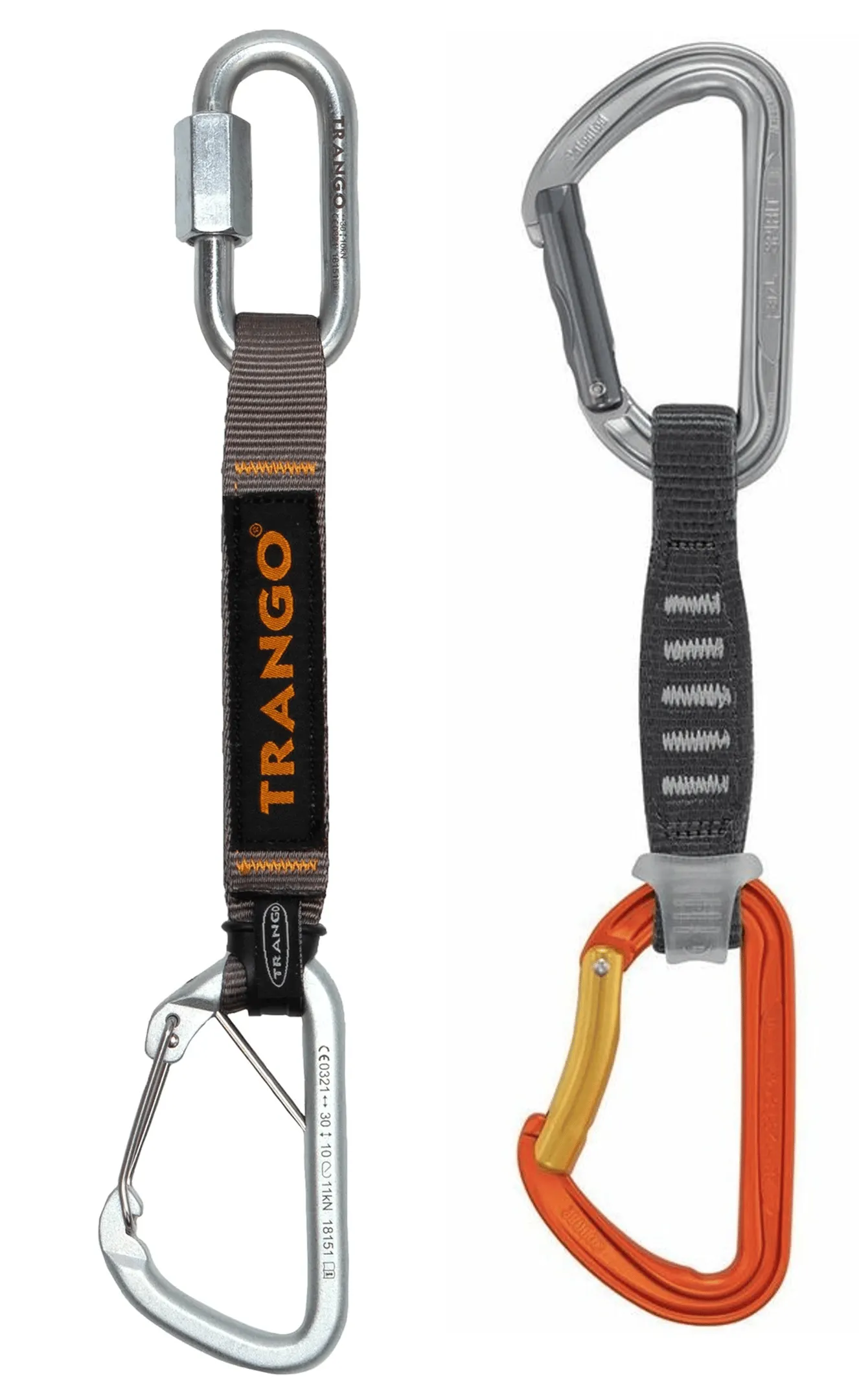
Quickdraws (usually sold and used as a set) serve the same purpose in rock climbing and sport climbing. Although the purpose is the same, there are some differences between quickdraws made for sport climbing and those made for rock climbing.
Quickdraws are designed specifically for sport or rock climbing with the following in mind:
- In rock climbing there are fewer falls than in sport climbing. Climbers take fewer risks and focus on completing the route, and there is less technical practice than in sport climbing.
- Weight matters more in rock climbing. In sport climbing, routes are often climbed with the quickdraws already in place.
- Quickdraws are not left on rock, but on climbing walls, especially those not used for competition, they can be left fixed. This allows the bolt-end carabiner to be steel and without a gate.
The choice of quickdraws depends on personal preference and purpose. Before buying, it is very important to be clear about where and why you will use them.
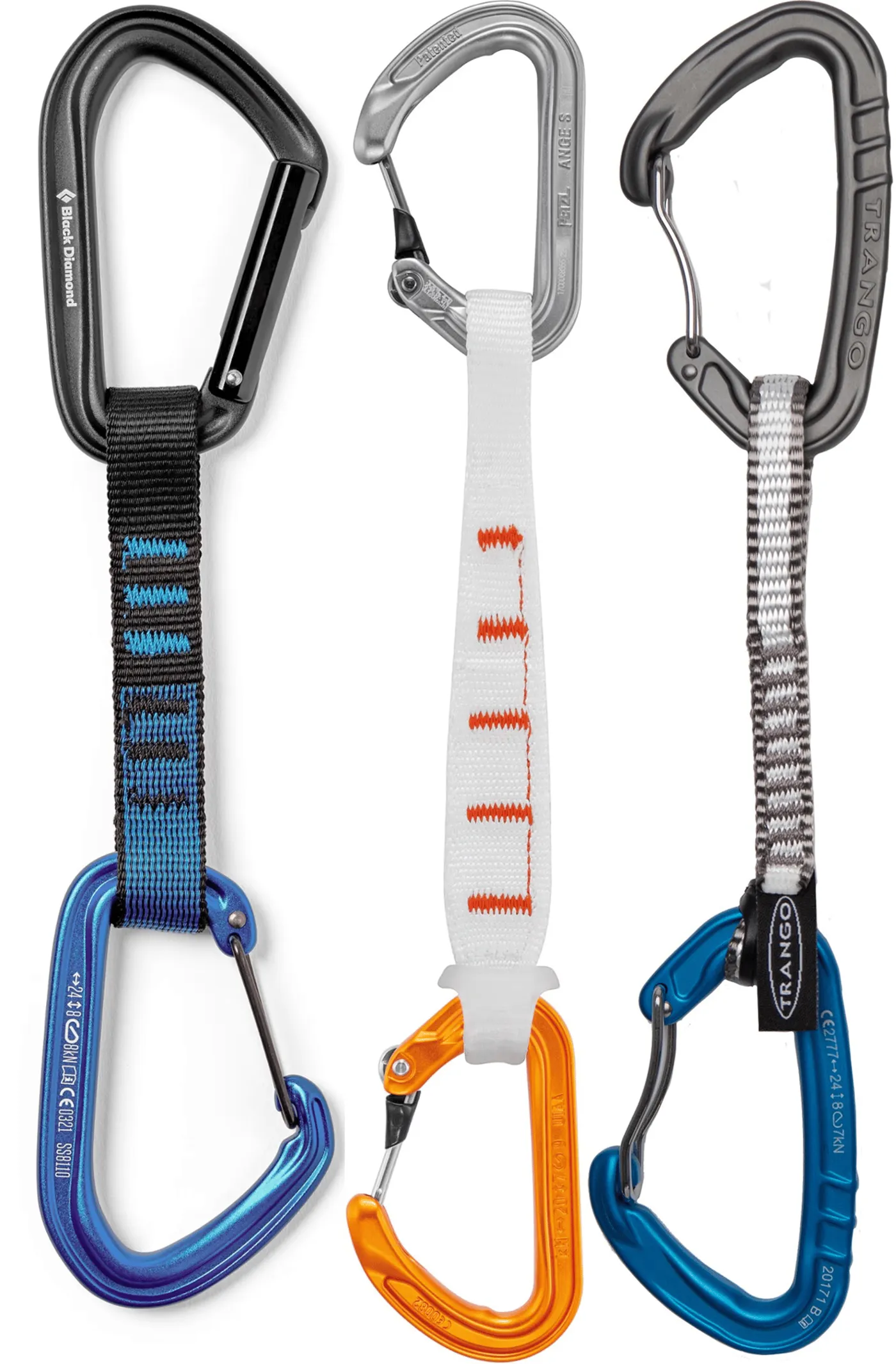
Choosing quickdraw length and how to use quickdraws will be covered in a separate article.
Chalk bag, chalk and brush
Climbers use chalk (magnesium carbonate) while climbing to absorb sweat from their palms and fingers, keep their hands dry and increase friction with the holds.
Climbing chalk is the same as the chalk used in wrestling, gymnastics and other sports. Liquid (alcohol-based) chalk is also made today. Check the ingredients before buying to avoid allergic reactions.
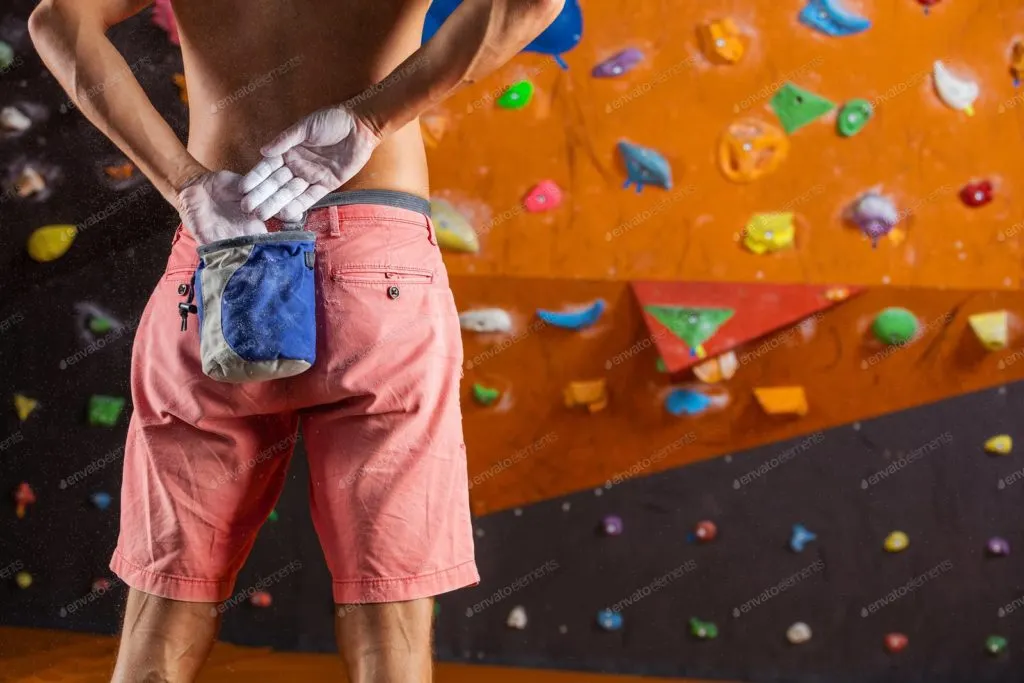
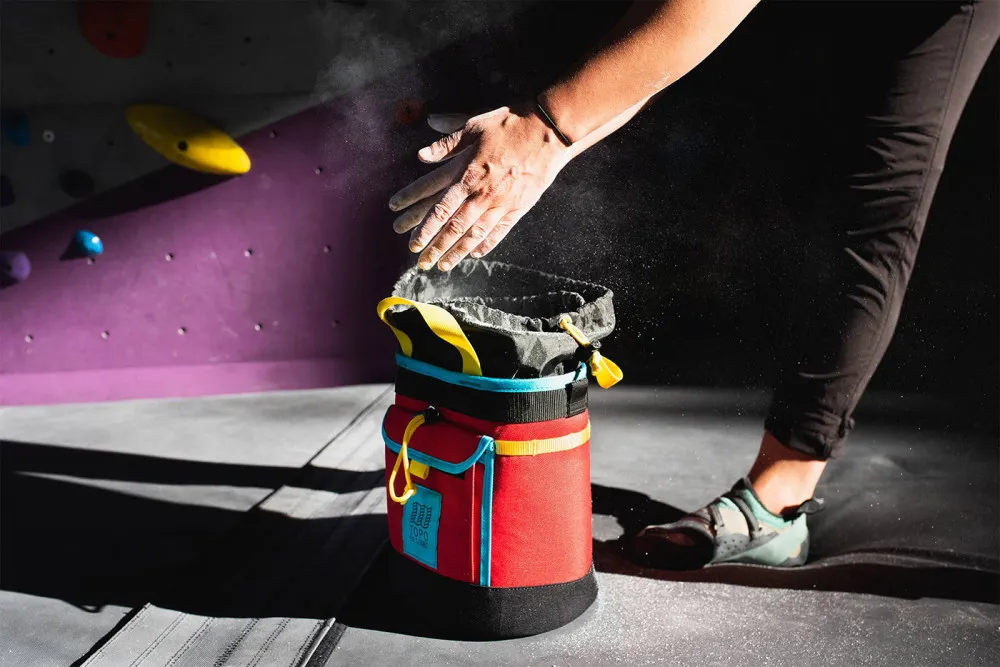
- Climbers use chalk bags in two sizes: one worn on the waist, and a larger one placed on the ground in bouldering.
- Chalk bags come in many styles and designs, with magnetic or drawstring closures and so on. Basically, all chalk bags do the same job; what matters is finding the one you are most comfortable with.

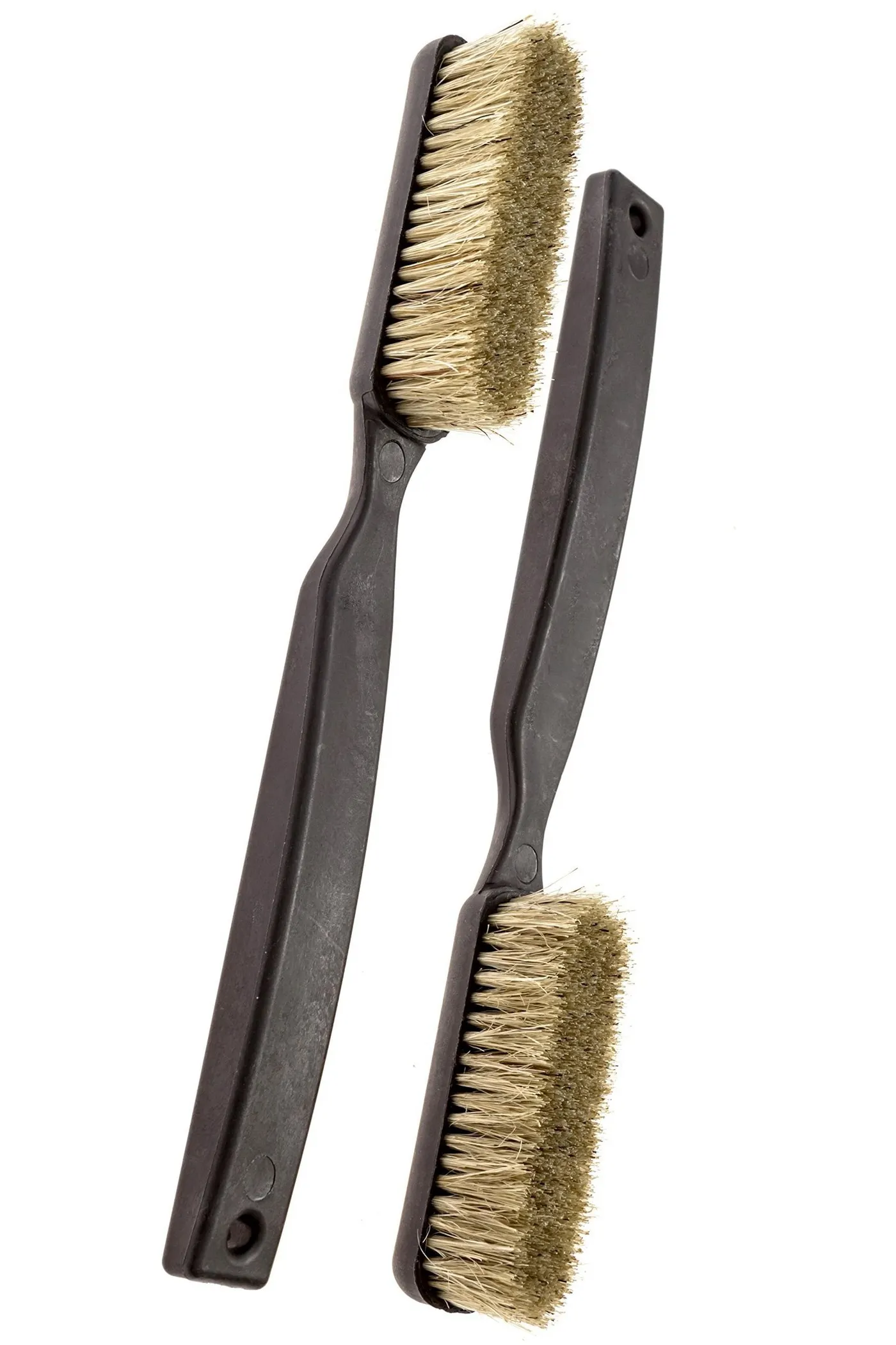
Depending on your preference and the type and place of climbing, you can weigh up the pros and cons of loose, block, ball or liquid chalk and choose what suits you.
Now that you know the gear and accessories used in sport climbing, you can read our article on which items to start with: My First Climbing Gear.