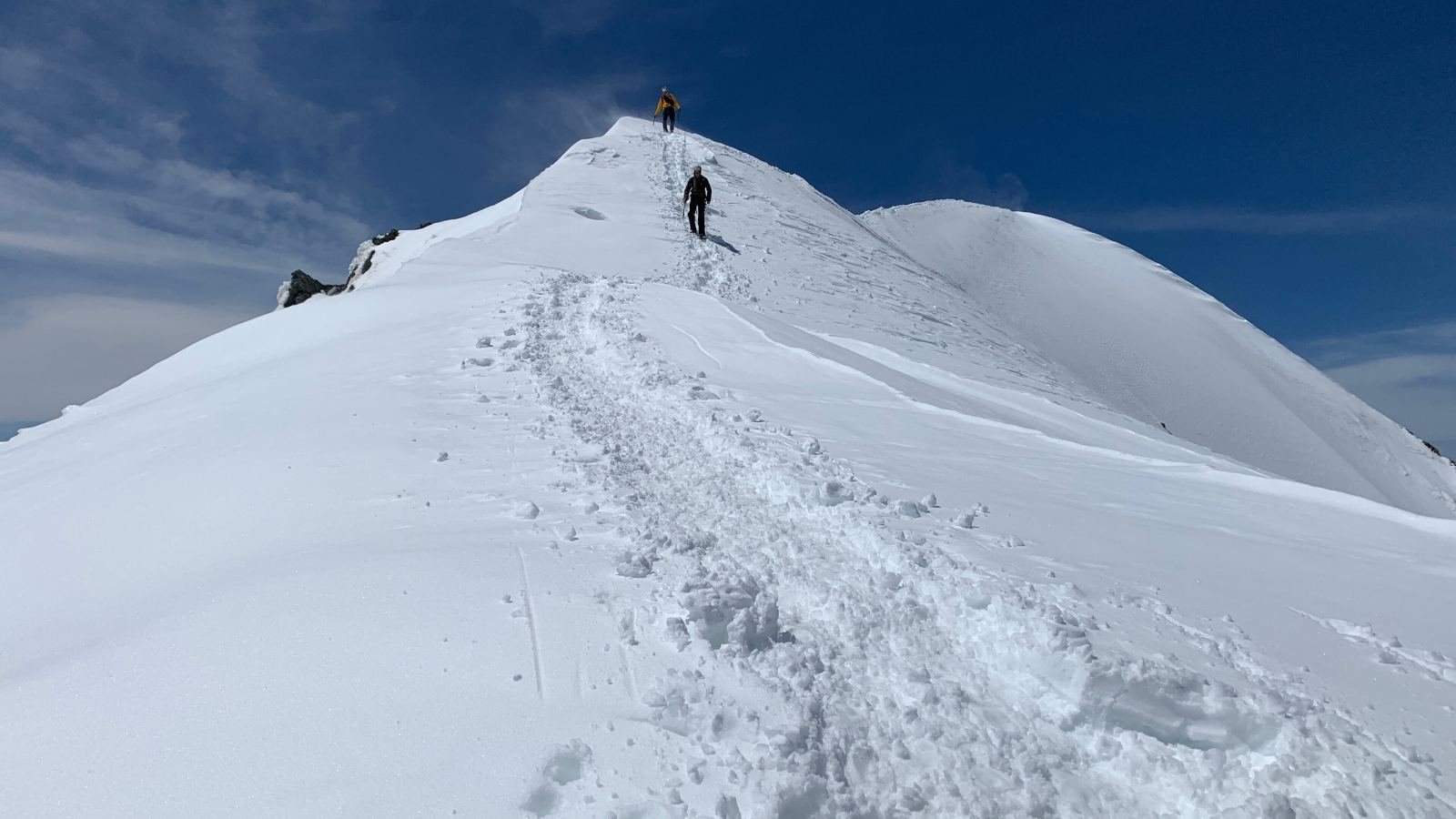
In the city an ambulance arrives within minutes. In the mountains, hours can pass between the moment you make the call and the moment someone reaches you. The best time to learn what to do in those hours is today, at home.
Help in the mountains does not arrive within minutes as it does in the city. It can take a rescue team hours to reach you; if the weather is bad the helicopter cannot fly and the team comes on foot. So the first decisions after an accident, and the time until help arrives, are in the party’s hands. This page explains, step by step, what to do when things go wrong in the mountains. For preparation before you set off, see Planning a Climb and Building a Team.
The single emergency number. Police, gendarmerie, AFAD and medical teams are all reached through it.
Source: Ministry of InteriorSix whistle blasts or flashes in a minute, then a minute’s pause. The reply is three a minute.
Source: SAC, Austria-ForumThe flat area, clear of wires and obstacles, a helicopter needs to land.
Source: RegaPrevention first
A rescue team’s favourite accident is the one that never happens. Most of the decisions that prevent it are made in the morning, before you leave home.
Most emergencies are prevented or made less serious by decisions taken before setting off:
- Leave a plan: write down where you are going, by which route, with whom and the latest time you will be back, and leave it with someone you trust (see The one-page plan).
- Think about communication: is your phone charged, and is there a spare battery in your pack? Is there mobile coverage on the route? If not, do you need another means of communication (radio, satellite device)? (see Navigation and communication)
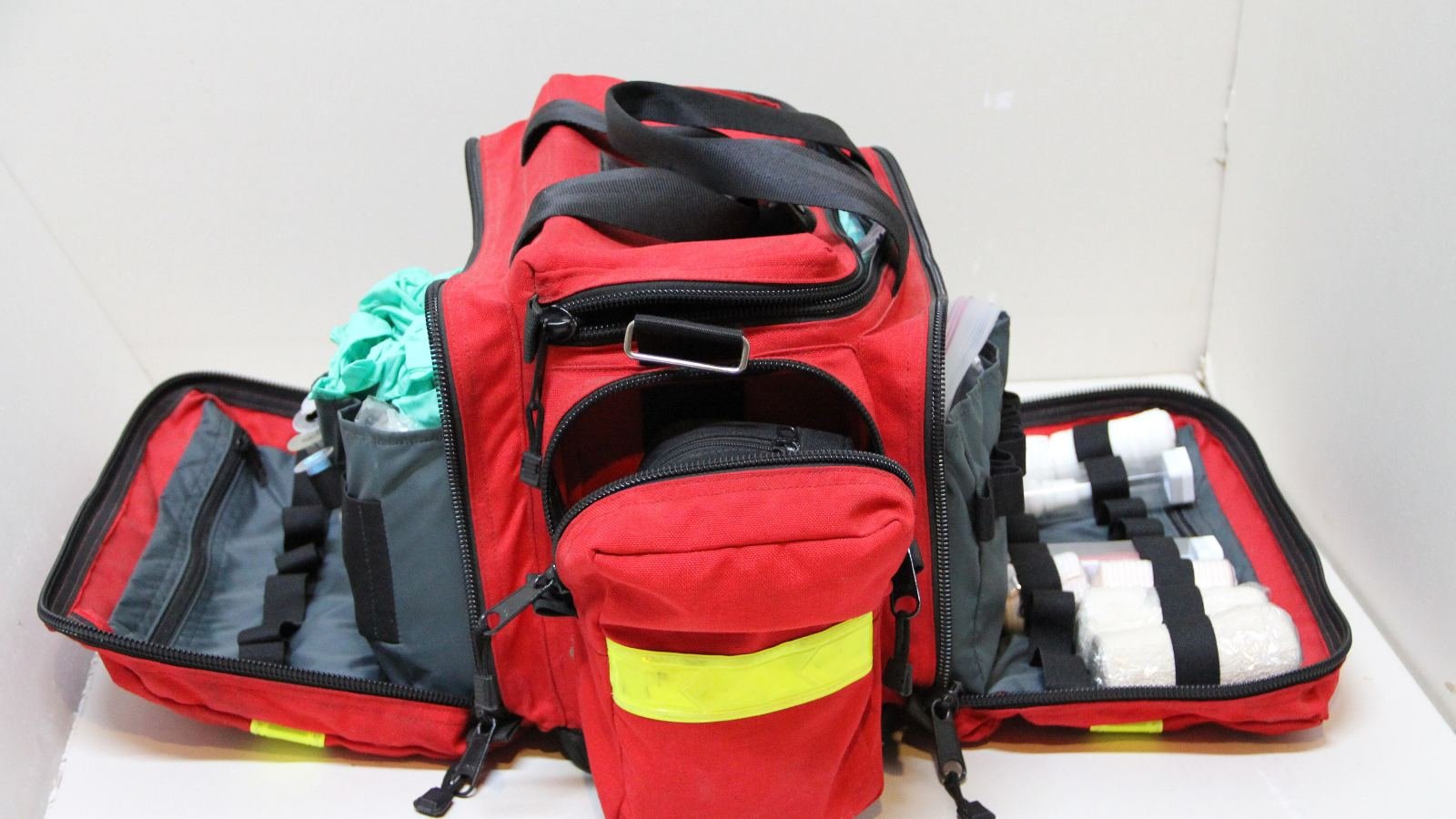
- Emergency kit: a whistle, head torch, thermal blanket or bivvy bag, first-aid kit and extra clothing are always in the pack (see The ten essentials; for what goes in a first-aid kit, see Health in the Mountains).
- Turnaround time: decide in advance the time at which you will turn back even if you have not reached the summit, and stick to it. On the descent, tiredness, darkness and worsening weather can all arrive at once.
The first minutes: stop and think
When you see an accident, your instinct tells you to run. In the mountains the right first move is often to stand still.
The first job after an accident is to prevent a second one. A rescuer who slips while running to the casualty, is hit by falling rock or walks onto the same avalanche slope doubles the problem.
- Make yourself and the party safe: is there still a risk of rockfall, slipping, avalanche or falling? If necessary, set up protection first (for mountain hazards, see Mountain Hazards).
- Reach the casualty and assess them: are they conscious, are they breathing, is there serious bleeding? Apply what you learned on your first-aid course.
- Decide: can we get down safely on our own, or should we call for help? If in doubt, call early; if the situation improves after the rescue team has set off, they can turn back, but the hours lost by a late call cannot be recovered.
- Share out tasks: one person looks after the casualty, one calls 112, one keeps the rest of the party warm and safe.
Calling 112
The operator at the other end of the line cannot see the mountain; they can only find you through what you tell them. Every word counts.
In Türkiye the single emergency number is 112. Since 2021 the police, gendarmerie, AFAD, forestry and coast guard lines have been merged into 112, and your call is passed on to the relevant teams from there. Before calling, have the following ready and tell the operator calmly and in order:
| What to say | Why |
|---|---|
| Location: the name of the mountain and route, coordinates (latitude and longitude), a nearby landmark | The team and helicopter use this to find you. Your phone’s map app shows the coordinates. |
| What happened: a fall, getting lost, illness, an avalanche | It determines what equipment the team brings. |
| Number of casualties, their age and condition | So the medical team can prepare. |
| Total number of people in the party | To know who is where. |
| A phone number to call back | The team may call you again on the way. |
| Weather and terrain: visibility, wind, a flat place where a helicopter could land, wires | To decide whether a helicopter can be used. |
- Stay where you are: stay at the place you reported until the rescue team reaches you or calls to tell you something else.
- Keep your phone on and reachable, but do not run the battery down with unnecessary calls. Batteries drain fast in the cold; carry the phone in an inner layer, close to your body.
A 112 card in your pack
In the stress of an accident it is easy to leave something out. Print the card below or copy it onto paper, and carry it in the lid of your pack or in your phone case. Fill in the route and phone lines before you set off, and read the rest off the card during the call. The card is the same as the table above, only grouped in the order Where? Who? What happened?
- Where?Mountain and route: Coordinates (latitude, longitude): Nearby landmark:
- Who?Caller’s name: Call-back number: Number of people in the party:
- What happened?Event (fall, lost, illness, avalanche): Number of casualties, age and condition:
- Weather and terrainVisibility and wind: Flat place for a helicopter, wires:
Then: Stay where you are · Keep your phone on · Distress signal 6 a minute (reply 3) · To a helicopter, both arms up Y = we need help, one arm up and one down N = we do not
Example: the UIAA and SAC emergency card
Mountaineering organisations also gather this information on cards to carry in the pack. A good example is the card and booklet produced by the Swiss Alpine Club (SAC) with the Swiss Society of Mountain Medicine and the youth sports programme Jugend+Sport; the International Climbing and Mountaineering Federation (UIAA) translated it into English and published it as Behavior in Emergency Situations. It contains these sections:
- Recognise, assess, act: taking in the overall situation and staying calm; weighing whether the danger threatens the casualty, the helpers or others; then protecting yourself, raising the alarm, securing the scene and helping.
- Raising the alarm: what to say, under the headings “Where? Who? What happened?”; if there is no phone signal, a text message, radio or satellite device. The card recommends calling the air rescue directly in a mountain emergency; this is for the Swiss system, while in Türkiye the number is 112.
- Helicopter rescue and signals: the Y and N arm signals, how to stand as the helicopter approaches, securing loose items; plus the distress signal (6 a minute, reply 3 a minute).
- First aid: the basic life support sequence, a systematic examination and special situations such as head injury, chest pain, neck and back injury and severe allergy. These are reminders for someone who has had first-aid training; they are learned on a course (see First-aid training, Call 112 at once: serious signs).
- Avalanche accident: the importance of the first 15 minutes, the search sequence, probing and shovelling (see Avalanche Rescue).
- Accident record form: the casualty’s personal and medical details (allergies, medication, known conditions, emergency contact); we explain where to write these down before setting off in the plan sheet.
The helicopter arm signals, the reply to the distress signal, the text-message advice and the advice to keep the wind at your back as a helicopter approaches on this page are taken from this card. For copyright reasons we do not publish the card itself here; you can download the German original free of charge from the SAC website. When preparing your own card, add what your party learned on its first-aid course alongside the 112 card above.
Giving your location
- Read out the coordinates: in most map apps, pressing and holding on your position shows the latitude and longitude. Read the numbers slowly and repeat them.
- Automatic location: according to the Ministry of Interior, the location of people calling 112 is determined automatically by the system. Even so, in the mountains the location may be wrong or rough; give whatever information you know as well.
- The Hayat 112 Acil app: launched by the Ministry of Interior in May 2026, the app signs in with e-Devlet (Türkiye’s e-government login) details; it lets you send your precise location and call for help with a single button, and attach a photo or a 10-second video to your report. Installing the app and testing the e-Devlet login before you set off saves time in an emergency.
Who comes in Türkiye?
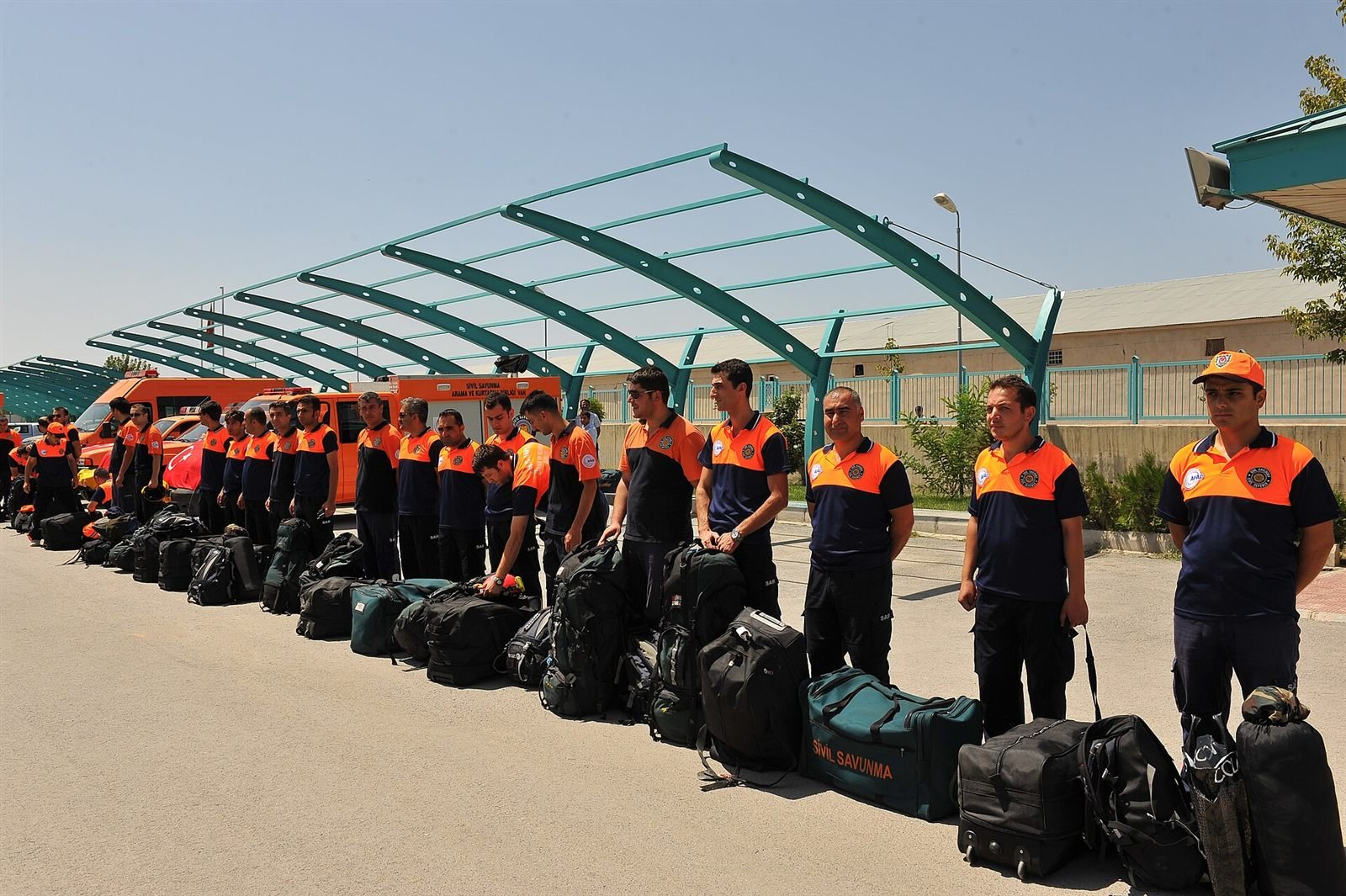
The 112 Emergency Call Centre assesses the call and directs suitable teams to the scene. The teams most often seen at mountain incidents are:
- AFAD (Disaster and Emergency Management Authority) search and rescue teams.
- JAK (Gendarmerie Search and Rescue) units: gendarmerie units working especially in mountainous areas and places busy with winter tourism.
- UMKE (National Medical Rescue Team): a team under the Ministry of Health that handles the medical side of rescue.
- 112 Emergency Medical teams and, when needed, aircraft; depending on the region, volunteer search and rescue associations also help.
Which team comes is decided by 112, not by you. Your job is to give the right information and stay reachable.
If there is no signal
“No service” in the corner of the screen. In the mountains this does not mean help is impossible, just that you need to find another way.
- Look for a spot with signal: ridges and high points often get better reception than valleys. If the casualty has to be left, one member of the party goes; they take the location and details with them in writing.
- Try a text message: if the signal is weak or the battery low, a text message (SMS) may get through more easily than a call. Try texting your location to the person you left your plan with.
- Satellite communication: a radio, satellite phone or a device that sends messages and location via satellite may be the only way in mountains with no phone coverage. Decide which to carry before you set off.
- Distress signal: if nobody can hear or see you, give the international distress signal used in the Alps since 1894: blow a whistle six times in one minute (or flash a light six times), wait a minute and repeat. Someone who hears your signal replies with three whistle blasts or flashes a minute; this tells you help is on its way. Even if you hear a reply, do not stop; keep going until someone reaches you. If you hear this signal in the mountains yourself, reply in the same way and call 112. Sound shows rescuers which way to come. That is why every pack has a whistle and a head torch.
- The hour you did not report back: this is where the plan you left before setting off pays off. The person you told “If we are not back by this time, call 112” starts the rescue when the time comes.
- Make yourself visible from above: for a team searching from the air, large markers in a colour that contrasts with the ground work well: a brightly coloured jacket or tent, sunlight reflected with a mirror or shiny surface by day, a head torch at night. In the international ground-to-air signals, drawing a large V on the ground means “we need help”.
Communication in the mountains: radios, satellite and emergency beacons
The phone is the most important emergency tool in the mountains, but it is not magic. You need to decide before setting off what will work where the signal ends.
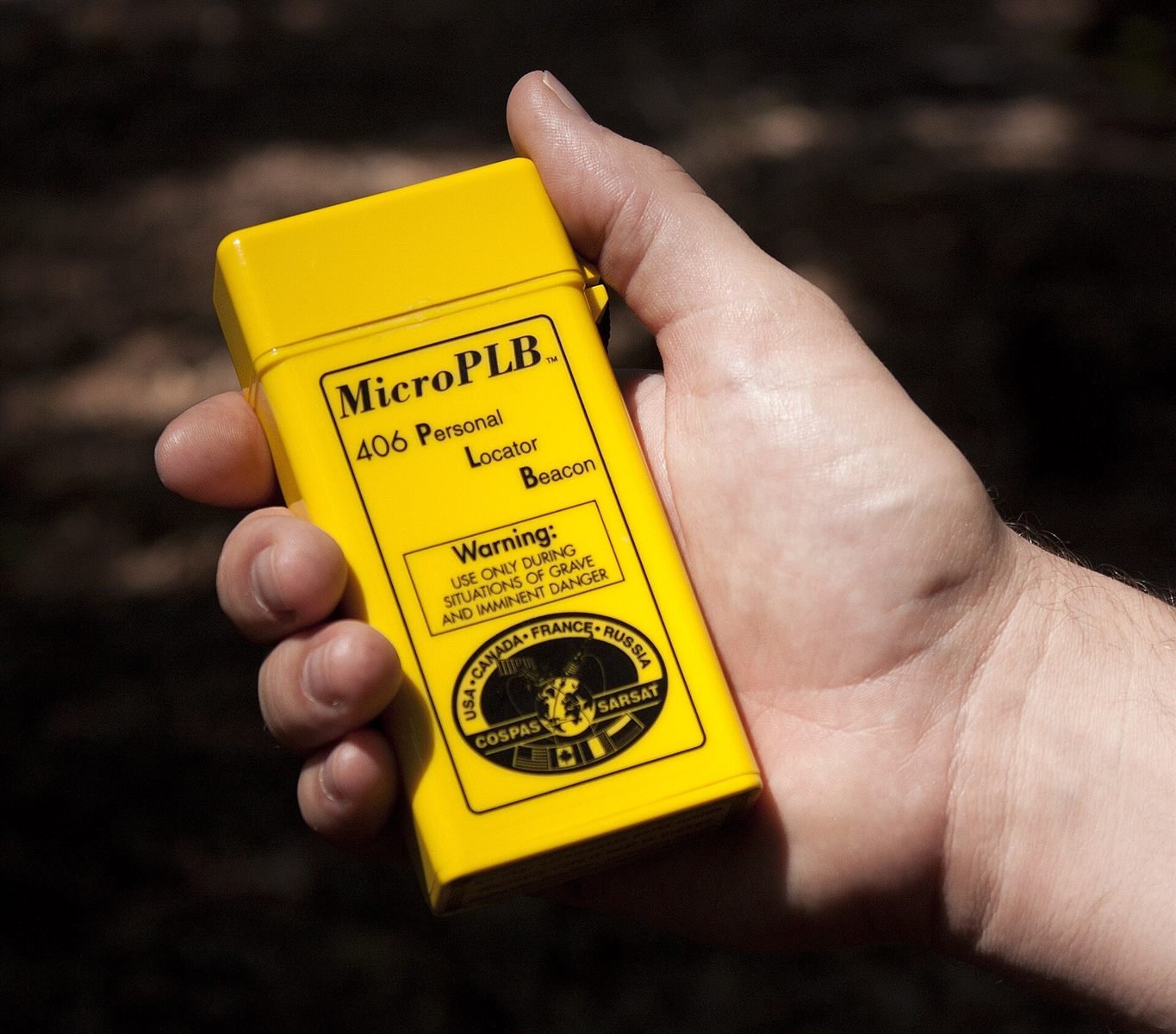
Each device has its job. Talking within the party, sending a message from where there is no signal and calling for help in a life-threatening moment are different jobs; a single device may not do them all.
| Device | What it does | Watch out |
|---|---|---|
| Mobile phone | Calls 112, sends your location, sends messages. | Needs a signal; the battery drains fast in the cold. Carry a spare battery. |
| PMR446 radio | Short-range talk within the party. Licence-free in Türkiye; 446 MHz, at most 0.5 W. | Range varies greatly with terrain; it cuts out between ridges and valleys. Not designed for emergency calls. |
| Amateur radio | Longer-range communication. | Requires an amateur radio licence obtained by examination. |
| Satellite messenger | Two-way short messages and location from where there is no signal; with the SOS button it reaches an emergency coordination centre staffed around the clock. | Needs a paid subscription. In some countries the use of satellite devices is regulated or banned; check the rules of the country you are going to. |
| Personal locator beacon (PLB) | Activated by hand; on 406 MHz it alerts search and rescue authorities directly via the international Cospas-Sarsat satellite system. Models with satellite positioning (GNSS) report your location to within about 100 metres. | Cannot send messages; it only says “we need help”. It must be registered. Once activated it transmits for at least 24 hours. |
- Satellite emergency features on phones: some new phones can send an emergency message via satellite when there is no signal. But this service only works in certain countries: for example, as of November 2026 Türkiye is not on the country list for Apple’s Emergency SOS via satellite. Before relying on your phone, check whether the service is available in the country you are in.
- Registration and testing: registering a PLB lets rescuers reach you and your family quickly when an alert comes in. Test the device only as the manufacturer describes; even a brief false signal can start a real alert.
- Choose with care: whichever device you carry, learn to use it at home, keep the battery charged and tell the person you leave your plan with which device you are carrying.
If you get lost
Most people who realise they are lost speed up. Yet the wisest thing to do at that moment is to stop and sit down.
The moment you realise you are lost, pressing on quickly in the wrong direction is the most common mistake. The four steps recommended by search and rescue teams are known by their initials as STOP:
- Stop: if you do not know the way for certain, stop walking, sit down and calm down.
- Think: when did you last know for sure where you were? How long have you been walking? Are you really lost, or have you just strayed from the path?
- Observe: compare your map, GPS and the obvious landmarks around you. Look at the weather, the light and the shelter available.
- Plan: whether to wait or to move to find your way again depends on the situation. If you can safely return to a point you are sure of, go back. If you are not sure, and the weather and light are getting worse, stay where you are, prepare a sheltered spot and call for help. Once you have called for help, do not move: changing position makes the search teams’ job harder; only move to reach shelter close by.
If someone becomes separated from the group, the party does not split up to search; it notes the place and time they were last seen and calls 112. We explain how to find your way again with a map, compass, phone and altimeter on the Map, Compass and Navigation page; the best cure for getting lost is not getting lost.
While waiting for help
Help is on its way. Now the real enemy is time, and its strongest weapon is the cold.
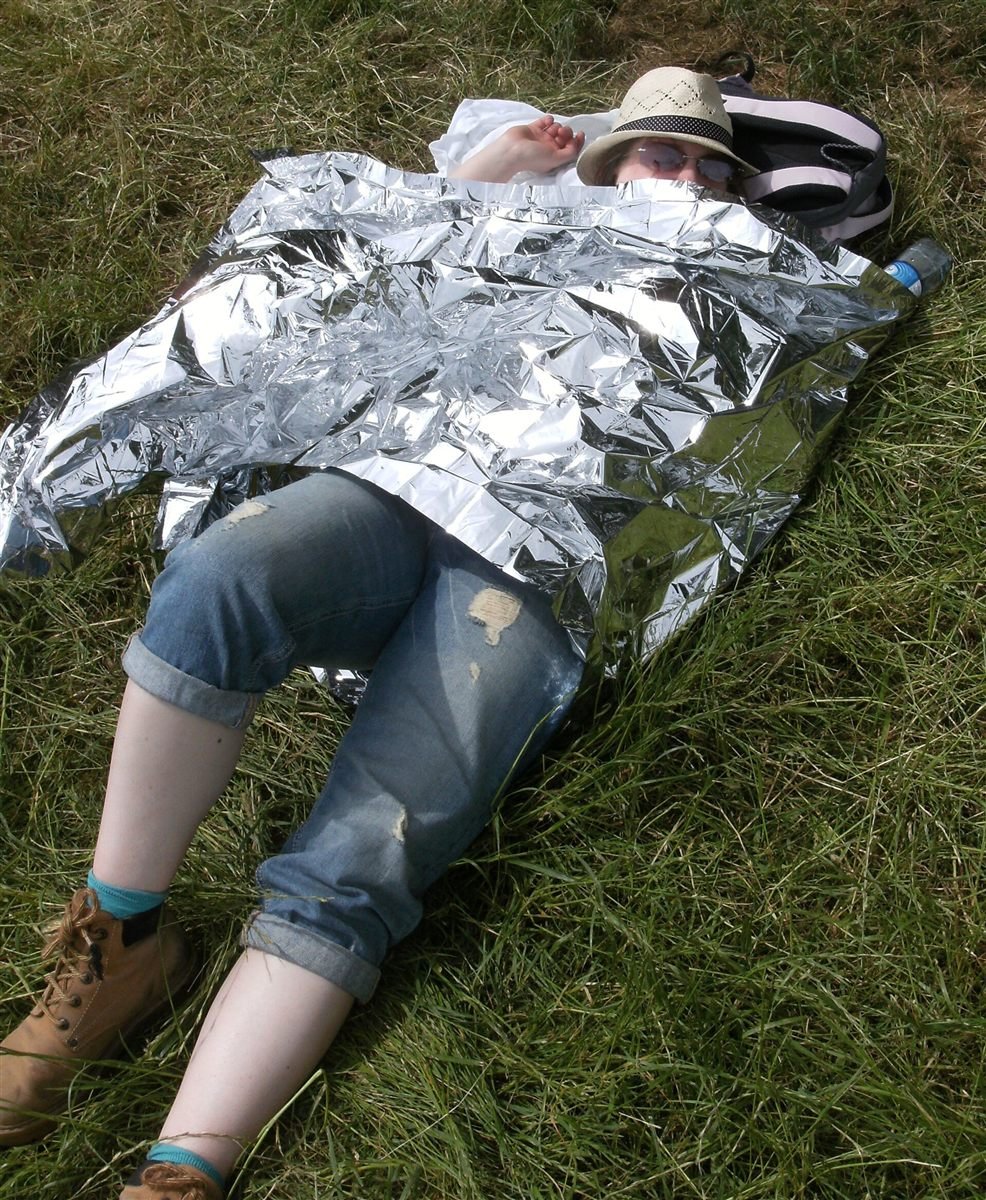
The wait can last hours. During this time the biggest enemy is usually the cold; because the casualty is lying still, they get cold much faster than the rest of the party.
- Insulate the casualty from the ground: put a mat, rope or rucksack under them; cover them with a bivvy bag, emergency blanket and spare clothes. Most heat is lost to the ground and the wind.
- Get out of the wind: behind a rock, in a dug snow hole or behind a quickly built wall. For an unplanned winter night, see The unplanned night: emergency bivouac.
- Do not leave the casualty alone; talk to them and note changes in their condition (time, consciousness, breathing). Give these notes to the rescue team.
- The rest of the party also eats, drinks and dresses warmly. A rescuer who becomes hypothermic makes things worse. For the signs of cold injury, see Surviving the Cold.
- Be visible: spread out a brightly coloured jacket or tent; keep your head torch on at night.
Managing the incident: who does what?
Everyone trying to do the same thing at the moment of an accident wastes time. One person in the team runs the incident and hands out tasks: one stays with the casualty and monitors them, one takes on communication (112, radio, satellite device), one deals with shelter and warmth, and one looks after the safety of the rest of the team. In a small team one person takes on several tasks; what matters is saying out loud who is responsible for what. How to manage a group is on the Group Leadership page.
Giving the rescue team a written note is far more reliable than telling them. What a tired, cold and worried person remembers can get muddled. That is why the emergency form of the Swiss Alpine Club, also published by the UIAA, asks you to write down the casualty's details and your observations. You can print the card below and put it in your first aid kit:
- CasualtyName and age: Allergies, medication, medical conditions: Person to inform:
- IncidentTime and what happened (fall, rock, avalanche, illness): Where there is pain, a wound, bleeding:
- MonitoringTime · consciousness (awake, answering questions?) · breathing · cold: Time · consciousness · breathing · cold: Time · consciousness · breathing · cold:
- ActionsWhat was done, and at what time (insulation, warm clothing, drinks, first aid):
If anything changes (consciousness clouding, breathing getting harder, shivering stopping), write down the time and inform 112 again.
If a helicopter approaches
When you hear the rotors, you feel relief. But whether the helicopter can reach you safely also depends on what you do on the ground.

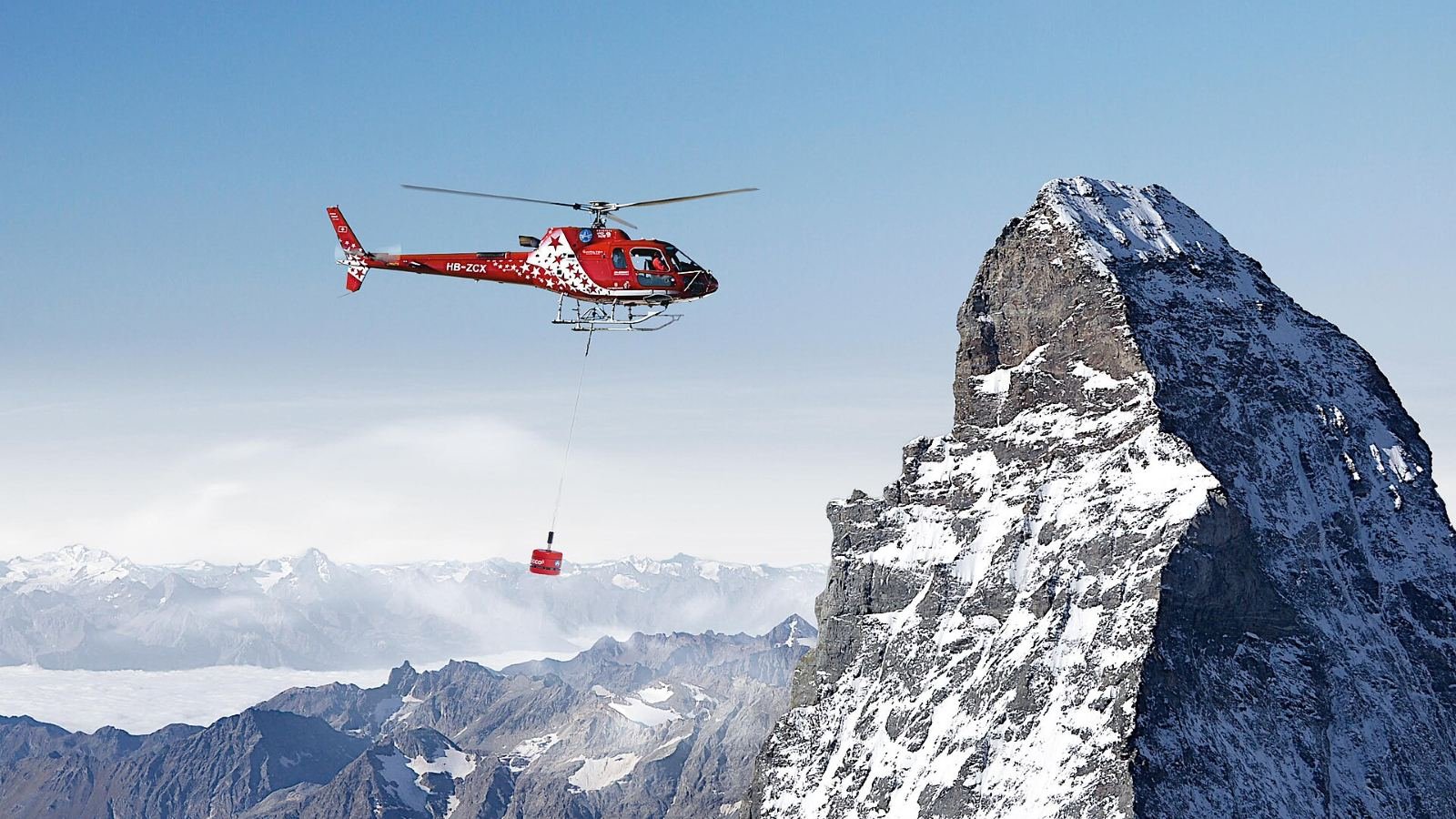
Helicopter rescue is fast, but it depends on the weather, visibility and wind. Follow the instructions of the team arriving by helicopter. The advice of Rega, Switzerland’s air rescue organisation, gives a general framework:
- Landing site: a flat area of about 25 x 25 metres, free of wires and obstacles; if possible about 100 metres away from the accident site.
- Gather up loose items: the rotor downwash lifts jackets, packs and mats into the air.
- Stay where you are as it approaches, kneel down, keep the wind at your back and keep eye contact with the pilot.
- Do not approach the helicopter until the rotor has stopped completely; if the crew calls you over, come from the direction they show you.
- If you do not need help, do not wave at the helicopter: a friendly wave can be mistaken for a call for help.
Arm signals to a helicopter
A crew looking down from the air finds it hard to tell whether someone on the ground wants help or is just resting. In the mountains two international arm signals are used for this. Face the helicopter and hold the signal steady until the crew sees it:
| Signal | How to make it | Meaning |
|---|---|---|
| Y (Yes) | Both arms raised diagonally upwards; the body looks like the letter Y. | Yes, we need help. |
| N (No) | One arm stretched diagonally up, the other diagonally down; the body looks like the letter N. | No, we do not need help. |
An easy way to remember: Y is for “yes” and N is for “no”.


Getting down on your own
Sometimes the best rescue is one that is never called: a summit turned back from early, a decision made in time.
Not every difficult situation needs a rescue call. A party that is tired, has a minor sprain or turns back because the weather has turned can usually get down safely on its own if it decides early. What matters is seeing the situation before it grows.
- Stick to your turnaround time: when the turnaround time in your plan comes, turn back however close you are to the summit.
- With altitude illness, if the symptoms get worse you do not keep climbing, you descend; details on the Altitude Illness page.
- In an avalanche, the first minutes of rescue depend not on a team coming from outside but on the companions at the scene: Avalanche Rescue.
- If the situation gets worse, do not delay the call. Being caught out on the mountain at nightfall while trying to get down on your own is one of the worst options.
Abroad
On a mountain abroad, a helicopter can get you to hospital in a few minutes; and then an unexpected bill may follow.
Every country’s mountain rescue system is different. In Switzerland, for example, Rega has its own number (1414) for air rescue. Note down the emergency and mountain rescue numbers of the country you are going to before setting off. Rescue and helicopter evacuation cost money in some countries; ask in advance whether your insurance covers mountain rescue and the altitude you will be climbing to.
Training: the best preparation
In a panic, people do not act by thinking but by habit. So the habit has to be learned in advance.
In an accident, people act not by thinking but as they have been trained. So:
- Take a first-aid course and keep your certificate up to date. It is required anyway for federation courses.
- The Turkish Mountaineering Federation’s Search and Rescue Course is one of the levels opened after the basic courses; its place and date are announced each year in the activity programme. Details: TDF training levels.
- Rehearse with your party: before going up the mountain, talk through what to say to 112, where the bivvy bag is kept and who has the whistle.
The list of emergency equipment is on the Equipment and Clothing page.
Sources
16
- Merging of emergency numbers into 112 – AA / Milliyet: Ministry of Interior announces switch to a single emergency number across Türkiye (11 October 2021) (in Turkish)
- What to say in a call and the distress signal – Lake District Search & Mountain Rescue Association: Stay Safe and Enjoy the Fells
- History of the Alpine distress signal – Austria-Forum (AEIOU): Alpine Distress Signal
- Calling a helicopter, landing site and safety – Rega (Swiss Air-Rescue): Calling out a rescue helicopter
- Automatic location on 112 – Posta: Ministry of Interior says 89 million calls answered (in Turkish)
- The Hayat 112 Acil app – Ministry of Interior: one-button reporting begins with the HAYAT 112 Acil mobile app (May 2026) (in Turkish)
- Waiting or moving when lost – New Zealand Mountain Safety Council: Emergency
- Organisations involved in mountain rescue – İstiklal: JAK and AFAD rescue (in Turkish), Milliyet: AFAD-led rescues on Erciyes and in the Aladağlar (in Turkish)
- The STOP steps when lost – KSL: STOP, what to do when lost in the woods
- Arm signals to a helicopter and the reply to the distress signal – Swiss Alpine Club (SAC), Swiss Society of Mountain Medicine and Jugend+Sport: Notfallblatt (emergency card, in German)
- Search and rescue course calendar – Turkish Mountaineering Federation: Activity Programme (in Turkish)
- Personal locator beacons (PLB), 406 MHz and registration – NOAA SARSAT: 406 MHz Emergency Distress Beacons
- Satellite messengers, subscriptions and country rules – Garmin: What's different about inReach devices?
- Emergency SOS via satellite on phones and the countries where it is available – Apple: Use Emergency SOS via satellite on your iPhone
- PMR446 radios – Regulation on Short Range Radio (KET) Devices, Official Gazette (in Turkish)
- Amateur radio licence – Amateur Radio Regulation (in Turkish)