
No cable car, no queue, no piste. At dawn you stick the skins to the bottom of your skis and start gliding uphill. Three hours later you are on the summit; you peel off the skins, lock your bindings and ski the whole slope you just climbed in a few minutes, in untouched snow.
Ski mountaineering (skimo) is the art of climbing a mountain on skis and skiing back down. Sometimes it is a tour to the top of a single snow slope; sometimes it is the summit of a high mountain that needs crampons, an ice axe and a rope. It is also a competitive sport and joined the Olympic programme for the first time at the 2026 Milano–Cortina Winter Olympics. This page covers ski mountaineering from equipment to ascent and descent technique, from avalanches to competitions and the Olympics.
This page does not replace training. Ski mountaineering combines two separate skills: skiing safely in every kind of snow, and making the right decisions in the mountains, especially in avalanche terrain. Both are learned slowly with an instructor. Avalanche danger is on Avalanches and Snow, avalanche rescue on Avalanche Rescue, winter equipment on Winter Equipment, and training levels on Clubs, Courses and Training Levels.
The military patrol race at the first Winter Olympics: considered the root of ski mountaineering racing. The race later became biathlon.
Source: BMCThe first year of the legendary Patrouille des Glaciers between Zermatt and Verbier. Today 57.5 km with 4,386 m of climbing.
Source: Patrouille des GlaciersSki mountaineering’s Olympic debut: two sprints and a mixed relay, three medal events.
Source: Olympedia, NBC OlympicsWhat is ski mountaineering?
Walking uphill on skis looks impossible. The secret is sticking a “skin” with hairs that lie in one direction to the bottom of the ski.

In ski mountaineering, the heel is free on the way up: the binding holds only the front of the foot, and you walk by sliding the ski forward without lifting it. The climbing skin under the ski lets it slide forwards and stops it sliding back. On the summit or at the top of the descent, the skins come off, the heel is locked and the ski descends like a normal ski.
- Ski touring: climbing and skiing a single slope or hill, or a hut tour of several days. It does not need technical mountaineering but takes place in avalanche terrain.
- Ski mountaineering: climbing on skis to or near the summit of a mountain. Part of the route is done on foot in crampons with skis on the pack, sometimes using a rope and ice axe; if there is a glacier, glacier technique is needed (Glacier Travel and Crevasse Rescue).
- Racing (skimo): a race against the clock on a set course of climbs, bootpacks with skis on the back, and descents. Explained below.
Equipment
A ski mountaineer wants two things, and they are opposites: gear as light as a feather on the way up and as solid as rock on the way down.
- Skis: lighter than alpine skis, since they are carried uphill. Width and length vary with use: race skis are very narrow and light, those designed for deep snow are wider.
- Bindings: bindings that free the heel for the ascent and lock for the descent. The most common are light pin (tech) bindings, where metal pins fit into two holes in the toe of the boot. Frame bindings are heavier but closer to alpine skiing; telemark is a separate technique in which the heel stays free on the descent too.
- Boots: boots whose cuff can be freed for walking and locked for skiing. To use pin bindings, they need suitable fittings at the toe and heel.
- Climbing skins: strips attached under the ski with a loop at the tip and a hook at the tail, held on by adhesive. Their hairs lie in one direction: the ski slides forwards but not back. Nylon skins grip more and are durable, mohair (angora goat hair) skins glide better; most skins are a blend.
- Ski crampons (harscheisen): metal teeth attached to the binding where the skin will not grip on hard, icy snow.
- Avalanche kit: transceiver, probe and shovel, always, for everyone. Their use is learned on a course (Avalanche Rescue).
- For the mountain: depending on the route, helmet, ice axe, crampons, harness and rope. Choosing them is covered on Winter Equipment.

Ascent technique
A beginner tries to climb the slope with their muscles and is exhausted after an hour. An experienced ski mountaineer never lifts the ski; they just slide it.

- Slide, do not lift: the ski is not lifted off the snow but slid forwards. Steps are short and even, and your weight goes fully onto the back ski; that way the skin grips best.
- Heel risers: the risers at the heel of the binding level the foot on steep slopes and relieve the calves. They are not used on gentle slopes; they spoil the stride.
- Setting a track: a good skin track zigzags at an even angle. A track that is too steep tires everyone and the skins start to slip. Choose the track so that it runs along safe lines away from avalanche terrain.
- Kick turn: the turn used to change direction on a zigzag, turning the skis one after the other. On steep slopes it is where most energy and time are lost and where most falls happen; practise it plenty on flat, safe ground.
- Skis on the pack: on sections too steep, icy or rocky for the skins to grip, strap the skis to your pack and walk in boots, with crampons and ice axe if needed.
Descent
On the piste the snow is groomed every morning. In the mountains you can meet hard wind crust, an icy strip and knee-deep powder on the same slope in the same minute.
- Transition: switching from ascent to descent, the skins are peeled off and folded away, boots and bindings are locked into ski mode, and clothing is changed. On a windy summit, do these jobs in a sheltered spot, in order and without dropping a glove.
- Off-piste snow: powder, wind crust, softening spring snow and icy snow each need their own technique. Before starting ski mountaineering, you need to ski comfortably in every kind of snow on and beside the piste.
- Ski one at a time: in avalanche terrain, the team skis the slope not all at once but one by one, from one safe spot to the next. Everyone watches the person skiing.
- The consequence of a fall: falling on skis on a steep, hard slope can mean sliding a long way without stopping. On such slopes, descending in crampons instead of on skis is sometimes the right decision.
Avalanches and decisions
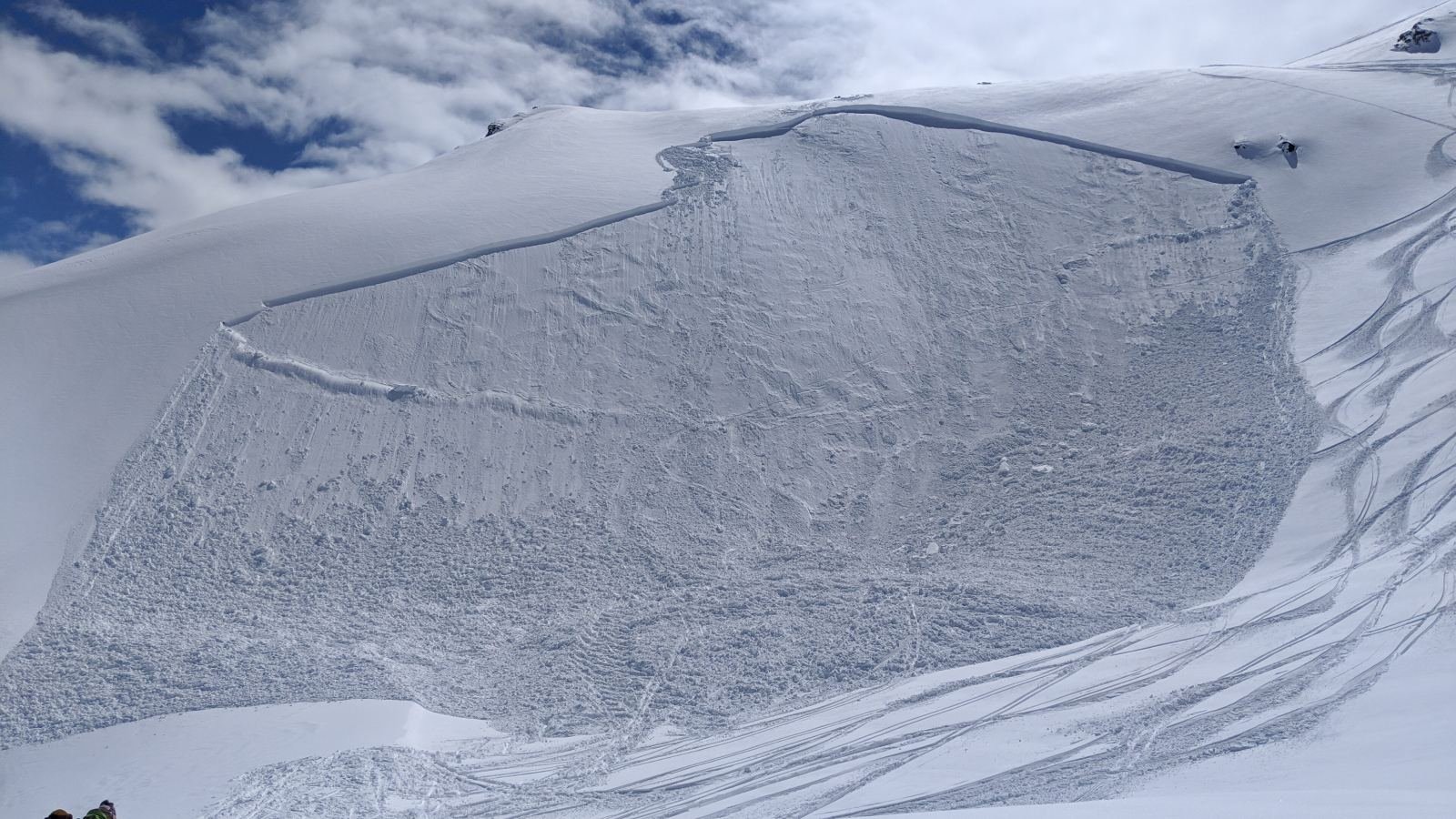
The ski mountaineer’s favourite slope, untouched, steep and full of snow, is also the avalanche’s favourite: most slab avalanches release on slopes of 35–45 degrees.
Ski mountaineering almost always takes place in avalanche terrain. So the real skill is not skiing but deciding where and when to ski.
- Bulletin and plan: before setting off, read the avalanche bulletin and weather forecast, and choose the route and retreat options accordingly (Avalanches and Snow).
- Kit and training: everyone in the team carries a transceiver, probe and shovel and knows how to use them. Do not enter avalanche terrain without avalanche training (Avalanche Rescue).
- Next to the ski resort is still the mountain: off-piste starts at the edge of the ski resort and is not controlled. The off-piste at resorts such as Erciyes is avalanche terrain too.
Competitions
A skimo racer needs a runner’s lungs, a skier’s nerve and the speed of a pit-crew mechanic all at once: peeling and refitting skins in seconds wins races.
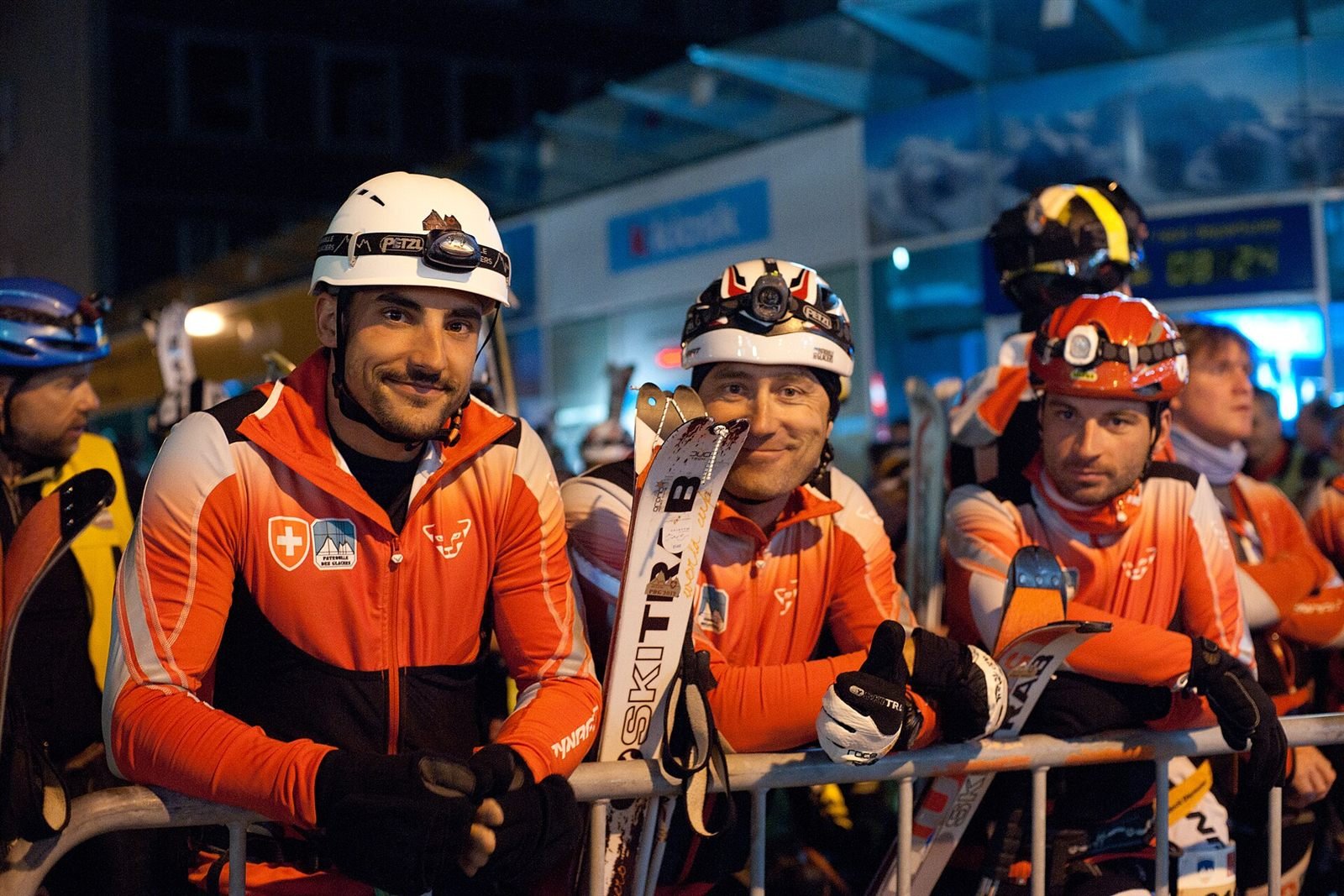
Ski mountaineering racing goes back to the military patrol race at the 1924 Chamonix Winter Olympics: mountain troops raced on skis over mountainous terrain and finished with shooting. That race gradually became biathlon; long mountain races continued as a separate tradition. The Trofeo Mezzalama in Italy started in 1933, and the Patrouille des Glaciers in Switzerland in 1943. Today international races are governed by the International Ski Mountaineering Federation (ISMF), founded in 2008.
| Race type | How it works |
|---|---|
| Individual | A long mountain course of several climbs and descents, with sections walked with skis on the pack |
| Teams | Long mountain races run together by teams of two or three; classics such as the Patrouille des Glaciers are of this kind |
| Vertical | Climb only: the first to get from the start to the top wins |
| Sprint | A short course lasting a few minutes: skin climb, short bootpack with skis on the back, descent and fast transitions; heats lead to a final |
| Mixed relay | A team of one woman and one man lap a short course in turn |
Ski mountaineering at the Olympics
The story that began a century ago with a military patrol race at Chamonix was completed in 2026 with an Olympic medal in the Italian Alps.
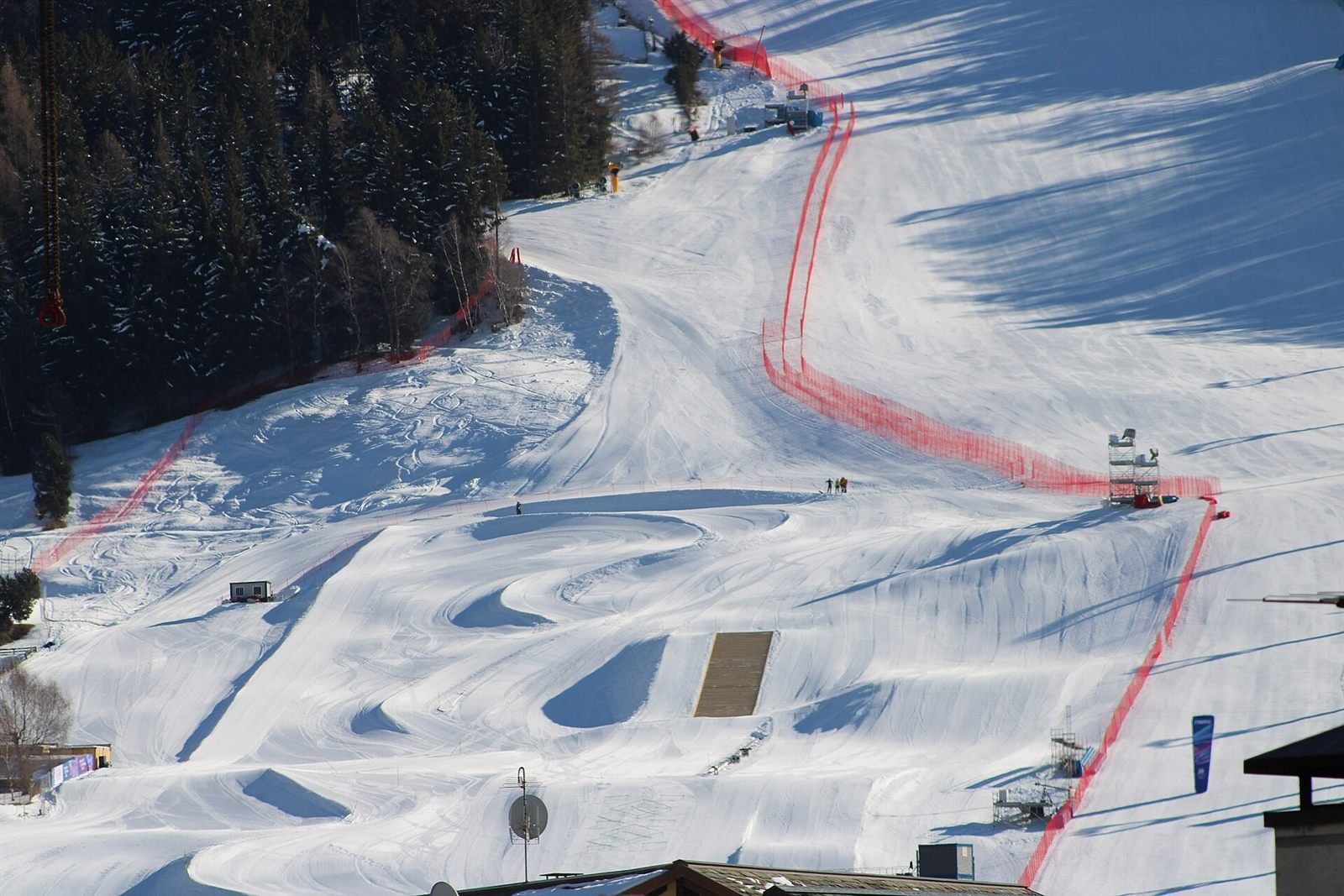
Ski mountaineering became an Olympic sport for the first time at the 2026 Milano–Cortina Winter Olympics. The races were held at the Stelvio Ski Centre in Bormio on 19 and 21 February 2026. There were two formats on the Olympic programme:
- Sprint: a single-lap course with about 70 metres of climbing, lasting 2.5–3 minutes. After heats of six athletes, semi-finals and a six-person final are raced.
- Mixed relay: teams of one woman and one man lap a course with about 140 metres of climbing per lap four times, in the order woman–man–woman–man; the race lasts about 30 minutes.
| Event | Gold | Silver | Bronze |
|---|---|---|---|
| Women’s sprint | Marianne Fatton (Switzerland) | Emily Harrop (France) | Ana Alonso (Spain) |
| Men’s sprint | Oriol Cardona (Spain) | Nikita Filippov (Individual Neutral Athlete) | Thibault Anselmet (France) |
| Mixed relay | France (Emily Harrop, Thibault Anselmet) | Switzerland (Marianne Fatton, Jon Kistler) | Spain (Ana Alonso, Oriol Cardona) |
The gold won in the women’s sprint was ski mountaineering’s first Olympic gold medal.
Ski mountaineering in Türkiye
Most of Türkiye’s ski resorts are on high, wide volcanic slopes. Where the cable car ends is where the ski mountaineer starts.
Ski mountaineering races in Türkiye are organised by the Turkish Mountaineering Federation. At the Turkish Ski Mountaineering Championship held in the Hacılar Kapı area of Erciyes Ski Resort in January 2026, 72 athletes competed. Erciyes (3,917 m), with its easy access and wide slopes, is one of the mountains where most people in Türkiye start ski touring and ski mountaineering; other mountain regions are on Mountain Regions of Türkiye. Mountains suited to winter mountaineering and ski mountaineering, and permit rules, are on the Winter Climbing in Türkiye page.
How to start
A good ski mountaineer is first a good skier, then a good mountaineer. The order matters.
- Skiing first: be able to ski comfortably on any gradient and snow on the piste. Go off-piste with an instructor.
- Avalanche training: avalanche knowledge and avalanche rescue come before equipment.
- Try it by renting: touring equipment is expensive; make your first tours with rented gear, on short routes with low avalanche danger, with an experienced team.
- Club: mountaineering clubs that go ski touring and the federation’s courses are the safest way in (Clubs, Courses and Training Levels).
Sources
14
- Definition, equipment and Olympic debut of ski mountaineering – Wikipedia: Ski mountaineering
- The 1924 military patrol race and the roots of skimo racing – BMC: A brief history of Ski Mountaineering Racing
- Patrouille des Glaciers: 1943, the 1949 accident, women’s teams – Patrouille des Glaciers: History
- Patrouille des Glaciers: course length and climbing – Wikipedia: Patrouille des Glaciers
- Trofeo Mezzalama (1933) – Wikipedia: Mezzalama Trophy
- Founding of the ISMF (2008) – Wikipedia: International Ski Mountaineering Federation
- 2026 Olympic results – Wikipedia: Ski mountaineering at the 2026 Winter Olympics
- 2026 Olympic results – Olympedia
- Olympic sprint and mixed relay format – NBC Olympics: How does Olympic ski mountaineering work?
- The first Olympic gold: Marianne Fatton – TSN / AP
- Climbing skins: sealskin, nylon and mohair – Wikipedia: Ski skins
- The pin binding, Fritz Barthel and “Low Tech” (1984) – WildSnow: Tech binding history
- Turkish Ski Mountaineering Championship, Erciyes, January 2026 – Karar, 18 January 2026 (in Turkish)
- Equipment and training in avalanche terrain – Avalanche Canada