
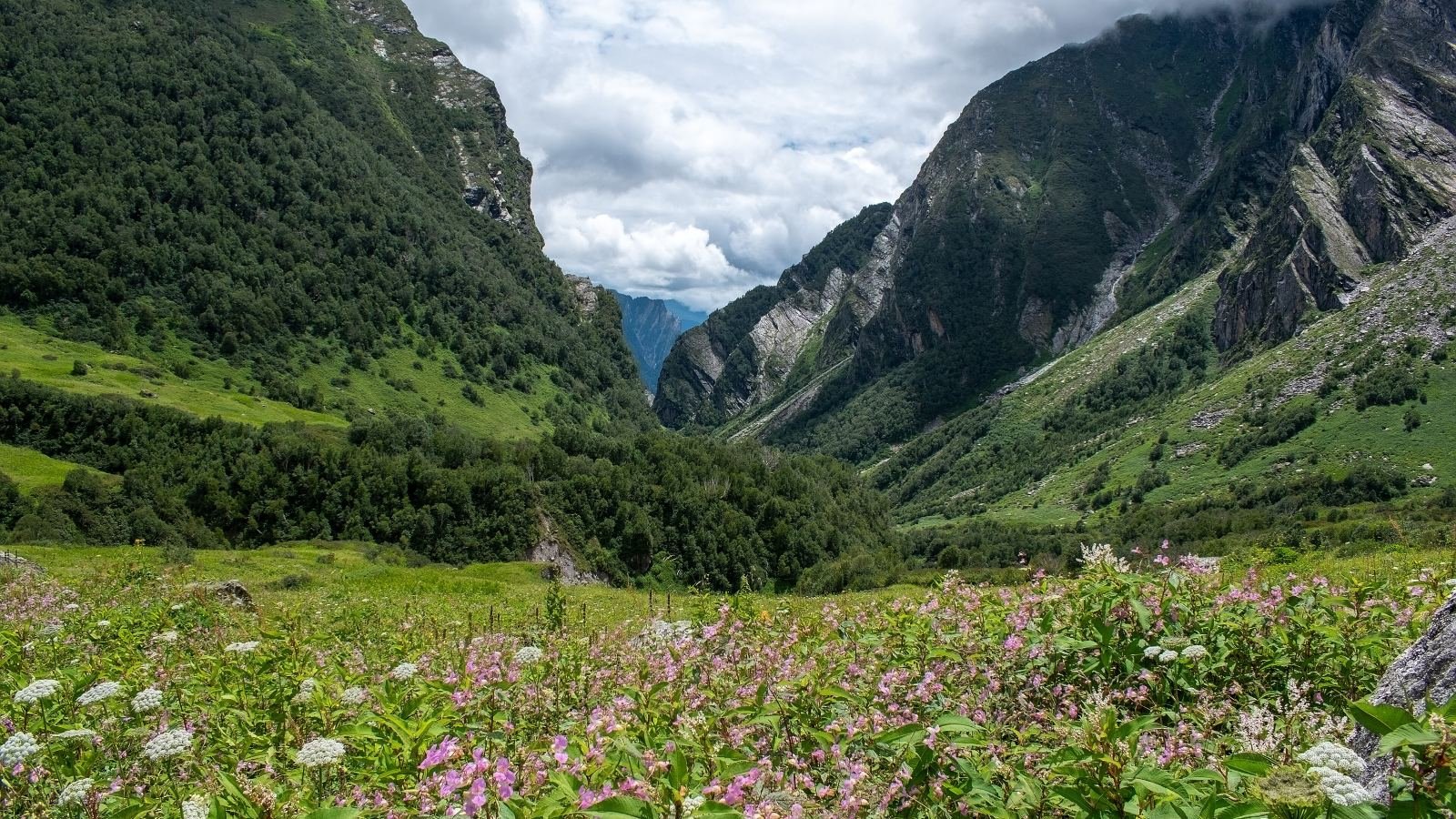
In the morning you set off in the humid forest of the Black Sea coast; by noon the trees are behind you and you are walking across a flowering highland pasture; by late afternoon you are among the rocks at the edge of a glacial lake. Climbing a few thousand metres in a day is roughly like travelling from Türkiye towards the poles.
Knowing the mountain is part of moving safely on it. The zone you are in decides wind and water, the rock under your feet decides rockfall and grip, and the marks left by glaciers decide how hard the way is. This page describes the mountain's natural make-up through a mountaineer's eyes, and how we can leave that nature for the next mountaineer.
The average fall in temperature for every 1,000 metres of height in the standard atmosphere. The real value changes with weather, humidity and season.
Source: ICAO, Penn StateOf the roughly 11,000 flowering plant species in Türkiye, about 4,000 are endemic: they grow naturally nowhere else in the world.
Source: Turkish Ministry of Environment and UrbanisationThe first famous drawing showing that plants are arranged in zones by altitude was published that year.
Source: Humboldt, BonplandAltitude zones
As you climb a mountain, the trees first get smaller, then stop. The moment you cross that line, the mountain starts treating you differently.
As you climb, the air gets colder, the wind harsher, the soil thinner and summer shorter. That is why plant cover on mountains is arranged in zones: forest on the lower slopes, above it the treeline where trees end, then alpine meadows, and at the top rock, snow and ice. The heights of the zones vary from mountain to mountain: at the same altitude you will see very different landscapes in the humid Black Sea mountains and the dry mountains of Eastern Anatolia.
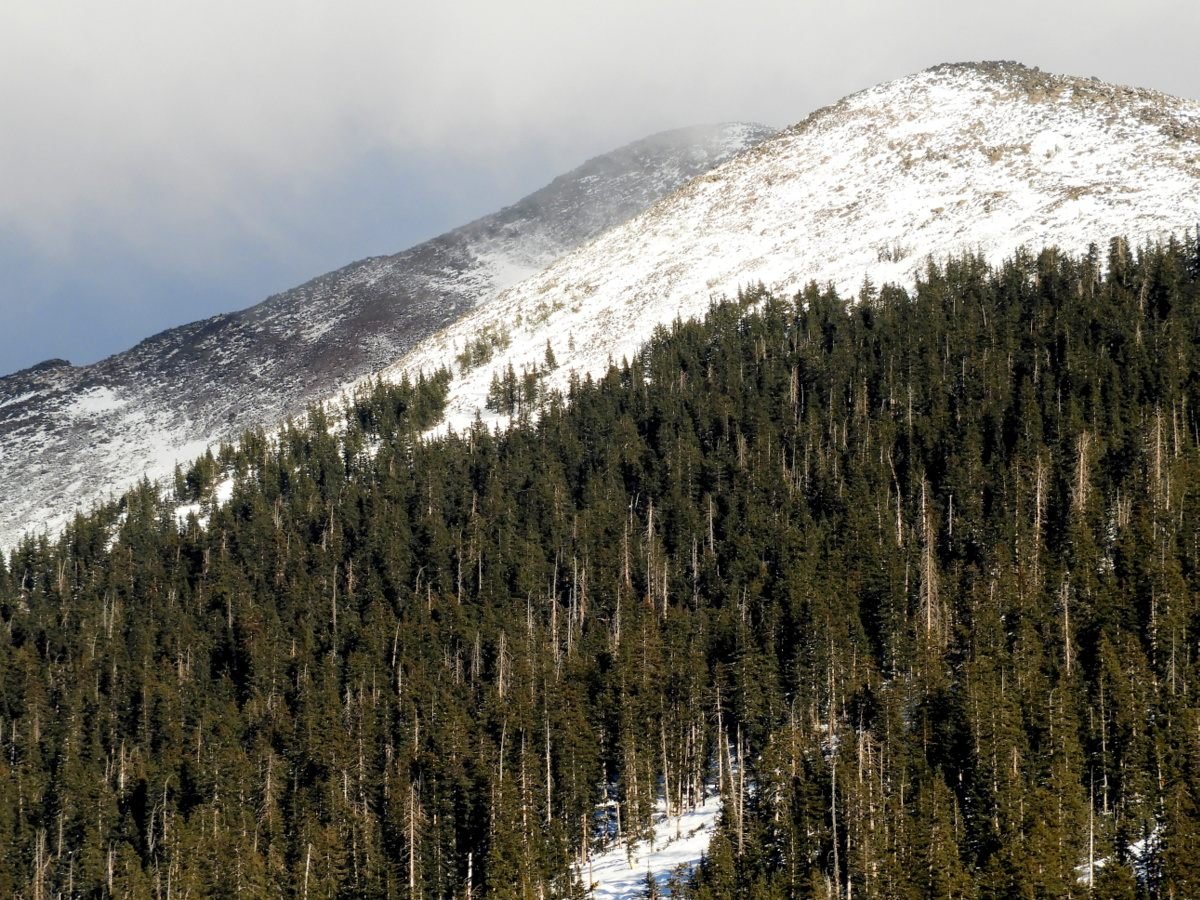
- Above the treeline: There is less shelter from wind, sun and lightning. Campsites and rest spots are chosen with that in mind (Camping).
- Water: Streams are plentiful on the wooded lower slopes; higher up there is often only snowmelt and springs. Late in summer many springs dry up.
- Navigation: On alpine meadows and rocky ground the path can disappear, leaving navigation to the map and the terrain (Map, Compass and Navigation).
Life on the mountain
The small purple flower beside the path may grow on this slope and nowhere else in the world.
Türkiye is very rich in plant diversity: about a third of its flowering plant species are endemic, meaning they grow naturally only in Türkiye. Many of these species live in the mountains, in small areas. Mountains are also a refuge for animals that prefer to keep away from people, such as wild goats, bears, wolves and large birds of prey.

- Do not pick flowers or dig up roots: It may be one of the few individuals of a rare species on a single slope. Take a photo.
- Keep your distance from wildlife: Do not approach or feed animals, and do not stay near their young. What to do if you meet a bear is on the Mountain Hazards page.
- Do not roll stones off rocks: Someone may be below, and it destroys the homes of creatures on the slope.

Rock types and the route
Of two slopes at the same angle, one is a sticky staircase under your feet and the other a bed of ball bearings that slides with every step. The difference is in the rock itself.
What rock a mountain is made of decides grip, rockfall, water and the character of the route. Türkiye's mountains come from three big families:
| Rock | Where? | What it means for a mountaineer |
|---|---|---|
| Volcanic | Volcanoes such as Ağrı (Ararat), Süphan, Erciyes and Hasan | Lava blocks and loose scree; on wide scree slopes every step slides. Rockfall is common higher up. |
| Limestone | Most of the Aladağlar and the Taurus Mountains | Sharp walls, often with solid holds; but water disappears underground (karst) and springs are scarce higher up. Sharp edges cut ropes and hands. |
| Granite and similar rocks | The core of the Kaçkar Mountains (the Kaçkar batholith) | Rough rock with good friction; routes follow the cracks. Where glaciers have polished it, it is slippery when wet. |

Scree and rockfall occur on every rock type, but they increase especially higher up, where freezing and thawing break up the rock. Technique for walking on scree is on the Walking in the Mountains page, and protection from rockfall on the Mountain Hazards page.
Marks left by glaciers
Those deep blue lakes in the Kaçkar Mountains are a memory of glaciers that sat there thousands of years ago.
As glaciers retreat they leave behind shapes that are easy to recognise: amphitheatre-shaped hollows carved into the mountainside (cirques), wide U-shaped valleys, banks of rock and soil carried and piled up by the glacier (moraines), and glacial lakes at the bottom of cirques. In the Aladağlar there was an ice cap on the Yedigöller plateau in the last ice age; the lakes that give the area its name ("Seven Lakes") are traces of those glaciers. Türkiye's present-day glaciers keep shrinking (Glacier Travel).


- Moraines are loose: The heaps of rock and soil left by a glacier are not compacted; walking on them is tiring and their slopes are slippery.
- Cirque walls: Stones and snow fall from steep cirque walls; when camping by a lake, keep away from the foot of the walls.
- Lakes are water sources: Glacial lakes are valuable sources of drinking water; keep soap and waste away from them.
Leave no trace
The best campsite is one that looks as if nobody has stayed there before you. It should stay that way for whoever comes after you.
The Leave No Trace principles are the most widely used guide in the world for minimising the impact of people spending time in nature. The seven principles are:
- Plan ahead and prepareLearn the rules of the area, leave unnecessary packaging at home, go in small groups.
- Travel and camp on durable surfacesStay on the path; camp on rock, gravel or dry grass; keep away from wetlands and stream banks.
- Dispose of waste properlyTake back everything you bring. For a toilet, dig a hole 15–20 cm deep at least 60 metres (about 70–80 steps) from water, camp and trails, and cover it.
- Leave what you findDo not take flowers, stones, fossils or historical objects.
- Minimise campfire impactsUse a stove for cooking; fires are banned in most protected areas (Permits and Rules).
- Respect wildlifeWatch from a distance, do not feed animals, protect your food from them.
- Be considerate of other visitorsBe quiet, share the path, remember you share the view with others.
- Toilet paper and wet wipes: The US Forest Service recommends packing them out; paper is buried deep in the hole only if it cannot be carried out. Wet wipes and hygiene products are always carried out.
- Dishes and soap: Wash at least 60 metres from water, with a little biodegradable soap; scatter the strained water on the ground.
The people of the mountains
When you reach a highland pasture, you are a guest. The meadow where you pitch your tent may be someone's summer grazing.
- Highland pastures (yayla): Do not camp close to shepherds' tents, pens or irrigation channels; ask permission.
- Shepherd dogs: Do not approach flocks; what to do when you meet the dogs is on the Mountain Hazards page.
- Gates and fences: Leave them as you found them; open if open, closed if closed.
- Local knowledge is valuable: Villagers and shepherds often know best about water, paths and weather. Asking improves safety and builds friendship.
Sources
9
- Temperature lapse rate in the standard atmosphere (about 6.5 °C/km) – Penn State METEO 3: Earth as a Temperature Controller
- Humboldt's climb on Chimborazo and plant zones – Science Friday: From Atop an Ecuadorian Peak, an Epiphany About Nature
- Flowering plant species and endemic species in Türkiye – Turkish Ministry of Environment and Urbanisation: Biological Diversity (in Turkish)
- Ararat as a stratovolcano – Smithsonian Global Volcanism Program: Ararat
- The Kaçkar batholith – Şahin, Güngör, Boztuğ: Comparative petrogenetic investigation of Composite Kaçkar Batholith granitoids (Earth, Planets and Space, 2004)
- The last ice age in the Aladağlar and the Yedigöller ice cap – Journal of Maps (2021): glacial geomorphology of the Aladağlar
- The seven principles of Leave No Trace – US National Park Service: Leave No Trace Seven Principles
- Cathole depth and distance – Leave No Trace: Dispose of Waste Properly
- Toilet paper, wipes and waste – US Forest Service: Dispose Human Waste Properly


