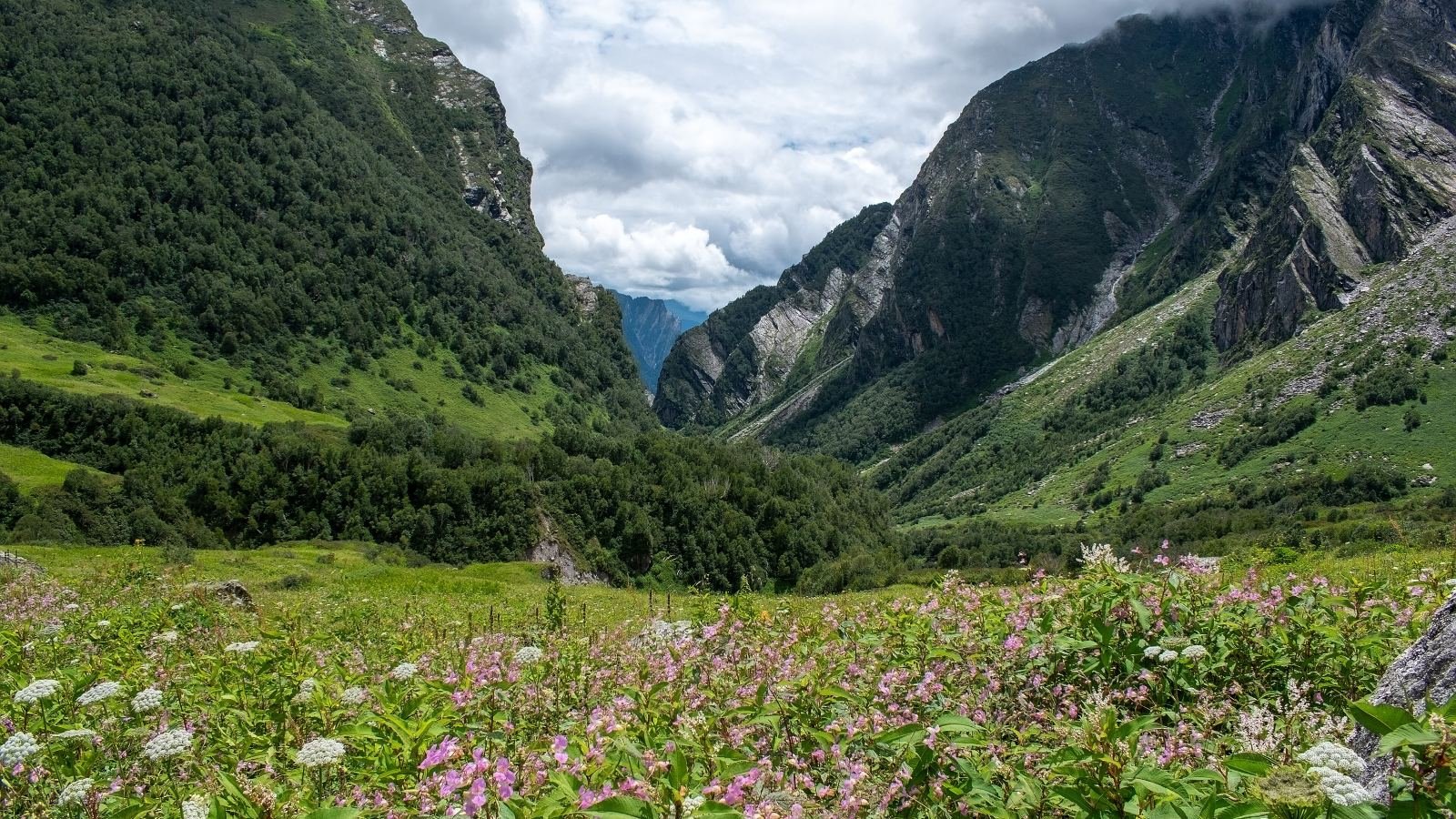

Nobody creates a crag on their own. The person who opened the route, the first to walk the path, the landowner, the bird nesting on the face and the climber who comes after you all share the same rock. The next person finds the rock the way you left it.
Ethics at climbing areas are less a written law than the way climbers have agreed to behave over time. The UIAA's 2024 declaration on mountaineering describes them as "a set of recommendations and norms, rather than rules": respecting other people's styles, protecting the natural environment, following local rules and communities, and using access to nature responsibly. The types of climbing are on the Types of Rock Climbing page, and the history of clean climbing on the Trad Climbing page.
The UIAA's 2024 declaration lists nine basic norms for climbers; four of them concern nature, climate, local rules and access.
Source: UIAAThe BMC asks climbers not to clear trees or scrub during the bird nesting season; some crags are closed to climbing in this period.
Source: BMCThe number of chalk marks, tape, fruit peel or litter to leave on the rock. Take home everything you bring.
Source: BMC, Leave No TraceRespect the rock
Rock seems endless, but holds are not. A hold that thousands of hands and shoes have passed over for years gets polished, breaks and is never the same again.
- Holds are not chipped or added: carving a hold, gluing one on or enlarging an existing one changes the route permanently for everyone. If a route is too hard for you, it is you who changes, not the rock.
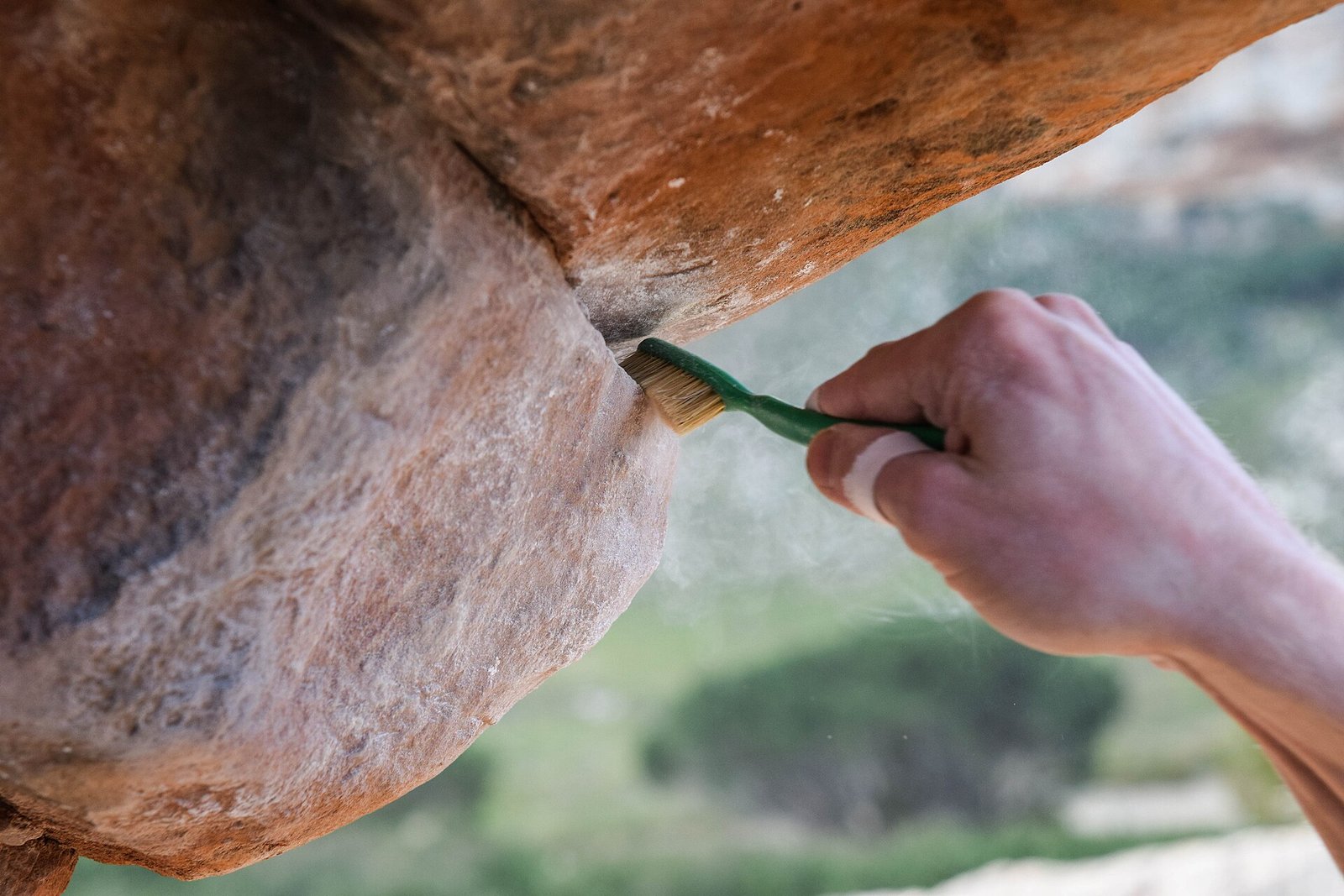
- Use little chalk, clean off the marks: the BMC asks climbers to use chalk minimally and to clean chalky holds and tick marks when they have finished. A soft-bristled brush is enough; a wire brush wears the rock away.
- Do not climb on wet sandstone: sandstone and similar soft rocks are much more fragile when wet; holds can snap off in a single ascent.
- Good footwork protects the rock: wiping your shoes before climbing and placing your feet precisely instead of scraping them protects both your climbing and the rock.
Bolts and fixed protection
A bolt is a sign that someone put work into that route. Adding one or removing one is a decision, and it is not one person's decision.
The bolts on sport routes are the work of the person who opened the route or of the club that looks after the area. Adding bolts to an existing route, removing bolts or bolting a traditional route changes that route's character. That is why the BMC asks climbers to speak to their local representative before placing or removing bolts or other fixed equipment; in many places permission is needed.
- Follow the local agreement: at some crags the tradition is no bolts; at others only certain walls are bolted. Before going to an area, check with its climbers, its club or the route guide.
- Report worn bolts and belays: if you see a rusty bolt or a worn belay, tell the club or people who maintain the route instead of trying to replace it yourself.
- Do not run the rope through the belay: top-roping with the rope directly through the lower-off ring wears it quickly; set up with your own carabiners where possible.

Nature and wildlife
For you the cliff is a route; for a falcon it is a nest. The two cannot use the same wall at the same time.
- Respect the nesting season: birds such as falcons, eagles and owls nest on cliffs. People near a nest can make a bird abandon the nest and its young. In many countries these cliffs are closed to climbing in spring and summer. Follow closure signs and local notices; if there is no sign and a bird is circling the cliff and calling, move away.
- Leave plants alone: plants and lichens in rock cracks grow slowly. Pulling out plants or cutting trees and scrub to clean a route is not done, especially in the nesting season.
- Stay on the path: a single path to the foot of the crag causes far less erosion than dozens of shortcuts.
- Litter and toilet: tape, fruit peel and cigarette ends are litter too; take everything home. Go to the toilet well away from water, paths and the foot of the crag. The general principles of leaving no trace are on the Mountain Nature and Environment page.

Other climbers and local people
What people remember most about a crag is often not the route, but the people they met there.
- Do not hog a route: leaving a rope hanging on a route for hours wastes the day of those waiting. On busy days, take turns.
- Keep the noise and music down: calls must be heard for safety; loud music and shouting disturb other parties and wildlife.
- Respect other styles: one person top-ropes, another leads, another climbs without a rope. The UIAA declaration counts accepting other styles when they differ from ours as one of its basic norms.
- Report your ascent honestly: say how you climbed a route (with rests, without falling, with prior knowledge) as it was.
- Respect landowners and villagers: park in the designated places, do not block roads or field gates, pass quietly through livestock and leave gates as you found them. Whether a crag stays open often depends on these small things.
Before you go to the crag
- Is there a bird nesting closure or another restriction in the area?
- Is there a local agreement on bolts and routes; what does the route guide say?
- Are the parking place and approach path clear?
- Are a rubbish bag, a chalk brush and, if needed, a trowel for the toilet in your pack?
Sources
4
- The nine basic norms and the 2024 declaration – UIAA: New Declaration on Hiking, Climbing and Mountaineering
- Respect for other climbers – UIAA: Climber's Manifesto #10
- Chalk, tick marks, wet rock, fixed equipment, litter, parking and birds – BMC: Respect the Rock
- The seven principles of leaving no trace – Leave No Trace: 7 Principles