
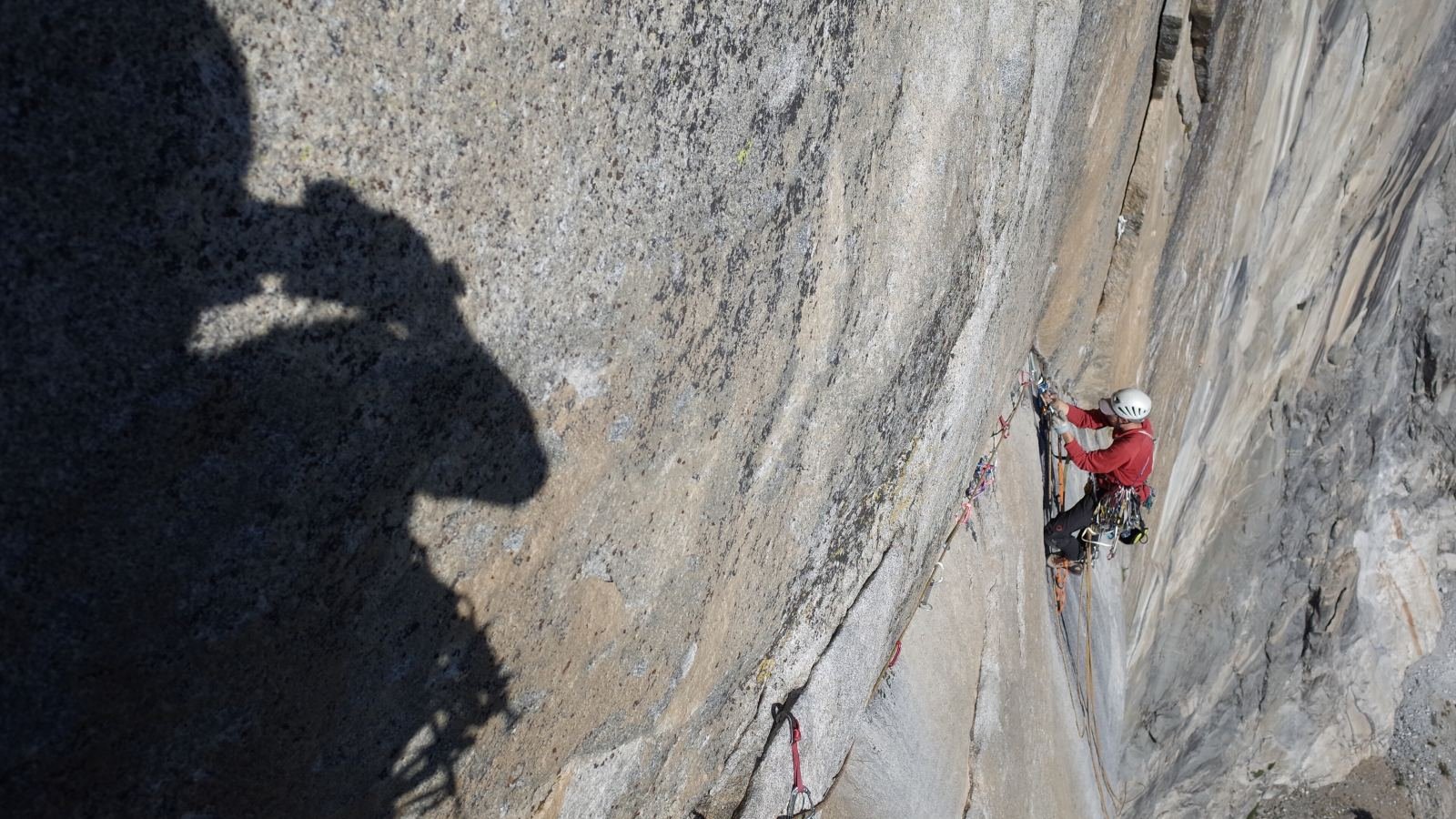
Your rope is 60 metres long; the wall is 300 metres high. The only way to the top is to split the wall into rope lengths: stop at the end of each pitch, build a belay, bring your partner up and set off again. A wall that looks small from the ground is a whole different world once you are halfway up it.
Multi-pitch climbing means climbing routes longer than a single rope length piece by piece, stopping at intermediate belays. The route may have fixed bolts (sport multi-pitch), or the protection may be placed by the climber (trad). Other types of rock climbing are on the Free Climbing Styles page.
This page is an introduction and a skills map. In multi-pitch climbing the slightest confusion, such as a wrong connection at the belay or a rope that turns out too short, has serious consequences. These skills are learned with an experienced instructor, first close to the ground, then on short routes.
Warren Harding, Wayne Merry and George Whitmore completed The Nose on El Capitan with fixed ropes, in a siege lasting months.
Source: WikipediaThe wall of about 880 metres is split into 31 pitches.
Source: WikipediaIn 2018 Tommy Caldwell and Alex Honnold climbed the same route in under two hours.
Source: WikipediaHow is it different from a single pitch?
If something goes wrong on a single-pitch route, your partner lowers you to the ground. Halfway up a wall, the "ground" is hundreds of metres below.
- Belays: At the end of each pitch both climbers clip into one belay; the belay carries the whole team.
- Being self-sufficient: A rescue team is hours away. The team must know how to ascend a rope, abseil and carry out simple rescues itself (Self and Partner Rescue).
- Communication: In the wind or round a corner you may not hear each other; calls are agreed in advance.
- Time and weather: On a long route the day runs out and the weather changes. The turnaround time and the descent are known before you start climbing (Turnaround time).
- Weight: Water, food, a spare layer, a headtorch and what you need for the descent are carried on your back or harness; every extra gram goes up with you.

The cycle of a pitch
Every pitch follows the same small cycle. A team that knows it by heart is fast and safe; a team that does not is the one tangled in ropes at the belay.
- The leader climbs: The belayer belays from the stance; the leader climbs to the end of the pitch, placing or clipping protection.
- The leader clips into the belay: They secure themselves to the belay and call "safe". Only after this call does the belayer take them off belay.
- Belaying the second: The leader pulls up the rope and belays the second from above; the second climbs, removing the protection.
- Changeover at the belay: The second clips into the belay; gear is handed over and the rope is sorted. If the lead is swapped (leading through), the second carries straight on up the next pitch.
Order at the belay
The belay is a small office in the middle of the wall. Everything has its place, and everything is clipped in.
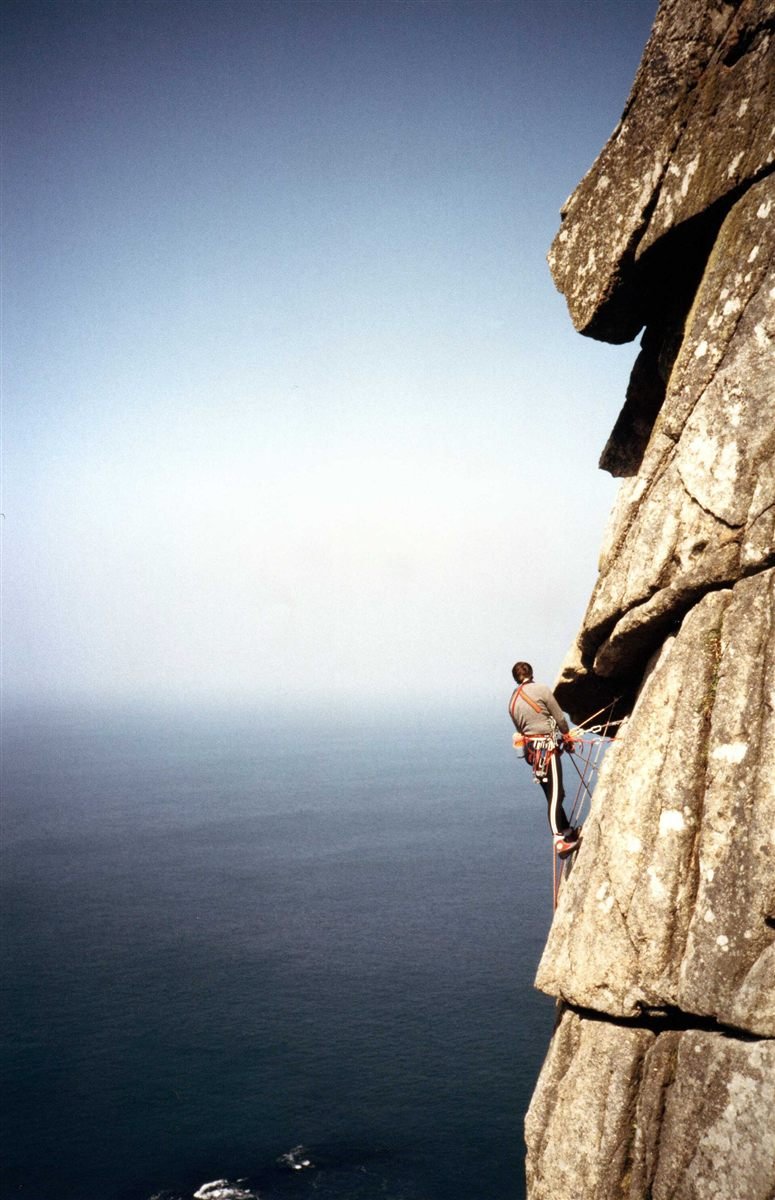
- Always clipped in: You are never unclipped at the belay, even for a moment; when changing a connection, the new one goes on first and the old one comes off afterwards.
- Rope management: Spare rope does not drop down the wall; it hangs below the stance or is stacked in loops over the tie-in rope. A tangled rope can catch in a crack in the wind.
- Gear organisation: Nuts and carabiners are not hung at random but in order, easy to take, on the belay or harness. A dropped piece is never seen again, and it may land on people below.
- Keeping warm: You wait at belays for a long time; a sweaty body gets cold quickly. Keep a spare layer within reach.
How to build a belay from trad gear is on the Trad Climbing page.
Getting down
Reaching the top is only half the job. The descent comes at the hours when fatigue and haste have built up most; that is exactly when attention starts to slip.
There are two ways down: walking off by a path behind the wall, or abseiling down the route's belays one after another. Abseiling means rigging again at every belay; tying knots in the rope ends, knowing whether the rope reaches the next belay and making sure the rope does not jam when pulled down are the basic rules. Abseiling technique is on the Rope Techniques and Abseiling page.
Your first multi-pitch route
On your first multi-pitch route, what surprises you should be the height of the wall, not its difficulty.
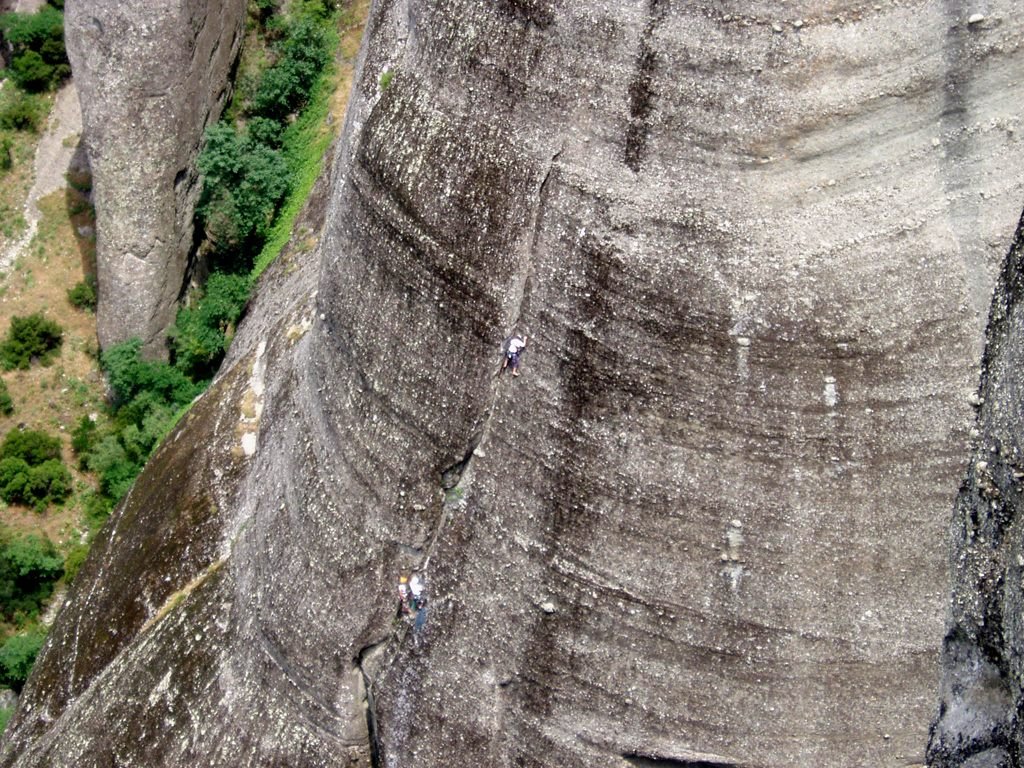
- Well below your grade: Choose a route clearly below the grade you climb comfortably on a single pitch. Height, fatigue and belay work add difficulty on their own.
- Short and bolted: Make your first routes two or three pitches long, with bolted belays and an easy descent.
- With someone experienced: Your first multi-pitch climbs are done alongside an experienced climber or instructor who knows the belay routines.
- Rehearse on the ground first: Clipping into the belay, changing over and rigging abseils are practised again and again on the ground, with your feet on the earth.
- Route information: Learn the topo (route diagram), pitch lengths, where the belays are, the descent and the rope length needed in advance.
Sources
4
- The Nose: first ascent, number of pitches, first free ascent and speed record – Wikipedia: The Nose (El Capitan)
- Swapping leads and abseiling on multi-pitch – BMC TV
- Building belays and rope management – Petzl Sport (YouTube)
- Belay principles – American Alpine Institute: SERENE and ERNEST Anchors


